Navigation
Install the app
How to install the app on iOS
Follow along with the video below to see how to install our site as a web app on your home screen.
Note: This feature may not be available in some browsers.
More options
Style variation
You are using an out of date browser. It may not display this or other websites correctly.
You should upgrade or use an alternative browser.
You should upgrade or use an alternative browser.
DO NOT BUY A TRANSMISSiON PAN!!!
- OP 🔹 HeavyAssault
- Start date



- Jul 26, 2025
- 2,111
- 3,862
- '25 F350 XLT Tremor 7.3 Guzziller Carbonized Grey
- '16 F150 5.0 Coyote/6R80 SuperCrew
If it ain’t leaking, don’t touch it is my motto on all these aftermarket pans. Tons of leaks and failures created from installing aftermarket pans from excessive sealants getting into the pickup. Not worth it unless it’s time to open it up anyway.
Well, it is time to "open it up", and, the PPE pan, anyway, uses the factory Ford O-ring gasket. Any decent installer will double-check the pan flange for flatness. Cheers.

My original plan was to change transmission fluid every 30K miles. Since adding the extra 2 gallons with the PPE pan, I'm going to 60K. At roughly $300 in fluid, that makes sense to me. My fluid looked good at 30K, the filter element was pretty black, the magnet had a light coating of fuzz. Considering the pickup is now a couple inches above the bottom of the sump and the nearly 50% more fluid volume, I think this is an improvement.
Apples,Waiting on the raw aluminum pan from PPE for my Tremor's 445-inch gasser 10R140. Again, the order is paid for but they won't be restocked until 2nd half November, so, a couple of weeks more.
And again, not doing this so much for the extry vol-yume of ULV but for the corn-venience of draining/refilling/easier level checks.
That, and raw aluminum finned, cast bits are my automotove jewelry... like this 8.8 Super (34 spline) rear axle diff cover from PML, for example (this one's on my 4.09-geared 4X2 F150 5.0) -
View attachment 233155
The raw trans pan is back in stock. Bought one last week.
- Jul 26, 2025
- 2,111
- 3,862
- '25 F350 XLT Tremor 7.3 Guzziller Carbonized Grey
- '16 F150 5.0 Coyote/6R80 SuperCrew
^ ^ ^ Thanks! and that's for the 7.3 gas motor?
I allegedly have a "pre order", and it's paid for. Wonder why I t'weren't notified! I'll give so-and-so a call here in a bit. Thanks again.
I allegedly have a "pre order", and it's paid for. Wonder why I t'weren't notified! I'll give so-and-so a call here in a bit. Thanks again.
Yep. 7.3 gasser.



- Jul 30, 2023
- 2,399
- 7,753
- PADI Divemaster & Rescue Diver, Medic
- 2024 F350 Tremor 7.3 Godzilla - Carbon Gray
- 1985 GMC 2500 4x4 High Sierra
I bet if someone made standard capacity heat sinked covers for the differentials and transmissions with appropriate drains and fills they'd make a killing. Cerakote the shit in crinkle black, polish the fins if you must, 3/8" square fill plug and drain plug, call it a day. Protected sight glass on the diffs if you're feeling fancy.
something like this ?
It's on my 2024 F350 Sterling 11.6
Full write up at the MVI's F350 Build page

- Oct 18, 2023
- 5,376
- 10,570
- 24 Lariat Tremor 7.3 Godzilla Antimatter Blue 🔵
- 85 Bronco
Exactly... Hurry up and start building themsomething like this ?
It's on my 2024 F350 Sterling 11.6
Full write up at the MVI's F350 Build page
View attachment 233178


looks like suncoast is coming out with a pan for the 10r140 that doubles the capacity built in conjunction with PPEi

Jiminny Crickets! 5 pages on a Banks tranny pan lol  couldn't we all just save money by swapping the boring stock ATF fluid and simply run straight coolant instead? I mean... "cool" is literally in the name


Honestly I didnt even look at the pan outside of the thumbnail on first post lol... the scoop would obviously also be a drag on our fuel economy numbers too! Very important to HD gas/diesel owners to maximize that! Surprised Gale missed such a critical factor with how important our carbon footprints are! Just a big wind sale under our trucks!
couldn't we all just save money by swapping the boring stock ATF fluid and simply run straight coolant instead? I mean... "cool" is literally in the name Honestly I didnt even look at the pan outside of the thumbnail on first post lol... the scoop would obviously also be a drag on our fuel economy numbers too! Very important to HD gas/diesel owners to maximize that! Surprised Gale missed such a critical factor with how important our carbon footprints are! Just a big wind sale under our trucks!

- Jun 9, 2024
- 873
- 2,626
- "Bumble" - White 2024 F350 Lariat Tremor 7.3 Godzilla
- "The Blueberry" - Blue 2025 Malibu 23LSV Wakesetter
I like the scoop. I'm thinking about getting one and bolting it on top of my hood with some butterfly valves added. Link it to the throttle and everyone will think I added a supercharger.
- Jul 26, 2025
- 2,111
- 3,862
- '25 F350 XLT Tremor 7.3 Guzziller Carbonized Grey
- '16 F150 5.0 Coyote/6R80 SuperCrew
Apples,
The raw trans pan is back in stock. Bought one last week.
Again, my good man, thanks a ton.
Just hung up the phone w/ their CS and one is on. the. way.

2020-2026 Ford Super Duty Gas/Diesel 6.2L/7.3L/6.7L 10R140 Heavy-Duty Cast Aluminum Transmission Pan
10R140 Heavy-Duty Cast Aluminum Transmission Pan, 2020-2025 Ford Super Duty 6.2L/7.3L, Ford Super Duty, 10R140 Heavy-Duty Cast Aluminum Deep Transmission Pan. Cast High-grade A356.0-T6 aluminum alloy
 ppepower.com
Now I can get my "blueprinted" (my term) NextGen valvebody up in there! Really looking forward to that.

- Jul 26, 2025
- 2,111
- 3,862
- '25 F350 XLT Tremor 7.3 Guzziller Carbonized Grey
- '16 F150 5.0 Coyote/6R80 SuperCrew
I've been around performance automatic transmissions for awhile, and have seen the effects of trans fluid/filter neglect and general transmission abuse. I know what it looks like, so I think I can pick up what Nate, here, is puttin' down.

 nextgendiesel.com
Problem #2 - The Valve Body
As with many transmissions, the 10R140 transmission's valve body is a huge cause of it's demise. Valve bodies are naturally complicated hydromechanical mechanisms with a huge concentration of moving parts and electronics. This makes them probable targets for internal crossleakage, solenoid failure and other similar problems that are notorious for cooking transmissions to death.
Firstly is the pressure solenoids inside the valve body. There are many of them as nearly all functions of this transmission are controlled by a switch or solenoid. As with most mechanisms, more moving parts means more things that can break. Generally, these solenoids are reliable, however they are often victimized by internal crossleakage inside the valve body that puts undue stress on the electronics by trying to push them on when the onboard computer believes they should be closed, or vice versa.
Additionally, the valvetrain inside the valve body is quite abundant, featuring dozens of moving parts. Every valve is a potential leakpoint. This would not be of concern if the transmission's valve body featured steel valves or anodized protective layers on the exterior of said valves, but unfortunately they are not. The valves are manufactured out of a low cost aluminum alloy designed to minimize cost at volume, leaving them susceptible to bore wear over time.
Further, the separator plate inside the valve body does not favor fast and efficient shifts. In fact, the separator plate contributes to many "sloppy" shifts by featuring unfavorable oil geometry when oil is trying to reach oncoming clutch packs. We expedite oil flow into oncoming clutches by making substantial modification to the OEM separator plate. To be fair, the OEM separator plate is rather thick and difficult to flex, but is inferior in other ways as mentioned. This makes modification of the OEM plate the most favorable way to ensure reliability as well as peak operability.
Problem #5 - The Oil Pan
As an expensive 10 speed transmission, it is exceptionally important to maintain low oil temperatures to preserve the longevity of the transmission. From the factory, the OEM saves money by stamping the oil pan out of thin plastic using a mold and a special tool to provide accurate shape. This is never optimal, but certainly does not endorse a healthy transmission for heavy duty applications or long term use.
In fact, the OEM oil pan is so lacking in volume that a variety of transmission pan manufactures have added in excess of a gallon to the oil volume of this transmission. Due to the obvious nature of this upgrade, it is standard on ALL Next Gen Drivetrain 10R140 transmissions to contain a cast aluminum deep pan.
Another lost benefit when operating with an OEM oil pan is the lack of structural support to the case. Cast aluminum deep pans function as a "girdle" that supports the case to prevent flexion, greatly decreasing the potential for a broken case. Although broken cases are not very common to this transmission, it does exist and should be noted. A cast aluminum deep pan virtually eliminates this concern.
Ford 10R140 Transmission • Problems, Solutions & Upgrades
As many know, the problematic 10R140 transmission is lacking in mechanical and hydraulic quality. This transmission was never meant to be a
nextgendiesel.com

Interesting, great link!
Problem #5 - The Oil Pan
As an expensive 10 speed transmission, it is exceptionally important to maintain low oil temperatures to preserve the longevity of the transmission. From the factory, the OEM saves money by stamping the oil pan out of thin plastic using a mold and a special tool to provide accurate shape. This is never optimal, but certainly does not endorse a healthy transmission for heavy duty applications or long term use.
In fact, the OEM oil pan is so lacking in volume that a variety of transmission pan manufactures have added in excess of a gallon to the oil volume of this transmission. Due to the obvious nature of this upgrade, it is standard on ALL Next Gen Drivetrain 10R140 transmissions to contain a cast aluminum deep pan.

Another lost benefit when operating with an OEM oil pan is the lack of structural support to the case. Cast aluminum deep pans function as a "girdle" that supports the case to prevent flexion, greatly decreasing the potential for a broken case. Although broken cases are not very common to this transmission, it does exist and should be noted. A cast aluminum deep pan virtually eliminates this concern.
Problem #5 - The Oil Pan
As an expensive 10 speed transmission, it is exceptionally important to maintain low oil temperatures to preserve the longevity of the transmission. From the factory, the OEM saves money by stamping the oil pan out of thin plastic using a mold and a special tool to provide accurate shape. This is never optimal, but certainly does not endorse a healthy transmission for heavy duty applications or long term use.
In fact, the OEM oil pan is so lacking in volume that a variety of transmission pan manufactures have added in excess of a gallon to the oil volume of this transmission. Due to the obvious nature of this upgrade, it is standard on ALL Next Gen Drivetrain 10R140 transmissions to contain a cast aluminum deep pan.
Another lost benefit when operating with an OEM oil pan is the lack of structural support to the case. Cast aluminum deep pans function as a "girdle" that supports the case to prevent flexion, greatly decreasing the potential for a broken case. Although broken cases are not very common to this transmission, it does exist and should be noted. A cast aluminum deep pan virtually eliminates this concern.
Last edited:

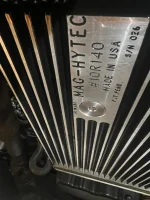
I run two mag hytech trans pans on both our 22 SDIf it ain’t leaking, don’t touch it is my motto on all these aftermarket pans. Tons of leaks and failures created from installing aftermarket pans from excessive sealants getting into the pickup. Not worth it unless it’s time to open it up anyway.
No leaks or issues
Installed when we did Nex gen valve body upgrade
Attachments
Out of curiosity how are you liking the nex gen valve upgrade?I run two mag hytech trans pans on both our 22 SD
No leaks or issues
Installed when we did Nex gen valve body upgrade
- Jul 26, 2025
- 2,111
- 3,862
- '25 F350 XLT Tremor 7.3 Guzziller Carbonized Grey
- '16 F150 5.0 Coyote/6R80 SuperCrew
Yes... I had wanted to ask that, too. 
I too am curious since the reviews on NGD seem to be polarizing (at least what i've seen here). Doesn't look like they do the cherry bomb upgrade for the 10r140 anymore or it moved and I can't find it.
- Jul 26, 2025
- 2,111
- 3,862
- '25 F350 XLT Tremor 7.3 Guzziller Carbonized Grey
- '16 F150 5.0 Coyote/6R80 SuperCrew
lol what is the cherry bomb upgrade - sounds catastrophic
(I only know cherry bombs as og fireworks or a brand of classic glaspack exhaust "mufflers" [little more than resonators, today])
But I will offer this:
NextGen could be in certain folks' crosshairs due to the controversial delivery/style of Nate, who we hear in these videos. The second reason is that they use Viton O-rings in their valvebodies; no one has done that before.
When I called a tech there to talk about this I was reminded that NextGen has been using O-rings in valvebodies for years. They started w/ the Aisin trans' vbs in the Dodges and these have seen service lives of over 200,000 miles.
That's all I can think of as to why anyone would complain about NextGen, oh, other than the PRICE of the Project Carbon vb. I have gambled on this and am about to install one (the jury's out if I'm going to do it in my driveway or have a proper shop do it. I'm getting a little brittle these days).
Curious as to the improvement in shift quality, so any input will be appreciated. Cheers.
(I only know cherry bombs as og fireworks or a brand of classic glaspack exhaust "mufflers" [little more than resonators, today])
But I will offer this:
NextGen could be in certain folks' crosshairs due to the controversial delivery/style of Nate, who we hear in these videos. The second reason is that they use Viton O-rings in their valvebodies; no one has done that before.
When I called a tech there to talk about this I was reminded that NextGen has been using O-rings in valvebodies for years. They started w/ the Aisin trans' vbs in the Dodges and these have seen service lives of over 200,000 miles.
That's all I can think of as to why anyone would complain about NextGen, oh, other than the PRICE of the Project Carbon vb. I have gambled on this and am about to install one (the jury's out if I'm going to do it in my driveway or have a proper shop do it. I'm getting a little brittle these days).
Curious as to the improvement in shift quality, so any input will be appreciated. Cheers.
it was a drop-in complete drum assembly they offered for the 10r80 and 10r140. They don't offer it any more but if you google it you can find reminence of posts that describe it in some capacity but all the links are dead and you can't find it on their site anymore.lol what is the cherry bomb upgrade - sounds catastrophic
(I only know cherry bombs as og fireworks or a brand of classic glaspack exhaust "mufflers" [little more than resonators, today])
But I will offer this:
NextGen could be in certain folks' crosshairs due to the controversial delivery/style of Nate, who we hear in these videos. The second reason is that they use Viton O-rings in their valvebodies; no one has done that before.
When I called a tech there to talk about this I was reminded that NextGen has been using O-rings in valvebodies for years. They started w/ the Aisin trans' vbs in the Dodges and these have seen service lives of over 200,000 miles.
That's all I can think of as to why anyone would complain about NextGen, oh, other than the PRICE of the Project Carbon vb. I have gambled on this and am about to install one (the jury's out if I'm going to do it in my driveway or have a proper shop do it. I'm getting a little brittle these days).
Curious as to the improvement in shift quality, so any input will be appreciated. Cheers.