Truck Campers Only, w/ an Overland & Off-roading theme

Try installing a soft start on your AC. Roughly $300 and an easy DIY install. I initially installed it on the dometic AC that came with our Northerlite to allow me to run a smaller honda generator, but found the overall operation of the AC is much quieter now. I can echo your comments on how frustratingly loud the AC was in our 2022 camper - to the point we avoided using it (we are located in Seattle - so use is sporadic).

AC: Honestly, I am an AC addict all my life. I hate being sweaty or sleeping hot. It is a must for me. I am disappointed about the AC in the Supertramp. It is probably less Supertramp, but more Dometic. Man, this thing is loud. It works, but it is loud. Like 1990's loud. You would think that in 2023 they have these things figured out and dialed in. 12v is great, but it is almost unusable at night. I am looking at other options, but it is Fall/Winter season, so probably won't make a move until Spring. I do not regret ordering it as I wanted them to do the wiring and upgrading the system, but it was not cheap and the result ... well ...
 
Try installing a soft start on your AC. Roughly $300 and an easy DIY install. I initially installed it on the dometic AC that came with our Northerlite to allow me to run a smaller honda generator, but found the overall operation of the AC is much quieter now. I can echo your comments on how frustratingly loud the AC was in our 2022 camper - to the point we avoided using it (we are located in Seattle - so use is sporadic).

For clarification in my below:
AC = alternating current
A/C = air conditioner

The Dometic A/C on Supertramps are 12v DC systems; not 120v AC. So not sure if the soft starts are compatible or necessary on a 12v DC system. The 12v DC units run directly off the 12v DC battery bank rather than from inverter AC, generator AC or shorepower AC. Even if on generator, the generator provides current to the camper charger which converts it to DC power. But the A/C is still pulling from the battery bank. Just mentioning this because the soft start installs are typically for 120v AC A/C units so they can run off generators that have the necessary sustained capacity but do not have the necessary mas start-up capacity. The soft start decreased the start-up load to get it below the max on the generator. But, I'm not in the know how the 12v A/C is setup. Just mentioning the Dometic is a 12v DC so one would need to determine of the same soft start unit is compatible or necessary.
 
Last edited:
I still have to get these to you. My apologies. Been crazy busy.
No worries brother I know how it is. Not like you owe some stranger in the Interwebs anything. If you do get a chance I appreciate it!

IMG_0369.webp

This is my rear leaf pack. As I stated previously Sumo told me they don’t work on a Tremor, but I have trouble believing that honestly. But what do I know. Thanks!
 
I've requested a 120v passthrough from Supertramp. If they don't want to do the mod during the build, I'll install myself. The concept will work in any camper, trailer, pickup or RV and is not my idea. Others have done this since inverters became common. The idea of having a dead 120v passthrough is so one can pass current into the camper from the outside or, pass current out from the inside (inverter).

Many have added an exterior female outlet and wired their inverter to it so they have 120v inverter power available outside. That will be my primary use case as well (use induction cooktop outside, plug in charger for boat batteries, eMTB or electric dirtbikes or any old appliance one might use around camp.

Others have added an external male plug and interior female outlet because they want to have a shore powered available inside the camper on a circuit separate from the shore power circuit powering the battery charger. If they want to push current from the inside inverter outlet to outside, they use a male/male adapter going from the inverter outlet to the passthrough outlet. !!Mandatory warning!! at this point; a 120 male/male adapter is affectionately known as a "suicide cord" for a reason. If attached in the wrong sequence, it will power up the exposed male end of the adapter with 120v. Things could get exciting from there. If using a male/male adapter cord, always plug into the dead side of the circuit first, then into the live side. In this case, one can be extra careful and not even turn on the inverter until after both ends are plugged in.

Since our primary use case will be sending current outbound from the camper, my first instinct was to wire the 120v passthrough with male plug inside and female outlet outside. With this layout, I'd only need a short extension cord to run current from the inverter outlet to the passthrough's interior male plug and no adapter needed outside. However, when I wanted to pass power inward, I'd need a male/male adapter outside and female/female inside. That means I'd need to carry three things: two adapters and one short extension cord. (That passthrough layout is scenarios 3a and 3b in the below chart)

I knew there was a way I'd only need one adapter to cover all scenarios so I worked up a quick table to visualize (below) and I now plan to make the passthrough with female outlets both inside and outside (rows 1a and 1b in the table). Female outlets both inside and out means I only need to carry one adapter; a male/male. If I run power outward, from inverter outlet, that male/male adapter goes on the inside (from inverter outlet to the female passthrough outlet). If I run power inward, that adapter goes on the outside. One male/male adapter and I'm covered for all scenarios and can run current inward or outward.

In my spreadsheet, the matching plug layouts are color coded, but the forum table doesn't allow for color coding. So I'll use numeric designators. Matching "outer plug/inner plug" layouts are designated by numeric row number. Meaning 1a goes with 1b because both of those rows are for Outer Plug/Inner Plug wired "female/female".
3a goes with 3b because both of those rows are for Outer Plug / Inner Plug wired as "female/male" etc.
You'll need all adapters and/or cords for both 'a' and 'b' rows to support any given plug layout.
Long way of saying, the female/female is the most useful because only one adapter (a male/male) is needed to cover all scenarios.


Use case - outside power source going in​
Needed exterior adapter​
Outer plug / Inner plug​
needed interior adapter​
1a​
male/male adapter​
female / female​
none​
2a​
none​
male / female​
none​
3a​
male/male adapter​
female / male​
female/female adapter​
4a​
none​
male / male​
female/female adapter​
Use case - inside power source going out​
Needed exterior adapter​
Outer plug / Inner plug​
needed interior adapter​
1b​
none​
female / female​
male/male adapter​
2b​
female/female adapter​
male / female​
male/male adapter​
3b​
none​
female / male​
short extension cord​
4b​
female/female adapter​
male / male​
short extension cord​


The "potentially very dangerous" male/male adapter. Rarely available retail so typically homemade. Often used to backfeed a circuit from a generator into a household circuit, which is safe if done correctly, however the main panel breaker MUST be turned off to prevent backfeeding current all the way out of your house to the transformer/power lines which would create an unsafe situation for linesman working on the lines.

View attachment 134101
How about just plugging in an extension cord in the camper and tossing the female end out the zippered window? Lol

I’m half joking but that’s my plan for now if i ever need 120V outside power. We don’t really camp at campsites and the Supertramp has a 45A charging port anyway so on the very off chance I’m parked with shore power I’ll just plug that in and use the inverter if/when needed for 120V.

I realize everyone has different uses and I LOVE your detail and brainstorming I absolutely plan on following and stealing your great ideas as long as you’ll let me LOL!!
 
It appears the new Supertramp website has launched now for anyone interested in it. Not sure what’s new or exciting but it’s definitely changed. They are at SEMA right now so it’ll be cool to see any videos coming out of there
 
How about just plugging in an extension cord in the camper and tossing the female end out the zippered window? Lol

I’m half joking but that’s my plan for now if i ever need 120V outside power. We don’t really camp at campsites and the Supertramp has a 45A charging port anyway so on the very off chance I’m parked with shore power I’ll just plug that in and use the inverter if/when needed for 120V.

I realize everyone has different uses and I LOVE your detail and brainstorming I absolutely plan on following and stealing your great ideas as long as you’ll let me LOL!!

Oh no doubt, there are simple ways to do most of the things we do, and the complicated way. An extension cords out a door, hard window, or soft-top window is certainly the former. But when has common sense ever stood in the way of camper, or pickup, upgrades? Ha.

Most use cases are covered by the simple way, but there are always a few that are not.
Some scenarios:
- Need access to 120v inside during storage but want to avoid leaving on inverter and avoid keeping batteries charged to 100% via shorepower plug because long term LiFePO4 storage at 100% reduces life. Or, if someone wants to run an item that draws more than the inverter is rated for. Storage scenario where someone wants to run heater or dehumidifier in camper off 120v.
- Need to run inverter power to outside camper, or 120v inside the camper with the top down, hardside-windows and doors closed. Perhaps due to security, weather (cold temps) or maybe while driving down the road. Very much an edge case, and might be a bit sketchy, but it occurred to me it might be handy to charge my boat batteries, or electric dirtbike battery or have inverter 120v fed into enclosed trailer while driving down the road. Could be handy, even if only at low speed like going from campground to launch ramp.

Plus, part if it is tinkering, planning, modding, and going for a nice and clean implementation even when a simply, if less elegant, solution would suffice. Ha.
 
It appears the new Supertramp website has launched now for anyone interested in it. Not sure what’s new or exciting but it’s definitely changed. They are at SEMA right now so it’ll be cool to see any videos coming out of there

They updated it a couple days ago. It now better shows, with more images and interactive selections, optional interior, exterior and decal colors, but the meat is the same. Big thing was adding the Megatron to the formerly-singular offering of the Flagship LT. And I still haven't heard back on the changed spec that now says Victron battery charger rather than Noco. Anxious to see interior images/walkthrough of Megatron. Not in my future, for many reasons, but really interested to see it!
 
@Chris-DTA
Looks like the app for the victron smart shunt has a handy feature that will tell you amps consumed since last charged to 100%. That could be a handy way to perform an energy comsumption audit while out in the field. (I'll go back and add this comment and vid to my previous post as well).

 
Oh no doubt, there are simple ways to do most of the things we do, and the complicated way. An extension cords out a door, hard window, or soft-top window is certainly the former. But when has common sense ever stood in the way of camper, or pickup, upgrades? Ha.

Most use cases are covered by the simple way, but there are always a few that are not.
Some scenarios:
- Need access to 120v inside during storage but want to avoid leaving on inverter and avoid keeping batteries charged to 100% via shorepower plug because long term LiFePO4 storage at 100% reduces life. Or, if someone wants to run an item that draws more than the inverter is rated for. Storage scenario where someone wants to run heater or dehumidifier in camper off 120v.
- Need to run inverter power to outside camper, or 120v inside the camper with the top down, hardside-windows and doors closed. Perhaps due to security, weather (cold temps) or maybe while driving down the road. Very much an edge case, and might be a bit sketchy, but it occurred to me it might be handy to charge my boat batteries, or electric dirtbike battery or have inverter 120v fed into enclosed trailer while driving down the road. Could be handy, even if only at low speed like going from campground to launch ramp.

Plus, part if it is tinkering, planning, modding, and going for a nice and clean implementation even when a simply, if less elegant, solution would suffice. Ha.
Agreed, I’m sure you’ve seen the Down2Mob video of Mauricio’s Camper where he has added a plug to allow direct shore power from outside to the inside and vice versa. Just added another NOCO plug next to the one that was already there.

I know he (Mauricio) was the one who insisted on having a Truma Combi Exo plus as an option because they wanted to be able to keep their camper plugged in and heated in the Maine winters. I think they have actually progressed past that as a good idea in favor of the 120V shore power directly in to the camper and using a small cube heater or something similar.

I Will admit I’m spoiled. Despite living in COLD upstate NY my garage has 12X12 doors, 14ft ceilings and is insulated and has radiant in floor heating so I’m not as concerned as those who will be leaving their Supertramp outside in sun or snow.

I definitely plan to evaluate my needs on a few things as we use the camper but we are offgrid 99.999% of the time anyway so my main concerns are power from alternative sources, hence my desire for larger and more powerful DC/DC charging. I do think the Honda generator will be an effective stop gap until I get that figured out though. IF it’s hot and I need A/C I’ll just use the generator to keep things happy and full.

I am so glad this discussion has continued as it’s helping me wait for my camper to be finished!

Now if only someone could show me a picture of the back side of there Laguna table mount 😉
 
Agreed, I’m sure you’ve seen the Down2Mob video of Mauricio’s Camper where he has added a plug to allow direct shore power from outside to the inside and vice versa. Just added another NOCO plug next to the one that was already there.

I know he (Mauricio) was the one who insisted on having a Truma Combi Exo plus as an option because they wanted to be able to keep their camper plugged in and heated in the Maine winters. I think they have actually progressed past that as a good idea in favor of the 120V shore power directly in to the camper and using a small cube heater or something similar.

I Will admit I’m spoiled. Despite living in COLD upstate NY my garage has 12X12 doors, 14ft ceilings and is insulated and has radiant in floor heating so I’m not as concerned as those who will be leaving their Supertramp outside in sun or snow.

I definitely plan to evaluate my needs on a few things as we use the camper but we are offgrid 99.999% of the time anyway so my main concerns are power from alternative sources, hence my desire for larger and more powerful DC/DC charging. I do think the Honda generator will be an effective stop gap until I get that figured out though. IF it’s hot and I need A/C I’ll just use the generator to keep things happy and full.

I am so glad this discussion has continued as it’s helping me wait for my camper to be finished!

Now if only someone could show me a picture of the back side of there Laguna table mount 😉

Yep, I enjoyed Phil's videos of Mauricios and Julia's Camper. (linked below for other folks info). I've exchanged a few email with Mauricio directly about the 120v passthrough and a few other things. Sidebar: Once we get our camper, I'll have to decide if we want to go with their sweet (though costly) bug screen or do something similar to @Chris-DTA 's solution (budget amazon bugscreen cut to size).

Mauricio's passthrough has the male plug on the outside and female outlet on the inside. So no adapters needed to pass 120v into the camper, but two adapters needed to get inverter 120v outside. It was during that conversation that I made the chart to think it through and decided the female outlets both inside and out would allow for the fewest adapters.

Speaking of shops, mine is reasonably sized with 16' walls, but uninsulated. Wife parks in attached garage and I park in the shop. When we built it 10+ years ago, we did a 9' tall garage door, but also put a header in at 14' so we, or future owners, could expand the opening and door to 14' tall if needed. Who'd of thunk it would be us and this soon. After measuring everything (My model F250 bed height, height of closed camper including vents, expected bed matt thickness, taller tires, and camper squat), I came out to 107", knowing it could be a couple inches more or less. I then went out and measured the current shop door height. The opening is...107". We have bids in hand to cut out current header and siding to expand opening up to the 14' header and install taller garage door and opener. This camper and pickup upgrade is getting more expensive by the day! We'll get that shop door work done over the winter and should be ready for March camper delivery.

I dug through my images from the Supertramp tour and I have no good picture of Lagun table mount through-bolting. This is the closest, but it does look like there are two nuts in the lower left hand corner of this image which coincide with the approximate location of the two upper bolts. Will be nice to see an actual close up of the back of the bracket bolts to see if any special considerations as I'd like to add at least once more Lagun bracket to give us some options on table location.

20230623_082649.webp


20230623_082306.webp


The vids referenced above:

 
20230905_125238.webp

Here's my contribution to the thread. Truck mods are 1" lower rear spring blocks, Ford blocks with bump stop in the same place as the Tremor block. Super Sway Stop upper overload blocks. Home made UHMW lower overload wedges. Ford sway bar installed. Truck rides and handles great with the camper and boat. Also installed coleman soft start and heat strip in a/c unit. I need to run a high current DC source from the truck to keep the refrigerator running while underway.

This pic is from the first shakedown test after putting it all together.
 
View attachment 134119
Here's my contribution to the thread. Truck mods are 1" lower rear spring blocks, Ford blocks with bump stop in the same place as the Tremor block. Super Sway Stop upper overload blocks. Home made UHMW lower overload wedges. Ford sway bar installed. Truck rides and handles great with the camper and boat. Also installed coleman soft start and heat strip in a/c unit. I need to run a high current DC source from the truck to keep the refrigerator running while underway.

This pic is from the first shakedown test after putting it all together.
Nice!!!! Looks like a great setup!
 
Hi, Not Sumo but same concept. I went with the Timbren Springs to help with the weight and stability. Let me know if you want me to snap some pics of them

Also the folks at etrailer are a great and according to them this is the part # for the tremor.

Hey sorry. I don’t know how i missed this and it’s late on Friday now. If/when you get a chance I’d love to see how this mounts into your Tremor! Thank you
 
I have a 2005 Hallmark Guinella. I had a one piece fiberglass top installed and 220w solar system a few years ago. Should be good for the years of off grid camping. What is everyone using for off grid internet?
IMG_4468.webp
 
I don't have a camper to share. Only a camper shell, but I've been toying with the idea of building a DIY Go Fast Camper.

I think it's great how fast this thread took off and made it to 5 pages, and I've followed a lot of it. I'd love to get a FWC, supertramp, or similar pop up camper one day, just not in the cards currently.
 
I have a 2005 Hallmark Guinella. I had a one piece fiberglass top installed and 220w solar system a few years ago. Should be good for the years of off grid camping. What is everyone using for off grid internet?View attachment 134182
Man I love seeing those Haulmarks. Super high quality camper. TBH if your Offgrid Offgrid, Starlink is sort of the only option. If you’re a little close there are some boosters and modems that can grab cell signal but if you’re where no signal exists Starlink can give you pretty decent internet.

It’s not perfect but we’ve used it with pretty good success even as far up as northern Newfoundland where it’s not really supposed to work. As with any satellite it can be effected by clouds and rain and snow….
 
I don't have a camper to share. Only a camper shell, but I've been toying with the idea of building a DIY Go Fast Camper.

I think it's great how fast this thread took off and made it to 5 pages, and I've followed a lot of it. I'd love to get a FWC, supertramp, or similar pop up camper one day, just not in the cards currently.
Agreed. Shows how much interest there is in truck campers! Although, I mean this is a Tremor Superduty forum, talk about a truck made for a truck camper!!

i had one of the first GFC campers it really got me started in truck camping it was great!

I also have a buddy who has a project M on order. Kind of a step in between a spartan setup like the GFC and a larger truck camper. One of his main reasons for going Project M (he had a GFC already too) was the ability to remove it with jackstands if needed. Really can’t miss either way. There are so many great campers out there now!
 
100 posts on this thread in barely 6 days!!!!

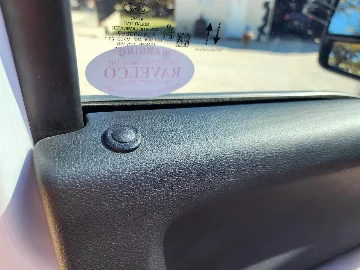
Has anyone considered something like this? An external door deadbolt to reduce/ prevent theft? Obviously not really for a daily driver but for a vehicle that might be left at a trailhead or parked in a remote area, my thought was something like this and window tints that are fairly “smash proof” to secure the vehicle. It seems like smash and grabs and theft is out of control in some parts of the southwest right now.

IMG_0387.webp

IMG_0388.webp

Also something like what Earthroamer offers standard which uses a hitch pin to lock it. Basically I’m looking to make my truck as difficult to steal as possible. Knowing nothing can prevent theft these things just slow it down. Thoughts?
 
Back
Top Bottom