Truck Campers Only, w/ an Overland & Off-roading theme

Since I started this thread in the hopes that truck camper people could help other truck camper people, I have a question.

Is anyone running Sumo Springs on a Tremor? Preferably a 23 but any year will do I suppose. If so do you have pictures? I did a chat with Sumo online and the person I was conversing with told me they don’t make anything for a Tremor. I’m 99.99999% I’ve seen people on here adding Sumos to Tremors but I don’t want to order if they won’t work.

Help…. Please.
Hi, Not Sumo but same concept. I went with the Timbren Springs to help with the weight and stability. Let me know if you want me to snap some pics of them

Also the folks at etrailer are a great and according to them this is the part # for the tremor.

 
Last edited:
I started with a 2005 FWC Hawk, moved into a Sportsmobile EB50, then to a Lance 855s, an now back to a FWC Hawk. For me it's tough to beat the Tremor/Hawk combo.
Hi There, How do you like those Torklift scissor steps? I am looking at those and the Brophy.

Did you attach to the hawk or bed? If to the hawk any issues and when you have a moment can you snap a pic or 2 of where you attached the mounting bracket, would be much appreciated?
 
Hi There, How do you like those Torklift scissor steps? I am looking at those and the Brophy.

Did you attach to the hawk or bed? If to the hawk any issues and when you have a moment can you snap a pic or 2 of where you attached the mounting bracket, would be much appreciated?
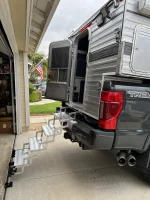
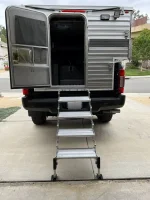
I like the Torklift Glowsteps a lot. After having them for 6 months or so, I can't believe I waited so long to get them. The installation was very straight forward and only took about 30 minutes to complete. Once the mounting bracket was installed to the camper, the steps went into place with their provided quick release pins. Very easy process, and very quick to remove the steps for travel. The steps are very sturdy and will make entry/exit from the camper much easier for me and my dogs. If for some reason the mounting screws get loose, I'll replace them with bolts /nylock nuts. But so far they are fine.
 

Attachments

  • mounting bracket 1.webp
    mounting bracket 1.webp
    199.2 KB · Views: 127
  • glowsteps extended side.webp
    glowsteps extended side.webp
    291.4 KB · Views: 130
  • glowsteps extended.webp
    glowsteps extended.webp
    249.5 KB · Views: 126
  • glowsteps removed.webp
    glowsteps removed.webp
    213.5 KB · Views: 138
I'm in! Well, I'll reserve this post for my inbound 2024 F250 7.3 Supercab (no Tremor available in Supercab, unfortunately) and Supertramp Flagship LT camper. Pickup has November build date (maybe) so expect to have it December of January. Pick up the Supertramp in March 2024.

Stunning, graphic-designed placeholder image is below. From the quality, you'd think it an AI image, but no. This was hand drawn. Like Ripley loved to say...Believe it or not!

Reserved for Supertramp.png


I've owned my 2013 Toyota Tundra DoubleCab (extended cab) with the smaller 4.6L V8, since 2015. At that point in our lives, my wife and I were still mostly hammock camping off our Dual Sport motorcycle, but had been thinking of camper for a few years. We finally dove in and bought our first slide-in, pop-up pickup camper; a 2016 FWC Hawk shell with factory-optioned side dinette, heater, stovetop. Basically a regular hawk minus the water tank/plumbing. We added a chest fridge and I designed my own electronics board with solar controller, shunt, battery monitor, etc. and installed a 180watt panel on the roof tracks.

Put Firestone Riderites and E rated tires on the Tundra and away we went.

01.jpg


02.jpg


We used and loved the FWC for several years. Primary shortcoming was the condensation, even with proper night-time venting and being used here in dry Montana and trips to UT. Even more so on our trips to Canada and the PNW. After a cold and rainy Sept trip to Orcas Island/Bellingham where we were mopping up 1/8" to 1/4" of standing condensation water in the cabover under our mattress, the hunt was on for a composite camper. We had also proved to ourselves that we were using our camper enough to spend on moving to a more fully-equipped, and more costly, camper with plumbing and hot water.

Overland Explorer Vehicles (OEV) had a prototype camper out in 2018. By 2019, they were in production. I'd researched them online and was thinking it would be a good fit for us, but they were way up in Red Dear, AB which was a 9 hour drive. Big Sky RV (now bought out and run as the chain Bish's RV, unfortunately) here in Bozeman, MT was the first US dealership for OEV. I was driving home from work and saw a CAMP-X sitting out front. I slammed on the brakes and whipped a U-turn for a closer look. Did a detailed look over, came back up the next day with my wife, and within a week, we had a 2020 CAMP-X on order. We received it spring 2020 and sold 2016 FWC. Loved the build quality of the OEV campers and name brand appliances; Truma cabin heater, Truma instant water heater, REDARC Battery Manager, etc.

In my opinion, OEV install was better than our FWC install. FWC install used 10gauge wire for DC/DC chargine. OEV used 8gauge.
FWC was attached to pickup bed only through the sheetmetal with eye hooks and 2"x3" batter plate.
OEV uses three heavy steel brackets in the pickup bet (full width in the front and two in the rear). They bolt down using factory bed bolts and/or reinforced brackets that attached to the pickup frame.

Even though camper was a bit heavier and taller than FWC, the attachment method made me feel better about trail driving and offroading. We started doing rougher and rougher trails. Moved up to better and larger all terrain tires. And the pickup has the claw marks in the dashboard, from my wife, to prove we often drove where we probably had no business going with this rig.
That includes forest service trail offshoots pointing up mountains to fire tower lookouts. Shelf roads that were nothing but loose scree. Climbing in and out of creek beds up 6' banks at angles that felt a few degrees shy of a rollover. A memorable rutted out trail, with one wheel in the air and the back of the truck/camper hopped up and down a few inches while tires dug for traction. That last one was South Draw road out the south end of Capitol Reef. We made it to the end of that trail and were eating lunch in a meadow and letting our nerves settle when a jacked up 4runner comes out the same trail. He stopped and said they new they were finally to a mild trail when they saw our pickup/camper in the meadow. All three occupants of their rig sat with their mouths open for a few seconds (to the point it was comical and looked staged) when I told them that we'd just come through that trail ourselves.


Weekend trip into one of the seven "local" mountain ranges around us.
04.jpg


We've done a 7-10 day UT trip each April for the last three years. Even if we spend time in the National and State Parks and Monuments during the days, we always disperse camp on BLM or Forest Service land.

Near San Rafael River swinging bridge.
05.jpg


Wolverine Loop Road off Burr Trail.
06.jpg


Near Hanksville, UT.
07.jpg


Valley of the Gods.
08.jpg


Long Canyon Rd from Moab up to Dead Horse Point State Park.
10.jpg


Long Canyon Rd from Moab up to Dead Horse Point State Park.
11.jpg


Dead Horse State Park.
12.jpg


This is on the White Rim Road in Canyonlands. Over the winter, within 3 minutes of online reservations opening, we managed to reserve the White Crack camp spot which is half way around the White Rim Road loop. Was about 4 hours drive in and 5 hours drive out the other side with the camper. I'd ridden the loop on a Dual Sport motorcycle previously which was an entirely different experience. Both were great.
14.jpg


White Rim Road.
15.jpg


Local fishing trip.
16.jpg


Heaviest trailers we tow are less than 3,500lb. Typically a fishing boat or enclosed trailer or hitch receiver racks that carry MTB, eMTB, electric dirtbikes, etc. I'd CAT scaled the rig with the FWC, but had not with CAMP-X. I knew we were a fair bit over Tundra max payload, but it it handled "adequately" with airbags and I drove conservatively on the road. Finally stopped at a CAT scale this spring, on the way to a half week camping trip, and got the kick in the pants I expected. My payload was 2,415lb including camper, full water tank/propane, food, camping supplies, typical tools and recovery gear that always stay in the truck, and my wife and I (300lbs). Oofda. And we pack light!

We hadn't planned to move up to a Superduty and Supertramp until 2025, but this piece of CAT paper, telling me what I already knew, was the impetus to initiate "Operation Upgrade" a year earlier than planned. The next few months were a blur of research and budget calculations. CAT scaling was in May. By June, we'd driven to Golden, CO for the Supertramp tour to be sure it was the camper for us. Placed our order before leaving. Drove home and put up our CAMP-X for sale and sold it within a few days to someone that followed my Expedition Portal CAMP-X thread. Wasn't expecting that! We'd done a few week long trips by then, but would miss out on a summer of camping. Silver lining was knowing it was sold and funds for Supertramp were available. In July, I placed my order for our 2024 F250 Supercab. Current build week in mid-Nov, but even with delays, shipping, dealer prep, should be here in December or January. Plenty of time for shake-out and break-in miles before the March run to CO for camper pickup.

I'm anxious to get the F250 and Supertramp out on the trails. Went with 7.3 gasser because it's lighter than 6.7 diesel which helps on trails. Plus, I won't work the diesel hard enough to keep the emissions equipment clean with passive regens. We putt along in 4lo barely over idle for hours and hours at a time. Not a great fit for diesel.

Went Supercab for shorter overall length, better breakover angle, and tighter turning radius compared to Supercrew. Plan is to run stock suspension and my favorite 285/75R18 tires for the first year, then decide what direction I want to go with suspension. Really want to do it immediately, but I prefer to know what I'm getting for my money and have the real-world experience with stock before I upgrade. That way I know what perceived deficiencies I'm solving. Even if I end up upgrading well beyond the needs and get into the "want" category, I'm doing it with full understanding. That is the plan anyway, but @TRAMPER, @Chris-DTA and others are making it hard on me when I see their pickups.

Data that helped me decide on Superduty supercab vs crewcab as compared to my 2013 Tundra Doublecab (extended cab) wit 6.5' bed:
VehicleOverall lengthWheelbaseTurning diameter
Tundra DC 6.5' bed229"146"44'
Ford F250 Supercab 6.8' bed238" (9" longer than current)148" (2" longer than current)49.6' (5.6' larger than current)
Ford F250 Crew cab 6.8' bed250" (21" longer than current)160" (14" longer than current)53' (9' larger wider than current)


I also have to add that I love all these camper and topper options. Loved our FWC and OEV. Love the Cirrus and Tern Overland Aterra XL (looked into both heavily). Also love the Go Fast Campers and similar. Can only have one rig, so I'm splitting the difference and sticking with a slide-in, pop-up for now. It's a blend of comfort but can still fit on the trails we frequent, where a hardwall will not.
 
Last edited:
I'm in! Well, I'll reserve this post for my inbound 2024 F250 7.3 Supercab (no Tremor available in Supercab, unfortunately) and Supertramp Flagship LT camper. Pickup has November build date (maybe) so expect to have it December of January. Pick up the Supertramp in March 2024.

Stunning, graphic-designed placeholder image is below. From the quality, you'd think it an AI image, but no. This was hand drawn. Like Ripley loved to say...Believe it or not!

View attachment 133961


I've owned my 2013 Toyota Tundra DoubleCab (extended cab) with the smaller 4.6L V8, since 2015. At that point in our lives, my wife and I were still mostly hammock camping off our Dual Sport motorcycle, but had been thinking of camper for a few years. We finally dove in and bought our first slide-in, pop-up pickup camper; a 2016 FWC Hawk shell with factory-optioned side dinette, heater, stovetop. Basically a regular hawk minus the water tank/plumbing. We added a chest fridge and I designed my own electronics board with solar controller, shunt, battery monitor, etc. and installed a 180watt panel on the roof tracks.

Put Firestone Riderites and E rated tires on the Tundra and away we went.

View attachment 133948


View attachment 133949


We used and loved the FWC for several years. Primary shortcoming was the condensation, even with proper night-time venting and being used here in dry Montana and trips to UT. Even more so on our trips to Canada and the PNW. After a cold and rainy Sept trip to Orcas Island/Bellingham where we were mopping up 1/8" to 1/4" of standing condensation water in the cabover under our mattress, the hunt was on for a composite camper. We had also proved to ourselves that we were using our camper enough to spend on moving to a more fully-equipped, and more costly, camper with plumbing and hot water.

Overland Explorer Vehicles (OEV) had a prototype camper out in 2018. By 2019, they were in production. I'd researched them online and was thinking it would be a good fit for us, but they were way up in Red Dear, AB which was a 9 hour drive. Big Sky RV (now bought out and run as the chain Bish's RV, unfortunately) here in Bozeman, MT was the first US dealership for OEV. I was driving home from work and saw a CAMP-X sitting out front. I slammed on the brakes and whipped a U-turn for a closer look. Did a detailed look over, came back up the next day with my wife, and within a week, we had a 2020 CAMP-X on order. We received it spring 2020 and sold 2016 FWC. Loved the build quality of the OEV campers and name brand appliances; Truma cabin heater, Truma instant water heater, REDARC Battery Manager, etc.

In my opinion, OEV install was better than our FWC install. FWC install used 10gauge wire for DC/DC chargine. OEV used 8gauge.
FWC was attached to pickup bed only through the sheetmetal with eye hooks and 2"x3" batter plate.
OEV uses three heavy steel brackets in the pickup bet (full width in the front and two in the rear). They bolt down using factory bed bolts and/or reinforced brackets that attached to the pickup frame.

Even though camper was a bit heavier and taller than FWC, the attachment method made me feel better about trail driving and offroading. We started doing rougher and rougher trails. Moved up to better and larger all terrain tires. And the pickup has the claw marks in the dashboard, from my wife, to prove we often drove where we probably had no business going with this rig.
That includes forest service trail offshoots pointing up mountains to fire tower lookouts. Shelf roads that were nothing but loose scree. Climbing in and out of creek beds up 6' banks at angles that felt a few degrees shy of a rollover. A memorable rutted out trail, with one wheel in the air and the back of the truck/camper hopped up and down a few inches while tires dug for traction. That last one was South Draw road out the south end of Capitol Reef. We made it to the end of that trail and were eating lunch in a meadow and letting our nerves settle when a jacked up 4runner comes out the same trail. He stopped and said they new they were finally to a mild trail when they saw our pickup/camper in the meadow. All three occupants of their rig sat with their mouths open for a few seconds (to the point it was comical and looked staged) when I told them that we'd just come through that trail ourselves.


Weekend trip into one of the seven "local" mountain ranges around us.
View attachment 133950


We've done a 7-10 day UT trip each April for the last three years. Even if we spend time in the National and State Parks and Monuments during the days, we always disperse camp on BLM or Forest Service land.

Near San Rafael River swinging bridge.
View attachment 133951


Wolverine Loop Road off Burr Trail.
View attachment 133952


Near Hanksville, UT.
View attachment 133953


Valley of the Gods.
View attachment 133954


Long Canyon Rd from Moab up to Dead Horse Point State Park.
View attachment 133955

Long Canyon Rd from Moab up to Dead Horse Point State Park.
View attachment 133956

Dead Horse State Park.
View attachment 133957


This is on the White Rim Road in Canyonlands. Over the winter, within 3 minutes of online reservations opening, we managed to reserve the White Crack camp spot which is half way around the White Rim Road loop. Was about 4 hours drive in and 5 hours drive out the other side with the camper. I'd ridden the loop on a Dual Sport motorcycle previously which was an entirely different experience. Both were great.
View attachment 133958

White Rim Road.
View attachment 133959

Local fishing trip.
View attachment 133960

Heaviest trailers we tow are less than 3,500lb. Typically a fishing boat or enclosed trailer or hitch receiver racks that carry MTB, eMTB, electric dirtbikes, etc. I'd CAT scaled the rig with the FWC, but had not with CAMP-X. I knew we were a fair bit over Tundra max payload, but it it handled "adequately" with airbags and I drove conservatively on the road. Finally stopped at a CAT scale this spring, on the way to a half week camping trip, and got the kick in the pants I expected. My payload was 2,415lb including camper, full water tank/propane, food, camping supplies, typical tools and recovery gear that always stay in the truck, and my wife and I (300lbs). Oofda. And we pack light!

We hadn't planned to move up to a Superduty and Supertramp until 2025, but this piece of CAT paper, telling me what I already knew, was the impetus to initiate "Operation Upgrade" a year earlier than planned. The next few months were a blur of research and budget calculations. CAT scaling was in May. By June, we'd driven to Golden, CO for the Supertramp tour to be sure it was the camper for us. Placed our order before leaving. Drove home and put up our CAMP-X for sale and sold it within a few days to someone that followed my Expedition Portal CAMP-X thread. Wasn't expecting that! We'd done a few week long trips by then, but would miss out on a summer of camping. Silver lining was knowing it was sold and funds for Supertramp were available. In July, I placed my order for our 2024 F250 Supercab. Current build week in mid-Nov, but even with delays, shipping, dealer prep, should be here in December or January. Plenty of time for shake-out and break-in miles before the March run to CO for camper pickup.

I'm anxious to get the F250 and Supertramp out on the trails. Went with 7.3 gasser because it's lighter than 6.7 diesel which helps on trails. Plus, I won't work the diesel hard enough to keep the emissions equipment clean with passive regens. We putt along in 4lo barely over idle for hours and hours at a time. Not a great fit for diesel.

Went Supercab for shorter overall length, better breakover angle, and tighter turning radius compared to Supercrew. Plan is to run stock suspension and my favorite 285/75R18 tires for the first year, then decide what direction I want to go with suspension. Really want to do it immediately, but I prefer to know what I'm getting for my money and have the real-world experience with stock before I upgrade. That way I know what perceived deficiencies I'm solving. Even if I end up upgrading well beyond the needs and get into the "want" category, I'm doing it with full understanding. That is the plan anyway, but @TRAMPER, @Chris-DTA and others are making it hard on me when I see their pickups.

Data that helped me decide on Superduty supercab vs crewcab as compared to my 2013 Tundra Doublecab (extended cab) wit 6.5' bed:
VehicleOverall lengthWheelbaseTurning diameter
Tundra DC 6.5' bed229"146"44'
Ford F250 Supercab 6.8' bed238" (9" longer than current)148" (2" longer than current)49.6' (5.6' larger than current)
Ford F250 Crew cab 6.8' bed250" (21" longer than current)160" (14" longer than current)53' (9' larger wider than current)


I also have to add that I love all these camper and topper options. Loved our FWC and OEV. Love the Cirrus and Tern Overland Aterra XL (looked into both heavily). Also love the Go Fast Campers and similar. Can only have one rig, so I'm splitting the difference and sticking with a slide-in, pop-up for now. It's a blend of comfort but can still fit on the trails we frequent, where a hardwall will not.

Nice setups over the years indeed. Do y'all still ride?
 
I'm in! Well, I'll reserve this post for my inbound 2024 F250 7.3 Supercab (no Tremor available in Supercab, unfortunately) and Supertramp Flagship LT camper. Pickup has November build date (maybe) so expect to have it December of January. Pick up the Supertramp in March 2024.

Stunning, graphic-designed placeholder image is below. From the quality, you'd think it an AI image, but no. This was hand drawn. Like Ripley loved to say...Believe it or not!

View attachment 133961


I've owned my 2013 Toyota Tundra DoubleCab (extended cab) with the smaller 4.6L V8, since 2015. At that point in our lives, my wife and I were still mostly hammock camping off our Dual Sport motorcycle, but had been thinking of camper for a few years. We finally dove in and bought our first slide-in, pop-up pickup camper; a 2016 FWC Hawk shell with factory-optioned side dinette, heater, stovetop. Basically a regular hawk minus the water tank/plumbing. We added a chest fridge and I designed my own electronics board with solar controller, shunt, battery monitor, etc. and installed a 180watt panel on the roof tracks.

Put Firestone Riderites and E rated tires on the Tundra and away we went.

View attachment 133948


View attachment 133949


We used and loved the FWC for several years. Primary shortcoming was the condensation, even with proper night-time venting and being used here in dry Montana and trips to UT. Even more so on our trips to Canada and the PNW. After a cold and rainy Sept trip to Orcas Island/Bellingham where we were mopping up 1/8" to 1/4" of standing condensation water in the cabover under our mattress, the hunt was on for a composite camper. We had also proved to ourselves that we were using our camper enough to spend on moving to a more fully-equipped, and more costly, camper with plumbing and hot water.

Overland Explorer Vehicles (OEV) had a prototype camper out in 2018. By 2019, they were in production. I'd researched them online and was thinking it would be a good fit for us, but they were way up in Red Dear, AB which was a 9 hour drive. Big Sky RV (now bought out and run as the chain Bish's RV, unfortunately) here in Bozeman, MT was the first US dealership for OEV. I was driving home from work and saw a CAMP-X sitting out front. I slammed on the brakes and whipped a U-turn for a closer look. Did a detailed look over, came back up the next day with my wife, and within a week, we had a 2020 CAMP-X on order. We received it spring 2020 and sold 2016 FWC. Loved the build quality of the OEV campers and name brand appliances; Truma cabin heater, Truma instant water heater, REDARC Battery Manager, etc.

In my opinion, OEV install was better than our FWC install. FWC install used 10gauge wire for DC/DC chargine. OEV used 8gauge.
FWC was attached to pickup bed only through the sheetmetal with eye hooks and 2"x3" batter plate.
OEV uses three heavy steel brackets in the pickup bet (full width in the front and two in the rear). They bolt down using factory bed bolts and/or reinforced brackets that attached to the pickup frame.

Even though camper was a bit heavier and taller than FWC, the attachment method made me feel better about trail driving and offroading. We started doing rougher and rougher trails. Moved up to better and larger all terrain tires. And the pickup has the claw marks in the dashboard, from my wife, to prove we often drove where we probably had no business going with this rig.
That includes forest service trail offshoots pointing up mountains to fire tower lookouts. Shelf roads that were nothing but loose scree. Climbing in and out of creek beds up 6' banks at angles that felt a few degrees shy of a rollover. A memorable rutted out trail, with one wheel in the air and the back of the truck/camper hopped up and down a few inches while tires dug for traction. That last one was South Draw road out the south end of Capitol Reef. We made it to the end of that trail and were eating lunch in a meadow and letting our nerves settle when a jacked up 4runner comes out the same trail. He stopped and said they new they were finally to a mild trail when they saw our pickup/camper in the meadow. All three occupants of their rig sat with their mouths open for a few seconds (to the point it was comical and looked staged) when I told them that we'd just come through that trail ourselves.


Weekend trip into one of the seven "local" mountain ranges around us.
View attachment 133950


We've done a 7-10 day UT trip each April for the last three years. Even if we spend time in the National and State Parks and Monuments during the days, we always disperse camp on BLM or Forest Service land.

Near San Rafael River swinging bridge.
View attachment 133951


Wolverine Loop Road off Burr Trail.
View attachment 133952


Near Hanksville, UT.
View attachment 133953


Valley of the Gods.
View attachment 133954


Long Canyon Rd from Moab up to Dead Horse Point State Park.
View attachment 133955

Long Canyon Rd from Moab up to Dead Horse Point State Park.
View attachment 133956

Dead Horse State Park.
View attachment 133957


This is on the White Rim Road in Canyonlands. Over the winter, within 3 minutes of online reservations opening, we managed to reserve the White Crack camp spot which is half way around the White Rim Road loop. Was about 4 hours drive in and 5 hours drive out the other side with the camper. I'd ridden the loop on a Dual Sport motorcycle previously which was an entirely different experience. Both were great.
View attachment 133958

White Rim Road.
View attachment 133959

Local fishing trip.
View attachment 133960

Heaviest trailers we tow are less than 3,500lb. Typically a fishing boat or enclosed trailer or hitch receiver racks that carry MTB, eMTB, electric dirtbikes, etc. I'd CAT scaled the rig with the FWC, but had not with CAMP-X. I knew we were a fair bit over Tundra max payload, but it it handled "adequately" with airbags and I drove conservatively on the road. Finally stopped at a CAT scale this spring, on the way to a half week camping trip, and got the kick in the pants I expected. My payload was 2,415lb including camper, full water tank/propane, food, camping supplies, typical tools and recovery gear that always stay in the truck, and my wife and I (300lbs). Oofda. And we pack light!

We hadn't planned to move up to a Superduty and Supertramp until 2025, but this piece of CAT paper, telling me what I already knew, was the impetus to initiate "Operation Upgrade" a year earlier than planned. The next few months were a blur of research and budget calculations. CAT scaling was in May. By June, we'd driven to Golden, CO for the Supertramp tour to be sure it was the camper for us. Placed our order before leaving. Drove home and put up our CAMP-X for sale and sold it within a few days to someone that followed my Expedition Portal CAMP-X thread. Wasn't expecting that! We'd done a few week long trips by then, but would miss out on a summer of camping. Silver lining was knowing it was sold and funds for Supertramp were available. In July, I placed my order for our 2024 F250 Supercab. Current build week in mid-Nov, but even with delays, shipping, dealer prep, should be here in December or January. Plenty of time for shake-out and break-in miles before the March run to CO for camper pickup.

I'm anxious to get the F250 and Supertramp out on the trails. Went with 7.3 gasser because it's lighter than 6.7 diesel which helps on trails. Plus, I won't work the diesel hard enough to keep the emissions equipment clean with passive regens. We putt along in 4lo barely over idle for hours and hours at a time. Not a great fit for diesel.

Went Supercab for shorter overall length, better breakover angle, and tighter turning radius compared to Supercrew. Plan is to run stock suspension and my favorite 285/75R18 tires for the first year, then decide what direction I want to go with suspension. Really want to do it immediately, but I prefer to know what I'm getting for my money and have the real-world experience with stock before I upgrade. That way I know what perceived deficiencies I'm solving. Even if I end up upgrading well beyond the needs and get into the "want" category, I'm doing it with full understanding. That is the plan anyway, but @TRAMPER, @Chris-DTA and others are making it hard on me when I see their pickups.

Data that helped me decide on Superduty supercab vs crewcab as compared to my 2013 Tundra Doublecab (extended cab) wit 6.5' bed:
VehicleOverall lengthWheelbaseTurning diameter
Tundra DC 6.5' bed229"146"44'
Ford F250 Supercab 6.8' bed238" (9" longer than current)148" (2" longer than current)49.6' (5.6' larger than current)
Ford F250 Crew cab 6.8' bed250" (21" longer than current)160" (14" longer than current)53' (9' larger wider than current)


I also have to add that I love all these camper and topper options. Loved our FWC and OEV. Love the Cirrus and Tern Overland Aterra XL (looked into both heavily). Also love the Go Fast Campers and similar. Can only have one rig, so I'm splitting the difference and sticking with a slide-in, pop-up for now. It's a blend of comfort but can still fit on the trails we frequent, where a hardwall will not.
As always a super well thought out and interesting response. And the truck rendering…. I’m stunned!!

I think all your points are extremely valid and basically the exact thought process I went through while deciding on the Supertramp. After having a Rubicon Unlimited, Cummins Ram, 2 Powerwagons, a Tacoma, I decided on the Superduty to be my end all truck. Same with the Supertramp, if money wasn’t an object what would I own, and so that’s what I bought..

Like you we use our vehicle a lot, we probably average 60 nights a year in it. Which isn’t as much as some but it’s our main hobby for sure.

Thanks for the compliments on the truck I think it’s really coming along nicely, once the ST is installed I’ll park it for winter and start figuring out radio install and a few other things. We have a Ram mount laptop mount on the way now for the passenger side so my wife can work while I drive.

You’re thread in Expo has been extremely helpful with all my decisions on the ST, thanks for all the time and thought you have contributed to the growing Supertramp community!!
 
I'm in! Well, I'll reserve this post for my inbound 2024 F250 7.3 Supercab (no Tremor available in Supercab, unfortunately) and Supertramp Flagship LT camper. Pickup has November build date (maybe) so expect to have it December of January. Pick up the Supertramp in March 2024.

Stunning, graphic-designed placeholder image is below. From the quality, you'd think it an AI image, but no. This was hand drawn. Like Ripley loved to say...Believe it or not!

View attachment 133961


I've owned my 2013 Toyota Tundra DoubleCab (extended cab) with the smaller 4.6L V8, since 2015. At that point in our lives, my wife and I were still mostly hammock camping off our Dual Sport motorcycle, but had been thinking of camper for a few years. We finally dove in and bought our first slide-in, pop-up pickup camper; a 2016 FWC Hawk shell with factory-optioned side dinette, heater, stovetop. Basically a regular hawk minus the water tank/plumbing. We added a chest fridge and I designed my own electronics board with solar controller, shunt, battery monitor, etc. and installed a 180watt panel on the roof tracks.

Put Firestone Riderites and E rated tires on the Tundra and away we went.

View attachment 133948


View attachment 133949


We used and loved the FWC for several years. Primary shortcoming was the condensation, even with proper night-time venting and being used here in dry Montana and trips to UT. Even more so on our trips to Canada and the PNW. After a cold and rainy Sept trip to Orcas Island/Bellingham where we were mopping up 1/8" to 1/4" of standing condensation water in the cabover under our mattress, the hunt was on for a composite camper. We had also proved to ourselves that we were using our camper enough to spend on moving to a more fully-equipped, and more costly, camper with plumbing and hot water.

Overland Explorer Vehicles (OEV) had a prototype camper out in 2018. By 2019, they were in production. I'd researched them online and was thinking it would be a good fit for us, but they were way up in Red Dear, AB which was a 9 hour drive. Big Sky RV (now bought out and run as the chain Bish's RV, unfortunately) here in Bozeman, MT was the first US dealership for OEV. I was driving home from work and saw a CAMP-X sitting out front. I slammed on the brakes and whipped a U-turn for a closer look. Did a detailed look over, came back up the next day with my wife, and within a week, we had a 2020 CAMP-X on order. We received it spring 2020 and sold 2016 FWC. Loved the build quality of the OEV campers and name brand appliances; Truma cabin heater, Truma instant water heater, REDARC Battery Manager, etc.

In my opinion, OEV install was better than our FWC install. FWC install used 10gauge wire for DC/DC chargine. OEV used 8gauge.
FWC was attached to pickup bed only through the sheetmetal with eye hooks and 2"x3" batter plate.
OEV uses three heavy steel brackets in the pickup bet (full width in the front and two in the rear). They bolt down using factory bed bolts and/or reinforced brackets that attached to the pickup frame.

Even though camper was a bit heavier and taller than FWC, the attachment method made me feel better about trail driving and offroading. We started doing rougher and rougher trails. Moved up to better and larger all terrain tires. And the pickup has the claw marks in the dashboard, from my wife, to prove we often drove where we probably had no business going with this rig.
That includes forest service trail offshoots pointing up mountains to fire tower lookouts. Shelf roads that were nothing but loose scree. Climbing in and out of creek beds up 6' banks at angles that felt a few degrees shy of a rollover. A memorable rutted out trail, with one wheel in the air and the back of the truck/camper hopped up and down a few inches while tires dug for traction. That last one was South Draw road out the south end of Capitol Reef. We made it to the end of that trail and were eating lunch in a meadow and letting our nerves settle when a jacked up 4runner comes out the same trail. He stopped and said they new they were finally to a mild trail when they saw our pickup/camper in the meadow. All three occupants of their rig sat with their mouths open for a few seconds (to the point it was comical and looked staged) when I told them that we'd just come through that trail ourselves.


Weekend trip into one of the seven "local" mountain ranges around us.
View attachment 133950


We've done a 7-10 day UT trip each April for the last three years. Even if we spend time in the National and State Parks and Monuments during the days, we always disperse camp on BLM or Forest Service land.

Near San Rafael River swinging bridge.
View attachment 133951


Wolverine Loop Road off Burr Trail.
View attachment 133952


Near Hanksville, UT.
View attachment 133953


Valley of the Gods.
View attachment 133954


Long Canyon Rd from Moab up to Dead Horse Point State Park.
View attachment 133955

Long Canyon Rd from Moab up to Dead Horse Point State Park.
View attachment 133956

Dead Horse State Park.
View attachment 133957


This is on the White Rim Road in Canyonlands. Over the winter, within 3 minutes of online reservations opening, we managed to reserve the White Crack camp spot which is half way around the White Rim Road loop. Was about 4 hours drive in and 5 hours drive out the other side with the camper. I'd ridden the loop on a Dual Sport motorcycle previously which was an entirely different experience. Both were great.
View attachment 133958

White Rim Road.
View attachment 133959

Local fishing trip.
View attachment 133960

Heaviest trailers we tow are less than 3,500lb. Typically a fishing boat or enclosed trailer or hitch receiver racks that carry MTB, eMTB, electric dirtbikes, etc. I'd CAT scaled the rig with the FWC, but had not with CAMP-X. I knew we were a fair bit over Tundra max payload, but it it handled "adequately" with airbags and I drove conservatively on the road. Finally stopped at a CAT scale this spring, on the way to a half week camping trip, and got the kick in the pants I expected. My payload was 2,415lb including camper, full water tank/propane, food, camping supplies, typical tools and recovery gear that always stay in the truck, and my wife and I (300lbs). Oofda. And we pack light!

We hadn't planned to move up to a Superduty and Supertramp until 2025, but this piece of CAT paper, telling me what I already knew, was the impetus to initiate "Operation Upgrade" a year earlier than planned. The next few months were a blur of research and budget calculations. CAT scaling was in May. By June, we'd driven to Golden, CO for the Supertramp tour to be sure it was the camper for us. Placed our order before leaving. Drove home and put up our CAMP-X for sale and sold it within a few days to someone that followed my Expedition Portal CAMP-X thread. Wasn't expecting that! We'd done a few week long trips by then, but would miss out on a summer of camping. Silver lining was knowing it was sold and funds for Supertramp were available. In July, I placed my order for our 2024 F250 Supercab. Current build week in mid-Nov, but even with delays, shipping, dealer prep, should be here in December or January. Plenty of time for shake-out and break-in miles before the March run to CO for camper pickup.

I'm anxious to get the F250 and Supertramp out on the trails. Went with 7.3 gasser because it's lighter than 6.7 diesel which helps on trails. Plus, I won't work the diesel hard enough to keep the emissions equipment clean with passive regens. We putt along in 4lo barely over idle for hours and hours at a time. Not a great fit for diesel.

Went Supercab for shorter overall length, better breakover angle, and tighter turning radius compared to Supercrew. Plan is to run stock suspension and my favorite 285/75R18 tires for the first year, then decide what direction I want to go with suspension. Really want to do it immediately, but I prefer to know what I'm getting for my money and have the real-world experience with stock before I upgrade. That way I know what perceived deficiencies I'm solving. Even if I end up upgrading well beyond the needs and get into the "want" category, I'm doing it with full understanding. That is the plan anyway, but @TRAMPER, @Chris-DTA and others are making it hard on me when I see their pickups.

Data that helped me decide on Superduty supercab vs crewcab as compared to my 2013 Tundra Doublecab (extended cab) wit 6.5' bed:
VehicleOverall lengthWheelbaseTurning diameter
Tundra DC 6.5' bed229"146"44'
Ford F250 Supercab 6.8' bed238" (9" longer than current)148" (2" longer than current)49.6' (5.6' larger than current)
Ford F250 Crew cab 6.8' bed250" (21" longer than current)160" (14" longer than current)53' (9' larger wider than current)


I also have to add that I love all these camper and topper options. Loved our FWC and OEV. Love the Cirrus and Tern Overland Aterra XL (looked into both heavily). Also love the Go Fast Campers and similar. Can only have one rig, so I'm splitting the difference and sticking with a slide-in, pop-up for now. It's a blend of comfort but can still fit on the trails we frequent, where a hardwall will not.
Welcome, Chad. Good to see you here as well :)
 
Nice setups over the years indeed. Do y'all still ride?

No dualsports at the moment. Have been riding dirtbikes since I was 10 (so 40+ years now) and always had streetbikes, dirtbikes and some dual sports. Peak of my dual sport riding was about 10 to 15 years ago at which point I owned no streetbikes and no dirt-only bikes; only dual sports. Heavy user on the ADVrider.com forum back then (Chadx on there, too). At my most intense, I put 20,000 miles on a 2008 WR250R dual sport (my "minibike" as I called it) in a few years. When I met my wife, started doing more trailering to trail heads (she road little dirtbikes a bit but mostly ATV) but back then, we did a lot of two-up dualsport camping especially as she recovered from two different shoulder injuries where she couldn't ride her dirtbike or ATV. So each time, we'd buy larger (better for two-up), used dual sport, throw her on the back and away we'd go. Proud the way she took to that as she'd be standing on the rear pegs when I'd stand on the front pegs and we'd bomb. Ha.

Found myself doing less and less road riding over the years (partially due to risk aversion but largely due to having bought the camper/overlanding rig). Still avid trail riders on dirtbikes, ATVs, electric dirtbikes (Surron LTB with Stark Varg on order), and also eMTB and MTB. Add in camping, fishing and hiking and I'm spread pretty thin in the summer, so I suppose lack of time and how friends/family prefer to spend time is also part of the equation for less road riding. I sold my last last dual sport two years ago.

Foresee our camping evolution to continue towards the "creature comfort" end of the spectrum rather than back to tents or camping hammocks. Might have gotten out of a camping hammock, near freezing, for a overnight bladder break, for my last time. Heated camper is making me soft. Trail driving in a heated and cooled vehicle, away from dust and bugs, is making me soft. My superduty order will contibute. I'm going from non-heated cloth seats, no "infotainment" center, crappy stereo in my base Tundra to a Superduty with phone connectivity, big infotainment, heated and ventilated seats and heated steering wheel for crying out loud. ...But I've starting to realize, or at least I'm trying to convince myself, that things don't have to be hard to be fun or to be an adventure. Ha.
 
No dualsports at the moment. Have been riding dirtbikes since I was 10 (so 40+ years now) and always had streetbikes, dirtbikes and some dual sports. Peak of my dual sport riding was about 10 to 15 years ago at which point I owned no streetbikes and no dirt-only bikes; only dual sports. Heavy user on the ADVrider.com forum back then (Chadx on there, too). At my most intense, I put 20,000 miles on a 2008 WR250R dual sport (my "minibike" as I called it) in a few years. When I met my wife, started doing more trailering to trail heads (she road little dirtbikes a bit but mostly ATV) but back then, we did a lot of two-up dualsport camping especially as she recovered from two different shoulder injuries where she couldn't ride her dirtbike or ATV. So each time, we'd buy larger (better for two-up), used dual sport, throw her on the back and away we'd go. Proud the way she took to that as she'd be standing on the rear pegs when I'd stand on the front pegs and we'd bomb. Ha.

Found myself doing less and less road riding over the years (partially due to risk aversion but largely due to having bought the camper/overlanding rig). Still avid trail riders on dirtbikes, ATVs, electric dirtbikes (Surron LTB with Stark Varg on order), and also eMTB and MTB. Add in camping, fishing and hiking and I'm spread pretty thin in the summer, so I suppose lack of time and how friends/family prefer to spend time is also part of the equation for less road riding. I sold my last last dual sport two years ago.

Foresee our camping evolution to continue towards the "creature comfort" end of the spectrum rather than back to tents or camping hammocks. Might have gotten out of a camping hammock, near freezing, for a overnight bladder break, for my last time. Heated camper is making me soft. Trail driving in a heated and cooled vehicle, away from dust and bugs, is making me soft. My superduty order will contibute. I'm going from non-heated cloth seats, no "infotainment" center, crappy stereo in my base Tundra to a Superduty with phone connectivity, big infotainment, heated and ventilated seats and heated steering wheel for crying out loud. ...But I've starting to realize, or at least I'm trying to convince myself, that things don't have to be hard to be fun or to be an adventure. Ha.

I totally understand your progression to the softer side of things. I've had to cut out hobbies and interests in recent years due to the fact that they were just spreading me too thin and cutting into my ability to truly focus on just a few of them in order to further progress in those disciplines. I found that the wife doesn't care for the more extreme off-road stuff and she too prefers the more pampered side of camping and exploring. That is why I will likely find myself back in a FWC or something comparable in the next few years. I was a hard core hammock camper myself until I broke my back, now I can longer handle the lack of support.

I plan to continue to ride my 500 in a dual sport and ultra light weight ADV bike of sorts fashion for the foreseeable future or at a minimum until my body can no longer hold up to the abuse. A bad back and hip have certainly limited my time on two wheels, of that I am sure. I'd like to add a full size ADV bike or tourer back to the stable but the masses of idiots on the roads today simply not paying attention due to being distracted with their phones has me shying away with my wife emphatically supporting that notion. I'd rather dodge trees than 2-ton cagers, if I hit a tree or boulder it's largely my fault as they are stationary and predictable lol. So for now it's dual sport rides, annual BDR's and the occasional romp in the woods.
 
Anyone here have any experience with the Supertramp camper? Would love to see what one of those look like on the new super duty.
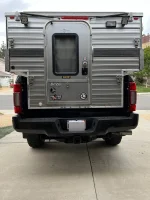
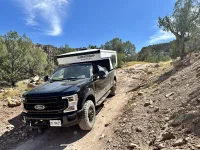
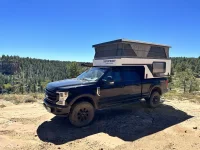
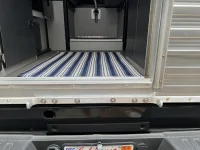
Here’s our new SuperTramp. Love it!
 

Attachments

  • IMG_1787.webp
    IMG_1787.webp
    590.9 KB · Views: 147
  • IMG_1749.webp
    IMG_1749.webp
    345.3 KB · Views: 139
Here’s our new SuperTramp. Love it!
Nice!!!!! We needed another Supertramp on here so Chris didn’t have to answer every question!!!

Did you get the Laguna table by chance???
 
My Supertramp Flagship LT order and thought process. Pasting the Standard features and options and then adding some thoughts on each. These are specific to the Flagship, but same thought process would apply to any brand. As always, this is my personal take for our specific use case, so something I value, you might find valueless and vice versa.

Standard Features

ELECTRICAL
  • Four Lifting linear actuators with manual override - Big plus. My previous campers were manual push up. Fine, I can handle it. But hitting my head on the end brackets was getting annoying. Plus, pop-top actuators mean the softtop can have two extra windows; one front, one rear. FYI, my previous brand camper, Overland Explorer Vehicles, offer pop-top actuators as an option on their flatbed camper (Hudson Bay), but not their slide in camper (Backcountry; formerly CAMP-X). Informationally, OEV charges $9,300 for the upgrade to add actuators vs. the manual pop-top on the Hudson Bay. Gulp! When I told Kelsey and Keith that option price point, they were taken aback.
  • Three 110W Flexible solar panels - Should work for our needs. I had one 180watt panel on first camper and one 200 watt panel on second. We found we used about 30 to 40 amps per day for fridge, lights, fans, cabin heater and water heater fans, water pump, phone charging, etc. Previously we didn't have heavy draw items like inverter, induction burner, laptops, etc. We'll get 1,500 inverter option in this camper and likely use more, but the 300watts should fit our needs. I do intend to use the inverter to power battery chargers for our boat's trolling motor batteries, electric dirtbikes and eMTBs. Will worry more about sizing battery bank to care for that rather than solar array.
  • Two Maxxair Deluxe 7500K roof vent fans - These have the remote control and are slicker units than my previous vent fans.
  • 12V, 100Ah BattleBorn Lithium battery - I'd prefer to build out a larger battery bank using SOK brand LiFePO4 batteries, but they won't fit where Supertramp stores the batteries. I'm exploring creating my own battery bank located under the campers front bench seat over the water tank.
  • 12V, 2.1A Dual USB ports
  • 12V, 5A Dash socket
  • Smoke Detector
  • NOCO 10amp AC/DC converter (battery charger) - The updated Supertramp website now says Victron charger. I have an email out to Kelsey to find out what Victron model and size this will be.
  • CO/Propane alarm
  • Victron 30 amp DC/DC battery charger - Reasonable for our use. On past campers, I had 30amp DC/DC chargers, but had an disconnect switch under the hood and almost always left the DC/DC charger powered off. Solar cared four our needs. Only time it didn't was a week long trip in the FWC where I only had 75amps available and we were in rain for 5 days straight. I turned on the DC/DC charger once that trip. That being said, I agree with @TRAMPER and others that some trucks can handle pushing a lot more and so a larger DC/DC option would be nice. Or, accommodating multiple 30amp DC/DC chargers. Perhaps, for redundancy, wiring from one alt/battery to one DC/DC charger, then independent wiring from second alt/battery to second 30amp DC/DC charger. Would just require two independent inbound paths from truck to camper to chargers.
  • Victron MPPT Solar charge controller - 75v/15amp model. Adequate for the three 110 watt flexible solar panels included from the factory. I can see how that is not enough for heavy energy users. Some campers also offer a side plug for portable solar array. Nice thing about portable solar array is one can place them in the sun while camper is in the shade. Plus, a portable array is easier to keep efficient by adjusting to point directly into the sun compared to panels laying flat on a camper roof. An owner might consider wiring an external plug into the existing solar controller wiring so when the camper is parked in the shade, or their are clouds, additional portable panels could be deployed to collect up to the 15amp max on the provided solar controller. Or, add a second 75v/15amp Victron (or even larger) for the external jack and portable solar array.
  • Victron SmartShunt - Have used one of these on previous build and it's nice option to use with phone, though Supertramp also provides the Victron battery monitor display so you don't need to use an app on a device to see State of Charge, etc. You can open the cabinet door and look on the battery monitor display.
PLUMBING
  • 24 Gallon fresh water tank - previous camper was 20 gallons. Some of the flatbed campers are 30+, which would be nice, but 24 gallons is workable. We find that on a 7 to 10 day trip, we'll stop and refill the water tank once with water. That includes each of us taking one shower on each tank full. We plan to add a water filter, be that carbon or that plus UV. The Acuva system is nice and @Chris-DTA has already broke ground there and installed that unit. One just has to be mindful that any plumbing add-ons are considered come winterization since the stock plumbing is all gravity drained and alteration may impact that.
  • 5 Gallon grey water tank for sink - This is a nice perk. Neither of our previous campers had a grey water tanks; Just a hose bib and attached hose that would drain the sink to the ground or bucket. Was never an issue, but there are times a greywater tank will be nice (washing hands/using sink for quick stops and not fully setting up camp)
  • Easy-access grey water drain hose
  • Easy-access winter drain valve - The Flagship is plumbed so they can be gravity-drained/winterized. Our previous campers required draining and then pumping RV antifreeze throughout. Gravity-drained will be a welcome method and means it's easier to drain, refill, drain again because I won't have to pump in, or clear out, RV antifreeze each time.
  • Folding marine faucet
  • 10’ Hose and Nozzle for interior/exterior shower - I like that there is no external shower attachment to worry about freezing in cold temps. The source of the 10' long shower hose/head is from inside the under-sink cabinet and it can be used inside (for optional inside shower) or run the shower hose out the back door or through a window for use outside. Con might be the temp adjustment is inside under the sink rather than outside like external units.
  • Truma Combi on-demand water heater and cabin heater - These are slick and a good use of space. I also like the separate Truma units on my OEV. The Truma Aquago water heater is actually nicer since it's an 'on demand' tankless water heater. Turn it on and in 30 seconds, you have hot water. In contracts, the Truma combi has to warm up first (5 - 10 minutes) so it functions like a water heater tank. The downside of the Aquago was half of it was external and so in below freezing, it either had to be left on 24hours a day or drained. Neither a big deal, but forgetting and freezing would be costly repair. Nice that the truma combi is all inside so as long as camper interior is above freezing, no worries. If something fails and you won't be able to heat when it's below freezing, then one can flip the switch and drain all water from the system and previously mentioned.
COMPONENTS
  • Queen-size bed - When we owned our FWC, we slowly pieced together a sleep surface that worked for us. First a thin memory foam topper on stock mattress, then a thicker memory foam topper on stock mattress, then replaced the mattress itself with soft foam which functions better with memory foam on top. Have been using this setup ever since. We intend to at least try the Supertramp mattress but otherwise will use out current piece-together mattress or, more likely, get a 5" or 6" foam/memory foam mattress which will be easier to handle and keep made compared to our home-made setup which is several pieces. We have had King Bed Pullouts on both previous campers, but after using them to sleep "North South" for a while, ended up never using them. Was convenient to allow either of us in or out during the night, but inconvenient to pull out into living space and having to remake the bed each time. In the end, we are fine with sleeping "East West" and avoid crawling over each other by getting up in the night, if needed, at about the same time. Our blanket/cover setup is a bit unique as we adapted our tent and hammock camping sleep setup. Rather than sharing covers and/or having sheet/blankets, we each use our individual down hammock topquilts. These have a footbox and open back plus draw string around the top to adjust the curve the top edge. Think sleeping bag with opening in the back, rather than side, and no zipper. They works fantastic. Quick to pull over like a blanket or pull down when you get too hot or want to get up. No reason to have down underneath you since there is no insulation value when compressed. Mattress is the insulation/warm for under us.
  • 65L Isotherm fridge - For us, a 65 to 80 liter fridge is the perfect size. Our previous two 65 liter fridges (one chest and one front-load) have worked for us even on our longer 10 day trips. When we considering the OEV Hudson Bay flatbed camper, one of our complaints was the huge 134liter fridge. Great for a full-timer, but complete waste of storage space for non-full-timer, not to mention electricity. After requesting a smaller options for the last two years, OEV has now added such an option.
  • Two 11 lb Propane tanks - All my campers have been two 11lb tanks rather than one 20lb. I like this. Lets us run one tank until empty, then swap to the second tank knowing we are 1/2 way through our supply) and we can refill first tank when we get back. Also allows you to pull one of the tanks and use around camp or pull empty tank and someone takes it to get refilled while the other bottle continues to run the camper.
  • Insulated pop-up fabric - Not as thick (and likely lower R value) than our OEV, but way more than FWC. Heat is cheap so should be fine.
  • Rhino liner base with automotive paint finish
  • Rear molle panel and L track now STANDARD
  • Rear door window now STANDARD
  • Portable cassette toilet - Like others, we'll be replacing the portable toilet with another solution. Considered the wrappon toilet, but also like the composting toilets. Those with cranks and vents are too big to fit under bench seat, but the waste is never in the camper long enough to truly compost anyway. We found various separating toilets that would fit. @Chris-DTA went with the 'Trelino Evo - M 'in his Supertramp Flagship LT and it fits great so we plan to do the same exact model and size (Thanks Christoph!).
  • Keyless Entry - This is a slick feature. It's an RVLock.com handle and lock which allows both keyed and keyless entry. The electronic portion can be turned on and off, as desired, with a switch on the inside of the camper.
  • Reico Titan convertible jacks
 
continued...

OPTIONAL UPGRADES
  • Dometic DC Air Conditioning - Lots to say about A/C decision. I sleep hot. Wife does not. She is terrified that I'll freeze her out if I have easy access like a built in A/C provides. Her concern is justified...and likely. We do gravitate camper use towards cooler areas and won't have the time to do long trips for another 10+ years (at which time we might wander to hotter climates and times of year). So for now, we plan to skip the A/C option. Even saying that bothers me. Ha. To console myself with reasons to not get A/C, we will already be a fair bit taller than our current rig (estimated 107" tall) and an A/C would add even more height. The A/C option also adds 75lb of weight up high. A/C also eliminates the front vent which we enjoy leaving cracked at night (even below freezing) for ventilation and I'll reach up and adjust throughout the night based on temp. Since these campers have a front pop-top window, I could just unzip that a bit for ventilation, but it's nice to have the open vent at the highest point to help warm damp air lift out the camper. We are looking into portable A/C options because they will only be brought along when needed (rarely) and will require setup time (rather than just flipping a switch on a built-in unit), so I'll only set up if cooling is really, really needed. Definitely a finicky setup, but so far, seems like the right choice for us. I've researched the CruiseNComfort units and some others and am hopeful that by the time we are wanting/needing it, these or newer solutions will exist and offer a quiet solution.
  • Up to 400 Ah of lithium batteries - These are Battleborn 100ah batteries. Two can fit in the electronics cabinet. Additional two batteries would get housed on the opposite side of the camper under the drivers side bench. Battleborn batteries are narrow while some other nice LiFePO4 batteries are a bit wider, like the SOK brand I have used. This mean that SOK and some other brands will not fit in the standard battery locations. I may eventually add a larger battery bank under the front bench seat, but for now will go with one or two Battleborn in standard location.
  • Truma Combi Eco Plus (adds ability to run off shore power) - I ordered the plus as I wanted the ability to run the cabin heater and water heater off electricity. I will likely never use this at a campground (but nice to know it's there if needed). More likely scenario is plugging this in when the camper is off the truck and in storage. The Truma can be set to two electric settings; 'Operating level 1' draws a 120v max of 850watts. 'Operating level 2' draws a 120v max of 1,700 watts. This allows the user to limit the draw if need be, when plugged into a 120v outlet that has other loads on it, etc. Heating a winterized camper in the off season may seem like overkill, but as it turns out, it costs pocket change to do so. Last winter, I'd winterized my OEV camper. But, as a cautionary step during a -40F snap, I put an electric oil-filled radiator heater inside and set it to 700watt and the "non-freeze" setting which runs about 38F - 40F. The poptop was down so small space to heat. I put a Kill-a-watt meter to see how many watts I used. After a month of -40F to -5F for lows in an uninsulated shop, I'd used about $5.00 worth of electricity. I left it on the rest of the winter, which cost even less per month once out of that cold snap. I think it was something like $11 of electricity for 3 months.
  • Lagun table - We went ahead an got this as we use table to eat, play games, etc. Will take some getting used to sitting 90degrees to one another rather than directly across from one another like in previous campers. We'll see how we like it. I'm checking on having a second Lagun bracket mounted on the driver's side bench near the shower basin so we have the option to use the table in a second location.
  • 1500W AC Inverter - We ordered this, but are campaigning for Supertramp to up the standard inverter size to 2,000watts. And make a 3,000watt an option. My argument is most household appliances, that can pull double duty in campers, pull up to 1,800watts. Induction cook tops, water boiler, microwave, etc. Why not swap it out after taking delivery? Besides having to then sell a not-new 1,500 watt inverter, moving from a 1,500watt to a 2,000 watt inverter take more than replacing the unit. One needs to also up the cable sizes, breakers, etc. to handle 2,000watt, so it would be really nice to get 2,000watt right from the factory.
  • 42” Artic Tern window with integrated screen and shade - We ordered this. I leaned towards NOT ordering as I was willing to give it up for better security, added cabin insulation and because we end up pinstriping the heck out of the sides of our campers. Not having the window would mean less acrylic polishing for me. Wife wanted window. We ordered window. Admittedly, I didn't take much convincing. I do really like the light and view it offers, even if your seated-view is looking at a downward angle rather than out at the horizon. In my opinion, the exterior of the camper looks better without it (sweet graphics on the camper side goes uninterrupted) but in the end, I'm glad we ordered it.
  • Inside shower (curtain, drain, 5 gallon grey water tank) - We ordered this. We've done a few too many outside showers when it was a bit too cool or breezy. Or, we've wanting a shower when we were in a campground (we avoid campgrounds, but end up in them when towing our fishing boat on a fishing trip). Worst case, the shower goes unused. Best case, it allows us to take showers with a bit more comfort and privacy.
  • 23 Zero 180-Degree awning - Did not order. Personally not a fan of awnings. They always seem to be in the wrong spot as the sun moves or late in the day when the sun drops lower. They don't shade the pop-top anyway which is where the sun heats up the camper interior. More weight up high is a con. They stick out to the side too far since the trails we frequent are branch-infested and tear at the sides of the camper. We keep a cheapo white tarp in a drawer and typically put L track, or some other means of attachment, on the top of the camper. When we are really concerned about sun/heat on camper, I'll attach tarp to sunny side and stake the lower edge to the ground which shades the entire sunny-side, including pop-top. The side benefit is it offers some privacy, and element protection, for parking MTBs or other gear.
  • Outside shower enclosure - Not ordered. For us, same reasons as no awning. Would get ripped up from branches. If we are dispersed camping, we don't need or use a shower enclosure. If we are where there is no privacy, we'll use the inside shower.
  • Backup camera - I skipped this one. I'll order a second aftermarket camera myself and plug into the backup camera port that is vacated when I remove the tailgate from the truck.
  • L tracks (various options for interior on side walls and celling, exterior one side walls) - We went silly with the L track. Always useful. Having it added to the Interior roof, kitchenette, passenger side exterior, etc. All locations seemed way over priced, as I've bought and mounted L track many times over the years, but I have a thing about cabin penetrations and so am letting Supertramp take the guesswork out of it. Overly cautious, but satisfying.
  • Molle panels - We are only getting standard, small rear molle. As mentioned, because of narrow trails, we'll attach nothing to the side while in motion. The L track on the exterior passenger side will mainly be used for odds and ends while set up in camp. No need for the molle on the sides for our uses.
  • 3M wrap - Neat to have this option. Supertramp says wraps are more fragile to pinstriping than paint. Pass for us.
  • Bunk bed - No need, but really like that they offer this.
  • Paint Color Options: Battleship Grey, Forest Green, or Sand Dune Tan - We ordered white camper but are reserving the right to add the Battleship Grey paint. My Superduty will be the new Glacier Grey Tricoat and I've not held a paint chip in my hand as of yet. Did the following images on the following thread and I like what I see, but I'll have to be mindful of the color temperature of the greys to avoid clashing.

Glacier grey info floating around in this thread: https://www.fordtremor.com/threads/new-glacier-gray-metallic-paint.15685/

Image credit goes to @cib2007
Glacier grey indoors.jpeg


Glacier grey outdoors.jpeg


Glacier grey on Azure grey hood.jpeg
 
Last edited:
@TRAMPER already gave it a plug, but there is a thread on expedition portal where I go into a lot more detail on the Supertramp Flagship LT and some good conversation has started (many of those users are on the Tremor forum as well). But just mentioning it again since this thread is for all pickup campers and not just the Supertramp brand.

 
As far as power/ Solar that’s a tough one. ST uses Victron components which is awesome, but the solar charger they use is a 75/15 charger which maxes at 15A of charge and the DC/DC charger is the 30A version so max of 30A.. Your (and mine) battery bank is 400Ah that means if you pull it down half way to 200A you’re going to need 13 hours of sun to fill it back up, and maybe 7 driving…. I had spoken with Kelsey about a larger or second DC/DC changer installed that would cut that in half. They said it was a good idea but not something they could implement right now.

The only charging upgrade they did do was to the shore power plug. That’s 45A on the upgraded battery banks. So…. My plan for now is to carry my Honda 2200i generator that runs purely on propane 45A should be able to keep up with your power needs.

I realize running a generator isn’t a solution for you, as a long term/ full timer but your tiny amount of solar will never be able to keep up with the power it takes to run your work electronics. Perhaps you could carry a large goal zero and set out big portable panels to collect more power? It’s not a fault of ST but with only so much roof space you can only have so much power.

Idk what the solution is, either collect more power or use less of it, that’s all you can do. If you plan on moving daily the additional DC/DC charger will be your best bet but if you want to stay in one place for days at a time a generator may be your only option.

Either way I’m super interested in the direction you end up going with things. You’re pioneering this for all of us.
Been debating with myself if a generator is practical for me at all. Would not know where to put it when driving. The rear bench is reserved for the dog. I do not have external storage for it. Not sure if I can safely store it inside the camper. It would need to be in some sort of bag to protect the camper from smell, dirt, and oil/gasoline.

Foldable, external solar panels with an upgraded DC to DC charger may be the best option. Will discuss this with my off-road shop to see what they suggest.
 
Been debating with myself if a generator is practical for me at all. Would not know where to put it when driving. The rear bench is reserved for the dog. I do not have external storage for it. Not sure if I can safely store it inside the camper. It would need to be in some sort of bag to protect the camper from smell, dirt, and oil/gasoline.

Foldable, external solar panels with an upgraded DC to DC charger may be the best option. Will discuss this with my off-road shop to see what they suggest.
Agreed increased solar and DC/DC would be best.

I have a Honda EU2200i that I install one of these onto it.
No need to worry about gas ever!!! Cleaner and no gas spills. You can 100% store it in the camper if you need too. Just a thought. Other methods are obviously preferred but if you NEED power there’s not going to be anything more reliable than an actual generator.
 
Last edited:
My Supertramp Flagship LT order and thought process. Pasting the Standard features and options and then adding some thoughts on each. These are specific to the Flagship, but same thought process would apply to any brand. As always, this is my personal take for our specific use case, so something I value, you might find valueless and vice versa.

Standard Features

ELECTRICAL
  • Four Lifting linear actuators with manual override - Big plus. My previous campers were manual push up. Fine, I can handle it. But hitting my head on the end brackets was getting annoying. Plus, pop-top actuators mean the softtop can have two extra windows; one front, one rear. FYI, my previous brand camper, Overland Explorer Vehicles, offer pop-top actuators as an option on their flatbed camper (Hudson Bay), but not their slide in camper (Backcountry; formerly CAMP-X). Informationally, OEV charges $9,300 for the upgrade to add actuators vs. the manual pop-top on the Hudson Bay. Gulp! When I told Kelsey and Keith that option price point, they were taken aback.
  • Three 110W Flexible solar panels - Should work for our needs. I had one 180watt panel on first camper and one 200 watt panel on second. We found we used about 30 to 40 amps per day for fridge, lights, fans, cabin heater and water heater fans, water pump, phone charging, etc. Previously we didn't have heavy draw items like inverter, induction burner, laptops, etc. We'll get 1,500 inverter option in this camper and likely use more, but the 300watts should fit our needs. I do intend to use the inverter to power battery chargers for our boat's trolling motor batteries, electric dirtbikes and eMTBs. Will worry more about sizing battery bank to care for that rather than solar array.
  • Two Maxxair Deluxe 7500K roof vent fans - These have the remote control and are slicker units than my previous vent fans.
  • 12V, 100Ah BattleBorn Lithium battery - I'd prefer to build out a larger battery bank using SOK brand LiFePO4 batteries, but they won't fit where Supertramp stores the batteries. I'm exploring creating my own battery bank located under the campers front bench seat over the water tank.
  • 12V, 2.1A Dual USB ports
  • 12V, 5A Dash socket
  • Smoke Detector
  • NOCO 10amp AC/DC converter (battery charger) - The updated Supertramp website now says Victron charger. I have an email out to Kelsey to find out what Victron model and size this will be.
  • CO/Propane alarm
  • Victron 30 amp DC/DC battery charger - Reasonable for our use. On past campers, I had 30amp DC/DC chargers, but had an disconnect switch under the hood and almost always left the DC/DC charger powered off. Solar cared four our needs. Only time it didn't was a week long trip in the FWC where I only had 75amps available and we were in rain for 5 days straight. I turned on the DC/DC charger once that trip. That being said, I agree with @TRAMPER and others that some trucks can handle pushing a lot more and so a larger DC/DC option would be nice. Or, accommodating multiple 30amp DC/DC chargers. Perhaps, for redundancy, wiring from one alt/battery to one DC/DC charger, then independent wiring from second alt/battery to second 30amp DC/DC charger. Would just require two independent inbound paths from truck to camper to chargers.
  • Victron MPPT Solar charge controller - 75v/15amp model. Adequate for the three 110 watt flexible solar panels included from the factory. I can see how that is not enough for heavy energy users. Some campers also offer a side plug for portable solar array. Nice thing about portable solar array is one can place them in the sun while camper is in the shade. Plus, a portable array is easier to keep efficient by adjusting to point directly into the sun compared to panels laying flat on a camper roof. An owner might consider wiring an external plug into the existing solar controller wiring so when the camper is parked in the shade, or their are clouds, additional portable panels could be deployed to collect up to the 15amp max on the provided solar controller. Or, add a second 75v/15amp Victron (or even larger) for the external jack and portable solar array.
  • Victron SmartShunt - Have used one of these on previous build and it's nice option to use with phone, though Supertramp also provides the Victron battery monitor display so you don't need to use an app on a device to see State of Charge, etc. You can open the cabinet door and look on the battery monitor display.
PLUMBING
  • 24 Gallon fresh water tank - previous camper was 20 gallons. Some of the flatbed campers are 30+, which would be nice, but 24 gallons is workable. We find that on a 7 to 10 day trip, we'll stop and refill the water tank once with water. That includes each of us taking one shower on each tank full. We plan to add a water filter, be that carbon or that plus UV. The Acuva system is nice and @Chris-DTA has already broke ground there and installed that unit. One just has to be mindful that any plumbing add-ons are considered come winterization since the stock plumbing is all gravity drained and alteration may impact that.
  • 5 Gallon grey water tank for sink - This is a nice perk. Neither of our previous campers had a grey water tanks; Just a hose bib and attached hose that would drain the sink to the ground or bucket. Was never an issue, but there are times a greywater tank will be nice (washing hands/using sink for quick stops and not fully setting up camp)
  • Easy-access grey water drain hose
  • Easy-access winter drain valve - The Flagship is plumbed so they can be gravity-drained/winterized. Our previous campers required draining and then pumping RV antifreeze throughout. Gravity-drained will be a welcome method and means it's easier to drain, refill, drain again because I won't have to pump in, or clear out, RV antifreeze each time.
  • Folding marine faucet
  • 10’ Hose and Nozzle for interior/exterior shower - I like that there is no external shower attachment to worry about freezing in cold temps. The source of the 10' long shower hose/head is from inside the under-sink cabinet and it can be used inside (for optional inside shower) or run the shower hose out the back door or through a window for use outside. Con might be the temp adjustment is inside under the sink rather than outside like external units.
  • Truma Combi on-demand water heater and cabin heater - These are slick and a good use of space. I also like the separate Truma units on my OEV. The Truma Aquago water heater is actually nicer since it's an 'on demand' tankless water heater. Turn it on and in 30 seconds, you have hot water. In contracts, the Truma combi has to warm up first (5 - 10 minutes) so it functions like a water heater tank. The downside of the Aquago was half of it was external and so in below freezing, it either had to be left on 24hours a day or drained. Neither a big deal, but forgetting and freezing would be costly repair. Nice that the truma combi is all inside so as long as camper interior is above freezing, no worries. If something fails and you won't be able to heat when it's below freezing, then one can flip the switch and drain all water from the system and previously mentioned.
COMPONENTS
  • Queen-size bed - When we owned our FWC, we slowly pieced together a sleep surface that worked for us. First a thin memory foam topper on stock mattress, then a thicker memory foam topper on stock mattress, then replaced the mattress itself with soft foam which functions better with memory foam on top. Have been using this setup ever since. We intend to at least try the Supertramp mattress but otherwise will use out current piece-together mattress or, more likely, get a 5" or 6" foam/memory foam mattress which will be easier to handle and keep made compared to our home-made setup which is several pieces. We have had King Bed Pullouts on both previous campers, but after using them to sleep "North South" for a while, ended up never using them. Was convenient to allow either of us in or out during the night, but inconvenient to pull out into living space and having to remake the bed each time. In the end, we are fine with sleeping "East West" and avoid crawling over each other by getting up in the night, if needed, at about the same time. Our blanket/cover setup is a bit unique as we adapted our tent and hammock camping sleep setup. Rather than sharing covers and/or having sheet/blankets, we each use our individual down hammock topquilts. These have a footbox and open back plus draw string around the top to adjust the curve the top edge. Think sleeping bag with opening in the back, rather than side, and no zipper. They works fantastic. Quick to pull over like a blanket or pull down when you get too hot or want to get up. No reason to have down underneath you since there is no insulation value when compressed. Mattress is the insulation/warm for under us.
  • 65L Isotherm fridge - For us, a 65 to 80 liter fridge is the perfect size. Our previous two 65 liter fridges (one chest and one front-load) have worked for us even on our longer 10 day trips. When we considering the OEV Hudson Bay flatbed camper, one of our complaints was the huge 134liter fridge. Great for a full-timer, but complete waste of storage space for non-full-timer, not to mention electricity. After requesting a smaller options for the last two years, OEV has now added such an option.
  • Two 11 lb Propane tanks - All my campers have been two 11lb tanks rather than one 20lb. I like this. Lets us run one tank until empty, then swap to the second tank knowing we are 1/2 way through our supply) and we can refill first tank when we get back. Also allows you to pull one of the tanks and use around camp or pull empty tank and someone takes it to get refilled while the other bottle continues to run the camper.
  • Insulated pop-up fabric - Not as thick (and likely lower R value) than our OEV, but way more than FWC. Heat is cheap so should be fine.
  • Rhino liner base with automotive paint finish
  • Rear molle panel and L track now STANDARD
  • Rear door window now STANDARD
  • Portable cassette toilet - Like others, we'll be replacing the portable toilet with another solution. Considered the wrappon toilet, but also like the composting toilets. Those with cranks and vents are too big to fit under bench seat, but the waste is never in the camper long enough to truly compost anyway. We found various separating toilets that would fit. @Chris-DTA went with the 'Trelino Evo - M 'in his Supertramp Flagship LT and it fits great so we plan to do the same exact model and size (Thanks Christoph!).
  • Keyless Entry - This is a slick feature. It's an RVLock.com handle and lock which allows both keyed and keyless entry. The electronic portion can be turned on and off, as desired, with a switch on the inside of the camper.
  • Reico Titan convertible jacks
Great take and summery of features for the ST camper! I have a wrappon toilet from my previous build and am really hoping it fits/ works out in the ST. If not I may explore the option you have listed.

I couldn’t agree more about a larger inverter.. if you’re going to install house type (120V) power it should be of similar power. In a kitchen the highest powered 120V outlet is 20A which at 120V is 2400W standard practice in the electrical world is to never pull more than 80% power continuous so… 1920 W so basically you need an inverter that can supply 2000W continuously to power any standard household electronics. And this is obviously if you’re only powering ONE item at a time. Not running an induction cooktop with starlink plugged in too…
 
I've requested a 120v passthrough from Supertramp. If they don't want to do the mod during the build, I'll install myself. The concept will work in any camper, trailer, pickup or RV and is not my idea. Others have done this since inverters became common. The idea of having a dead 120v passthrough is so one can pass current into the camper from the outside or, pass current out from the inside (inverter).

Many have added an exterior female outlet and wired their inverter to it so they have 120v inverter power available outside. That will be my primary use case as well (use induction cooktop outside, plug in charger for boat batteries, eMTB or electric dirtbikes or any old appliance one might use around camp.

Others have added an external male plug and interior female outlet because they want to have a shore powered available inside the camper on a circuit separate from the shore power circuit powering the battery charger. If they want to push current from the inside inverter outlet to outside, they use a male/male adapter going from the inverter outlet to the passthrough outlet. !!Mandatory warning!! at this point; a 120 male/male adapter is affectionately known as a "suicide cord" for a reason. If attached in the wrong sequence, it will power up the exposed male end of the adapter with 120v. Things could get exciting from there. If using a male/male adapter cord, always plug into the dead side of the circuit first, then into the live side. In this case, one can be extra careful and not even turn on the inverter until after both ends are plugged in.

Since our primary use case will be sending current outbound from the camper, my first instinct was to wire the 120v passthrough with male plug inside and female outlet outside. With this layout, I'd only need a short extension cord to run current from the inverter outlet to the passthrough's interior male plug and no adapter needed outside. However, when I wanted to pass power inward, I'd need a male/male adapter outside and female/female inside. That means I'd need to carry three things: two adapters and one short extension cord. (That passthrough layout is scenarios 3a and 3b in the below chart)

I knew there was a way I'd only need one adapter to cover all scenarios so I worked up a quick table to visualize (below) and I now plan to make the passthrough with female outlets both inside and outside (rows 1a and 1b in the table). Female outlets both inside and out means I only need to carry one adapter; a male/male. If I run power outward, from inverter outlet, that male/male adapter goes on the inside (from inverter outlet to the female passthrough outlet). If I run power inward, that adapter goes on the outside. One male/male adapter and I'm covered for all scenarios and can run current inward or outward.

In my spreadsheet, the matching plug layouts are color coded, but the forum table doesn't allow for color coding. So I'll use numeric designators. Matching "outer plug/inner plug" layouts are designated by numeric row number. Meaning 1a goes with 1b because both of those rows are for Outer Plug/Inner Plug wired "female/female".
3a goes with 3b because both of those rows are for Outer Plug / Inner Plug wired as "female/male" etc.
You'll need all adapters and/or cords for both 'a' and 'b' rows to support any given plug layout.
Long way of saying, the female/female is the most useful because only one adapter (a male/male) is needed to cover all scenarios.


Use case - outside power source going in​
Needed exterior adapter​
Outer plug / Inner plug​
needed interior adapter​
1a​
male/male adapter​
female / female​
none​
2a​
none​
male / female​
none​
3a​
male/male adapter​
female / male​
female/female adapter​
4a​
none​
male / male​
female/female adapter​
Use case - inside power source going out​
Needed exterior adapter​
Outer plug / Inner plug​
needed interior adapter​
1b​
none​
female / female​
male/male adapter​
2b​
female/female adapter​
male / female​
male/male adapter​
3b​
none​
female / male​
short extension cord​
4b​
female/female adapter​
male / male​
short extension cord​


The "potentially very dangerous" male/male adapter. Rarely available retail so typically homemade. Often used to backfeed a circuit from a generator into a household circuit, which is safe if done correctly, however the main panel breaker MUST be turned off to prevent backfeeding current all the way out of your house to the transformer/power lines which would create an unsafe situation for linesman working on the lines.

male male plug.JPG
 
Last edited:
Been debating with myself if a generator is practical for me at all. Would not know where to put it when driving. The rear bench is reserved for the dog. I do not have external storage for it. Not sure if I can safely store it inside the camper. It would need to be in some sort of bag to protect the camper from smell, dirt, and oil/gasoline.

Foldable, external solar panels with an upgraded DC to DC charger may be the best option. Will discuss this with my off-road shop to see what they suggest.

@Chris-DTA Best first step might be doing an energy consumption audit. Until you know how much power you consume on an average day, it will be tough to size. Inbound solar or DC/DC charging might make it hard to audit when you are out on a camping trip, so perhaps do the audit at home. The most straight forward way would be to charge to 100%, turn on all the devices and appliances you'd run while camping and let them go for 24hours, but also cover up solar panels and don't drive truck so there is no recharging going on. Might not be exact, since outdoor temp makes things like heater, vents and fridge run more or less, but would get you ballpark since it sounds like your biggest draw is work equipment (computer and starlink, etc.). During the 24audit, leave those work devices on for about the same amount of time you would while camping. Taking a sample like that is often easier, and more accurate, that trying to add up the draw of each appliance and estimating how much it will draw over a 24hour period since draw isn't consistent (like fridge). Our 24 draw has typically been around 30amp, but that is core camper draw; no computers or broadband draw.

Once you have a ballpark average for your 24hr draw, you'll be able to compare against the potential inbound from solar (which will not only change from day to day due to clouds, but season to season because of shorter days and solar path being angled lower in the winter.

I figure there are two ways/levels if you add a portable solar array (I'm cheating by copying some of this from my statement earlier, but isolating it here):

Portable array: Nice thing about a portable solar array is one can place them in the sun while camper is in the shade. Plus, a portable array is easier to keep efficient by adjusting to point directly into the sun, when the sun angle is low, compared to panels laying flat on a camper roof. That alone make an incredibly big difference. An owner might consider wiring an external plug into the existing solar controller wiring so when the camper is parked in the shade, or there are clouds, or the sun is low angle during winter, the additional portable panels could be deployed for a better chance of collecting, along with the rooftop array, up to the 15amp max on the provided solar controller. If the combination of rooftop and portable panels will likely exceed the 15amp capacity of the built in Victron, or one wants redundancy, then best to go all in and add a second, and independent, solar controller (be that a second 75v/15amp Victron or a larger or different brand). Then have the external jack and portable solar array flow only through that second solar controller.

Edit: Looks like the app for the victron smart shunt has a handy feature that will tell you amps consumed since last charged to 100%. That could be a handy way to perform an energy comsumption audit while out in the field.

 
Last edited:
Back
Top Bottom