7.3 to lose 40 LB FT of TQ and 10 HP for 2027

I think Ford shot themselves in the foot with that decision! The decision to not get out in front. I have the same delima, after my order was built and on the train to AZ I learned that the 7.3 was derated...
As far as the updated 27' 7.3L rating, the secret was out before I placed my June order in Fords May release of the 2027 Buyer's Guide. In my book, change is not always a good thing, even assuming all the 27' info is true, if 40 LB-FT really ends the positive aspect of being a new, 1st time Ford owner in my 2027 daily driver F350 Lariat Tremor, then lesson learned, next time I'll choose the 500HP/1200TQ Power Stroke.
 

Attachments

  • 2027 Ford Buyers guide.webp
    2027 Ford Buyers guide.webp
    52.3 KB · Views: 19
  • 2027 Buyers Guide.webp
    2027 Buyers Guide.webp
    5 KB · Views: 12
Last edited:
...if 40 LB-FT really ends the positive aspect of being a new, 1st time Ford owner in my 2027 daily driver F350 Lariat Tremor, then lesson learned, next time I'll choose the 500HP/1200TQ Power Stroke.
Meanwhile, someone at Ford corporate after reading this...

Jack-Nicholson-Nodding-Yes.gif
 
Man, that's a tough call on the 7.3 Godzilla in a 2027 Super Duty...

Kinda want both: two trucks; both Tremors, one gas, one H.O. Powerstroke.

There really is something nice about driving the lighter front axle weight of a Godzilla Super Duty, at least before having a some torque shaved off.

The new de-rated output of the Godzilla will STILL BE a nice truck to drive, though. That I can almost guar-AHN-tee.
 
Im waiting for GM to announce 500 LB FT of torque out of the 6.6 Gas for 2027 and a Duramax discount so Ford eats shit for an entire model year on both fronts lmao. It would be hilarious, and they have the opportunity to grab Ford by the balls with the current price structure/lack of incentives.
 
Long time lurker and finally made an account to post on this topic.
Was planning on buying a '27 7.3 and am hoping it's only a change in rating test method and fuel octane used.
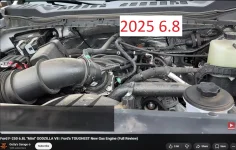
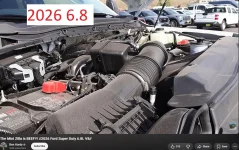
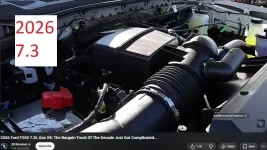
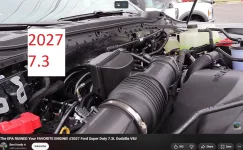
Here are a few screen grabs from youtube folks who have posted many videos over the years and it seems there is a physical change to the air intake piping...at a minimum.
The 2027 7.3 air intake looks similar to the previous years 6.8 setup (not identical).
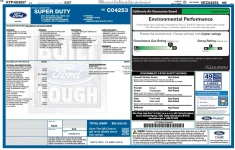
I have attached images from the videos of 2027 7.3, 2026 7.3, 2026 6.8, and 2025 6.8.
I left the video name and creator channel in the bottom of the snip for those who would like to review.
I also attached the window sticker of the '27 that was shown in that video since the vin # was visible on the door jamb (1FT7W2BN1VEC04253).
Thanks to Getty's Garage, JB Reviews, and Ben Hardy youtube channels for documenting.
Is it paperwork / running change or did we get the snippy-snippy? Thoughts?
 

Attachments

  • Window Sticker 27.webp
    Window Sticker 27.webp
    171 KB · Views: 21
  • 2025 6.8.webp
    2025 6.8.webp
    149.6 KB · Views: 21
  • 2026 6.8.webp
    2026 6.8.webp
    188 KB · Views: 22
  • 2026 7.3.webp
    2026 7.3.webp
    109 KB · Views: 23
  • 2027 7.3.webp
    2027 7.3.webp
    152.8 KB · Views: 23
Last edited:
Long time lurker and finally made an account to post on this topic.
Was planning on buying a '27 7.3 and am hoping it's only a change in rating test method and fuel octane used.
Here are a few screen grabs from youtube folks who have posted many videos over the years and it seems there is a physical change to the air intake piping...at a minimum.
The 2027 7.3 air intake looks similar to the previous years 6.8 setup (not identical).
I have attached images from the videos of 2027 7.3, 2026 7.3, 2026 6.8, and 2025 6.8.
I left the video name and creator channel in the bottom of the snip for those who would like to review.
I also attached the window sticker of the '27 that was shown in that video since the vin # was visible on the door jamb (1FT7W2BN1VEC04253).
Thanks to Getty's Garage, JB Reviews, and Ben Hardy youtube channels for documenting.
Is it paperwork / running change or did we get the snipp- snippy? Thoughts?
Welcome to the forum and great write-up. I got snipped a long time ago! 🤪
 
Is it paperwork / running change or did we get the snippy-snippy? Thoughts?


That you have a keen eye for detail is refreshing, sir. We like the cut o' yer jib!

What if... (since I am when speaking technically a "split the difference" kinda modifications guy) What if Ford has split the difference between the Godzilla and the Mini-zilla? in any effort to appease the 'tards at EPA?

Too, if that's the case and I were wanting my first Godzilla, and one being *brand spankin' new* I'd have to choose from the '27 engine config. Since the Godzilla in it's architecture alone!, it's great bones, it's stout character... I'd be happy to.

/just the way it is

Welcome aboard! the FT.c

She's a great, grand ship! of a forum, she be.
 
Long time lurker and finally made an account to post on this topic.
Was planning on buying a '27 7.3 and am hoping it's only a change in rating test method and fuel octane used.
Here are a few screen grabs from youtube folks who have posted many videos over the years and it seems there is a physical change to the air intake piping...at a minimum.
The 2027 7.3 air intake looks similar to the previous years 6.8 setup (not identical).
I have attached images from the videos of 2027 7.3, 2026 7.3, 2026 6.8, and 2025 6.8.
I left the video name and creator channel in the bottom of the snip for those who would like to review.
I also attached the window sticker of the '27 that was shown in that video since the vin # was visible on the door jamb (1FT7W2BN1VEC04253).
Thanks to Getty's Garage, JB Reviews, and Ben Hardy youtube channels for documenting.
Is it paperwork / running change or did we get the snippy-snippy? Thoughts?
Welcome!
I’m assuming the difference you are pointing out is the resonator on the intake duct?
 
...What if... (since I am when speaking technically a "split the difference" kinda modifications guy) What if Ford has split the difference between the Godzilla and the Mini-zilla? in any effort to appease the 'tards at EPA?
I'll bet the new output levels are no coincidence. Now both the 10R100 and 10R140 magically mate to a single 7.3L gasser explaining why they were able to eliminate the the 6.8L.

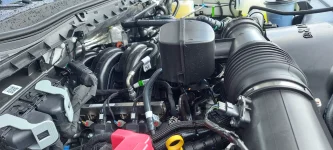
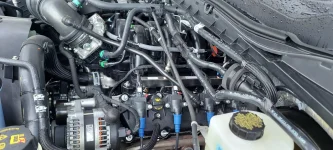
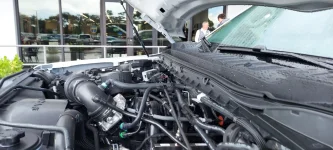
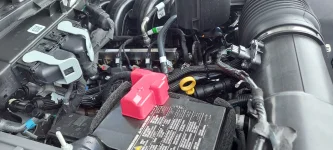
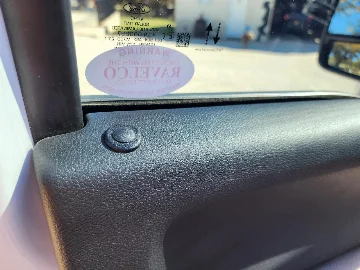
My 2027 F350 7.3L arrived at the dealer today. I test drove and can report it's quite snappy off the line with the 4.3 rear end. I also took a few pics to see what changes might be obvious to those 2026 owners.
 

Attachments

  • 20260909_151940.webp
    20260909_151940.webp
    202.2 KB · Views: 23
  • 1000002842.webp
    1000002842.webp
    215.2 KB · Views: 27
  • 1000002843.webp
    1000002843.webp
    151.7 KB · Views: 23
  • 1000002844.webp
    1000002844.webp
    218 KB · Views: 22
Last edited:
I'll bet the new output levels are no coincidence. Now both the 10R100 and 10R140 magically mate to a single 7.3L gasser explaining why they were able to eliminate the the 6.8L.

My 2027 F350 7.3L arrived at the dealer today. I test drove and can report it's quite snappy off the line with the 4.3 rear end. I also took a few pics to see what changes might be obvious to those 2026 owners.
I have heard that they are using a smaller exhaust manifold on the 27s. I was wondering if anyone has seen this to confirm one way or another.
 
I have heard that they are using a smaller exhaust manifold on the 27s. I was wondering if anyone has seen this to confirm one way or another.


Welcome to FT.c, Roscoe!

I had to ask Go0gle AI:

"2027 Super Duty Godzilla 7.3L gasoline engine changes from prior years. Every detail? Camshafts timing, exhaust manifold dimensions, intake manifold and cold air piping... everything. Thank you."


It's reply:

"For the 2027 model year, Ford has made the 7.3L Godzilla V8 the standard gasoline engine across the Super Duty lineup, but there are no major physical or internal architectural redesigns to components like the camshaft timing, intake manifold, or cold air piping. [1, 2, 3]

Instead, the most discussed change is a drop in its officially advertised ratings to 420 horsepower and 445 lb-ft of torque (down from 430 hp and 485 lb-ft). This reduction is not due to a physical detuning or engine change, but rather a shift to the stricter SAE J1349 testing standard, which mandates factoring in heavy-duty cooling fan mechanical losses during dyno testing.[4, 5]

The exact breakdown of what has—and has not—changed for the 2027 Godzilla 7.3L engine includes:

Internal Architecture & Mechanical Specs (Unchanged)​


  • Camshaft & Valve Timing: The engine retains its standard in-block pushrod design with variable cam timing (VCT). No changes have been made to the factory camshaft profile or timing mechanics. [1, 3, 6, 7]
  • Intake Manifold & Cold Air Piping: The composite intake manifold and factory cold air induction piping remain identical to the previous model years. The commercial-focused packaging and throttle body angles have not been modified by Ford. [1, 7, 8]
  • Fuel Delivery: Despite rumors of an upgrade, Ford has not added direct injection or a dual-injection system to the production truck engine. It continues to rely on its highly reliable sequential multi-port fuel injection. [7, 9]
  • Core Rotating Assembly: The physical engine block remains cast iron, paired with aluminum cylinder heads, a forged steel crankshaft, and cross-bolted main bearing caps. [1, 7]

Minor Production Revisions​

While the core powertrain is carried over for maximum fleet reliability, a consensus among users tracking production parts on Facebook Groups notes that Ford implemented minor updates to secondary components. These production updates include: [9]
  • Slightly revised exhaust manifold casting adjustments for better heat clearance.
  • Updated engine wiring harnesses.
  • Minor revisions to the front engine cover.
  • Upgraded spark plug wires to mitigate the premature heat-fail issues known in earlier 2020–2024 revisions. [9]

Lineup Simplification​


The biggest change under the hood of the 2027 Super Duty is actually what is missing from the ordering guide. Ford completely discontinued the entry-level 6.8L "Mini-Godzilla" V8 gas engine and the standard-output 6.7L Power Stroke diesel. By making the 7.3L Godzilla the mandatory base engine, Ford has streamlined manufacturing complexity while giving all base-model trucks premium gas performance. [10, 11, 12]
Are you asking because you are planning an aftermarket build or engine swap, or are you looking to order a new 2027 truck and want to ensure part compatibility with older model years? Let me know so I can get you the specific aftermarket clearance or compatibility data.

[1] https://www.youtube.com
[2] https://www.motor1.com
[3] https://www.youtube.com
[4] https://www.facebook.com
[5] https://pickuptrucktalk.com
[6] https://www.fivestarfordsm.com
[7] https://www.youtube.com
[8] https://www.instagram.com
[9] https://www.facebook.com
[10] https://www.reddit.com
[11] https://www.youtube.com
[12] https://www.facebook.com

/end quote


*So, if that's the case, then, all we Godzilla Tremor drivers are running around w/ the same net output.

/whaddayathink o' that!
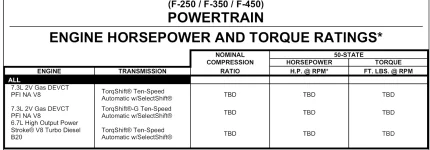
Thank you very much. Yes I have been looking at a 2027 7.3 I just wanted to know what the difference as to why it was rated less.
 
*So, if that's the case, then, all we Godzilla Tremor drivers are running around w/ the same net output.

/whaddayathink o' that!

This would/should mean that the 6.7L will be "derated" as well, which doesn't appear to be the case? Either way, it would be great if Ford would finally fix the stupid blower fan problem now!
 
Re: this new SAE testing standard...


Awhile back we had been tossing around the idea of electric radiator cooling fans for our Super Duty engines... but the BTU requirements are far greater than they are in a half-ton affair... to the tune of it does indeed take 40HP to turn that radiator fan! when needed to do so. This is why fan clutch operation is so critical.

That, and an electric fans setup CFM requirements to pull radiator air in our larger trucks would consume a sizeable quantity of amperage, requiring considerable copper stranded wire diameters and tremendous alternator outputs. Just makes more sense to have the engine crankshaft deliver the torque energy necessary to drive that big rad fan.

/and so it goes


If the above is indeed true, then the end result is the 7.3 Godzilla retains it's normal, Super Duty-tuned *net* output for all of us, from model years 2020 through the new 2027s.

I'll be damned. And all the pearl-clutching, earlier!
I hope they're screwing around and pull a 2011 Powerstroke style trick.

It's not the peak numbers that have me raising an eyebrow.

It's the rpm at which the peak occurs. Points to a cam change.

I would say more duration, or just a different gap strategy... the former points to maybe.... just maybe.

The latter.... meh.

Now fur the real question.

Can any of you guys pull up the part number for a 2027 camshaft?
 
Last edited:
it would be fun to see a previous model and a 2027 bone stock on the dyno next to each other.

I hate to agree with my fellow Coloradan but I do have some questions since it doesn’t appear to be just additional drag (the old net versus gross) and the PSD is unaffected.

Does it make it or break it? No. I would buy the 7.3 for a DD or to be modded for desert with Carli toys. 6.7 would be my preference for towing heavy/regular. For work it just means we are getting 7.3s instead of 6.8s so just annoyed with the cost. We still get 6.7s for heavy applications.

But to go from something that was claimed to be “under rated” to lower ratings doesn’t feel great especially when no manufacturer ever wants to lower power ratings, especially below a direct competitor. Remember we talk about gross/net from the muscle car era but emissions, compression and breathing played a big part in going from 375 hp small blocks to 150 hp, far more than the alternator and water pump.

On my GMT-800 with the 8.1/496 it was derated from 345hp/455 to 330/440 primarily due to the 4L85E supposedly not standing up compared to the Allison 1000 in theory. That being said, a simple catback could get over 17 rwhp so sound was actually likely the main driver. The engine was bullet proof and I beat on the transmission for 200k miles with no issues. In heavy applications it had dual 2.5” tailpipes and dual mufflers. The light application had two cats choked into one muffler with a single 2.5” tailpipe (after a Y). The stock Mercury Magnum boat engine was 425 hp and there was plenty of room above that.
Nailed it.
 
Back
Top Bottom