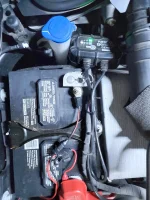
Noco Battery charger/maintainer

Awesome!!! I really appreciate the input and info. Of course with everything on my truck this can’t just be straight forward and easy haha. I have a question though. For my set up this is a set up that does not stay permanent in the truck. The fridge and other accessories only get put in when I go on camping trips which is every once in a while. I also have a EcoFlow delta max that I bring with me and keep those devices plugged into the EcoFlow and then the EcoFlow is plugged into the truck. So with that being said is the issue of my truck batteries not really reaching a full charge still a concern? Or would the on board chargers work for short camping trips like that where the camp site has power available and I plug my truck in over night or for a few days while at the site? Sorry I’m not very knowledgeable yet when it comes to power systems. I’m still trying to learn.
These are well thought out questions! The EcoFlow is a great way to run things for short periods, (short is relative to load requirements and time away from an AC source) and as long as you have AC at the campsite, easy to keep charged up for occasional jaunts in the wilderness. (Solar backup would be good here as well, though expensive, and need much more time for charging.) Having the truck as a backup charging network for the EcoFlow will still have the same battery discharge conditions. In other words, if you run the EcoFlow down to where it relies on the truck batteries to recharge or run, it would still drain the battery. Charging them back up with the Noco (or any other charger) must equal the demand.

Power demand is straight forward, you need more power to create less power. Essentially, no matter what means you use to transfer power, batteries, AC, BU generator, etc., it will require more power to maintain each device in the string. (Solar is the exception, this just needs time as the medium)

If it was me setting this up, I would use a battery tender type device (AC or Solar) on the truck batteries to maintain the charge, but I would be using the EcoFlow as my primary power source. I would have it plugged into AC (if available) or solar if the power demand is low enough to keep my accessories running and have enough capacity to maintain the charge on the EcoFlow. The truck is a good backup if none of the other devices are not available, but I would occasionally start the truck and recharge everything.

Current demand can be calculated that whatever your accessory needs are, you need that much energy plus the energy to run the generation function. Every time there is a "transfer" of energy, it requires that much more energy for the transfer function to work, as well as the load. (AC to DC, DC to AC, or DC to DC.)

This is an excellent thread and good timing for me to obtain more information regarding this subject. I'm not knowledgeable but in the process of learning. Have not heard of the Eco Flow...so, plan to read up on those units.

Recently purchased this fridge / freezer -------->


ARB has a power pack with a 15Ah Lithium battery for up to 18 hours of run time. The power pack is listed with the Zero fridge / freezer, but works with all ARB untis.

Have been looking at variety of products to maintain the current dual MotorCraft...and future Odyssey Extreme or XS Power batteries in my truck.....different products from Battery Tenders and NOCO. The truck also has the engine block heater.

It is my understanding the best way to maintain and extend the life of automotive batteries is to use a low 1.5 to 2 amp trickle charger about every 30 to 45 days...even when the battery is new and healthy. The high amp chargers....10 to 25 amps can be used to reduce the charge time. At present, I am leaning towards installing the NOCO 2 Genius 2D and NOCO GCP2.


I have considered a third battery...a lithium to power the ARB Elements fridge and other small appliances when out and about away from the cabin. In addition, I am checking out products from the following two companies.

1. REDARC -----------> https://www.redarcelectronics.com/us/power

I talked to the REDARC regional representative a few weeks ago and he was very knowledgeable and helpful.

REDARC has some awesome products. Definitely like the idea of having a battery isolator on the truck. Dual Batteries pose additional concerns in regards to connection, charging, one battery draining the other, etc. Both batteries should be identical and always purchased new in pairs.

2. Jackery -----> https://www.jackery.com/pages/solar-generator-3000-pro-event

Not sure if I will splurge and get the Solar Generator 3000 Pro, but if so, I need to squeeze the trigger very soon...to save $399.00.

Jackery has a page explaining the connection of solar panels...in a series or in parallel .....and the advantages and disadvantages of each.


In short, I like the idea of using an on-board trickle charger to maintain the dual batteries and keep the power source...batteries, inverters, solar, etc. for the fridge and other small appliances, tools, etc. separate. So much information to gather...everyone has different and or unique needs. Hope what I posted above is beneficial to some guys.

Thanks to Brown2922 for starting the thread and all the great comments from everyone. Big ^High Five^ to Canyon Trekker for all of his input and knowledge.
 
This is a great thread, and the knowledge base within this group is impressive. My knowledge of things electrical is pretty limited. I've got a 22 6.7 that sits in the garage for weeks at a time, and I'm wanting to provide a battery maintainer trickle charger protection device.

With this in mind, I've purchased the Noco GEN5x1. Before I install it, I just wanted to confirm, based on the batteries being wired in parallel, does it make any difference which battery (driver side or passenger) I'm attaching the charger to?

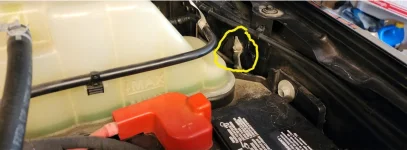
I'd also like to confirm the best grounding location. Adjacent the passenger battery there appears to be a grounding point towards the firewall (see photo).
1000008507.webp

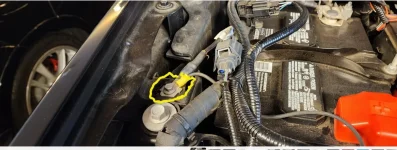
There's also another option on the driver's side. I'm assuming that's what these are because each side has black wires terminated with eyelet connections bolted against can I use one or the other?
1000008505.webp
 
This is a great thread, and the knowledge base within this group is impressive. My knowledge of things electrical is pretty limited. I've got a 22 6.7 that sits in the garage for weeks at a time, and I'm wanting to provide a battery maintainer trickle charger protection device.

With this in mind, I've purchased the Noco GEN5x1. Before I install it, I just wanted to confirm, based on the batteries being wired in parallel, does it make any difference which battery (driver side or passenger) I'm attaching the charger to?

I'd also like to confirm the best grounding location. Adjacent the passenger battery there appears to be a grounding point towards the firewall (see photo).
View attachment 137198
There's also another option on the driver's side. I'm assuming that's what these are because each side has black wires terminated with eyelet connections bolted against can I use one or the other?
View attachment 137199
Either side will work for maintaining. Just pick the side most convenient for you and your charging plug access for the maintainer.
 
This is a great thread, and the knowledge base within this group is impressive. My knowledge of things electrical is pretty limited. I've got a 22 6.7 that sits in the garage for weeks at a time, and I'm wanting to provide a battery maintainer trickle charger protection device.

With this in mind, I've purchased the Noco GEN5x1. Before I install it, I just wanted to confirm, based on the batteries being wired in parallel, does it make any difference which battery (driver side or passenger) I'm attaching the charger to?

I'd also like to confirm the best grounding location. Adjacent the passenger battery there appears to be a grounding point towards the firewall (see photo).
View attachment 137198
There's also another option on the driver's side. I'm assuming that's what these are because each side has black wires terminated with eyelet connections bolted against can I use one or the other?
View attachment 137199
The grounding point is not critical though, the battery maintainer has two short leads that can be hooked to one battery. I just hooked direct to the battery terminals. (Ignore the corrosion, I have two new brackets and will replace after I put the new batteries in.)
 

Attachments

  • 20231121_185739a.webp
    20231121_185739a.webp
    249 KB · Views: 119
Either side will work for maintaining. Just pick the side most convenient for you and your charging plug access for the maintainer.

The grounding point is not critical though, the battery maintainer has two short leads that can be hooked to one battery. I just hooked direct to the battery terminals. (Ignore the corrosion, I have two new brackets and will replace after I put the new batteries in.)

So I think I'll just add the ground to this encircled connection point adjacent the passenger battery. Thanks for the help.
1000008507.webp
 
When you say "ground" are you referring to the black terminal cable from the charger? I always put that on the negative side of the battery. Is that wrong?
 
So I think I'll just add the ground to this encircled connection point adjacent the passenger battery. Thanks for the help.
View attachment 137206
I see there is already a connector in that position, my only concern would be that the more terminals you have on a point like that, the more prone to coming loose. I would also be concerned with water intrusion between terminals that have potential to cause corrosion over time. One more concern, I don't know what the torque spec is on that particular ground point, but you may distort or even break the added connector trying to get the same torque. It looks like a substantial wire size so torque would be important.
 
I see there is already a connector in that position, my only concern would be that the more terminals you have on a point like that, the more prone to coming loose. I would also be concerned with water intrusion between terminals that have potential to cause corrosion over time. One more concern, I don't know what the torque spec is on that particular ground point, but you may distort or even break the added connector trying to get the same torque. It looks like a substantial wire size so torque would be important.
When I had AMP retractable side steps installed earlier this year the installation shop used the passenger battery for power, and the encircled connection point for ground. I wasn't really even thinking about any bolt torque spec, but the stud bolt seems to have adequate remaining room for another eyelet connection. I'd add some dialectic greese to the stack to address moisture or corrosion. The Noco installation guide suggests the grounding point should not be the battery terminal, but a separate point either on the frame or engine block.

In actually my driver side battery actually has more room for the charger, and it has the available ground point against the side frame. So it doesn't matter which battery I use?
 

Attachments

  • 1000008505.webp
    1000008505.webp
    74.5 KB · Views: 58
  • 1000008507.webp
    1000008507.webp
    122 KB · Views: 57
When I had AMP retractable side steps installed earlier this year the installation shop used the passenger battery for power, and the encircled connection point for ground. I wasn't really even thinking about any bolt torque spec, but the stud bolt seems to have adequate remaining room for another eyelet connection. I'd add some dialectic greese to the stack to address moisture or corrosion. The Noco installation guide suggests the grounding point should not be the battery terminal, but a separate point either on the frame or engine block.

In actually my driver side battery actually has more room for the charger, and it has the available ground point against the side frame. So it doesn't matter which battery I use?
Either side will work. I also used the driver's side battery.
 
To add, with these modern vehicles equipped with the battery monitoring systems, you do NOT want to wire the negative terminal of the charger directly to the battery. You should connect it to a ground connection on the body. If you truly feel the need to connect directly to the battery, you will need to connect the negative to the passenger side battery with the negative cable going through the Hall sensor (round black thing with the battery negative cables running through it) in the correct orientation as the battery cables, so that the system can “see” the charge going into the battery.
Is this only in a dual battery setup?
 
When you say "ground" are you referring to the black terminal cable from the charger? I always put that on the negative side of the battery. Is that wrong?
Same here. Why is it different when the battery is in a vehicle versus out? Why aren't they charged in the same manner?
 
Yeah isn't the negative terminal of the battery already grounded?
 
Same here. I had a Noco on the old truck and getting ready to add the same one to the new truck. Only difference is going from single to dual batteries 🔋
The Noco is a low current (relative) charger/maintainer and is irrelevant to the truck computer. It can be hooked up directly to either battery direct with no ill effects. The batteries are in parallel and will both be maintained equally, so long as the two batteries are the same. (Same brand, same age, same type; lead acid (or AGM)).
 
Both of the You Tube videos are close to target, but many YouTube explanations do not include the reasons "why" you hook up batteries and chargers in the manner described. There is a science behind this, and they don't go into the finite detail. This is important to understand when trying to determine if you need one or dual bank chargers for the truck.

I'll give the short version of an answer here:

Two batteries wired correctly in parallel will result in the exact same voltage when measured with no load, at either battery connection. The reason is because they are essentially equal to each other due to no current drawn by the load, (Truck in this case) and the wire size, which is never mentioned in the articles above, which is an important factor here, which I'll cover in a bit.

The batteries in the truck are indeed in a parallel configuration and the reason they both charge with the alternator at the same time while running. (Two alternators, if you have that configuration, do the same thing.) The batteries do not have, nor do they need independent chargers when hooked up in a parallel configuration and same age, in good condition.

Longer explanation:

As one of the videos above mentioned, it is important for both batteries to be the approximate same age (and style) due to deterioration over time, even though one battery can fail before the other. If only one battery goes bad, several things can happen. One battery may charge normal and the other may never come to full charge, whereby the charging system (alternator or external charger) can work very hard trying to equalize the batteries, which can over time result in one of the batteries overheating and evaporating water, the charger can overheat and break down, one battery will remain low, and you will lose starting "total" current, and possibly throw codes related to the batteries or even "false" unrelated codes due to a low voltage drop at the computer. Several other possible issues related to the starting sequence. This is why you always test the batteries unhooked so they are not in parallel. One good battery can mask the bad one.

In a starting situation, where the starter draws a LOT of current, if one of the wires of the batteries was loose or bad, or one battery was bad, most of the current demand would come from one battery. The capacity may not be enough to start correctly. This is especially true in the 6.7.

To address the charger:

When these batteries are in the truck wired with the heavy gauge wire that is used, (4gauge or better) they will be equal to each other due to the ultra-low resistance of the connection, and you really only need one charger for both batteries. Trickle charging or maintenance charge as I call it, is not a demanding operation. The NoCo video above is closest to the correct manner to hook up the charger, but remember, the negative is also the chassis, and these connections are using heavy gauge wires, so electrically, they are at the same potential. You CAN hook up a dual bank charger, and you CAN run a separate wire to each battery plus and negative, but it is not necessary in this case due to the heavy wire and conduction between the two batteries, and the ultra-low demand from a trickle charger. But running a dual bank charger, doubles the charge capacity if that's important to you. If your batteries go dead often and you need to fully charge them, this may be a good option to have.

In the second video, the gentleman is talking about the dual charger "testing" the batteries independently in a parallel configuration. Sorry, this is not true for the situation he has. When you have the two banks wired together in this manner, the "testing" built into the computer in the charger can be fooled by the good (or bad) battery and falsely accept or keep charging the bad battery (and good battery). In other words, if one battery is defective and they are in parallel with a large gauge wire, (this is an important factor) the charger computer cannot distinguish which battery is causing the reading due to the low resistance of the parallel wiring.

In a boat, it can be a very different scenario depending on age of the batteries, wire length between the batteries, wire size, how much they have been drawn down via electronics and the trolling motor, and the manner of the hookup. In a boat with a greater than 12 volt trolling motor, the batteries will be in series and MUST have independent charge networks. If using a 12-volt trolling motor and two batteries are used in parallel to increase the overall capacity, you can use a two-bank charger, in parallel, and they will charge just fine. They will also charge with one charging bank so long as the connection between the two are heavy gauge wire. (Albeit slower) The most important thing to remember here is that in a boat, the battery draw needed to charge, will be much higher than the trickle charge in the truck, to maintain the batteries.

I too, have a boat with four batteries and a quad charger. This is a must for this situation. I have also experienced many of the described issues above due to faulty batteries, chargers, and wiring. Side note, I recently updated my boat charger with a newer model and found out I was recycling batteries much sooner than necessary due to the old charging technology.

I run a 2-amp NoCo charger for both batteries in the truck and it keeps the batteries charged up for days. (Probably longer, but I can't help it, I have to take it out once in a while,) I know my total draw from the accessories on board do not draw more than 2 amps and therefore, don't need a heavy charger to maintain them. And yes, my green light of the NoCo comes on after completing the maintenance charge and as soon as I open the door, it resets the charge cycle due to the instantaneous current draw but finishes the cycle in a matter of minutes. That's all I ask of it. just maintain the battery to full. I did recently test my batteries (disconnected and independently tested) and they are still both equal and have plenty of capacity after one plus year now.

Modern day chargers have sophisticated electronics in them and not like the old chargers that tend to overcharge batteries. They are great for this scenario for people that have their truck sit for days or weeks at a time without running.

I hope this helps, I tried to avoid all of the ohms law explanations.
 
Greatly appreciate leaving out ohms! Thanks for the thorough explanation.
 
Back
Top Bottom