Noco Battery charger/maintainer

Both of the You Tube videos are close to target, but many YouTube explanations do not include the reasons "why" you hook up batteries and chargers in the manner described. There is a science behind this, and they don't go into the finite detail. This is important to understand when trying to determine if you need one or dual bank chargers for the truck.

I'll give the short version of an answer here:

Two batteries wired correctly in parallel will result in the exact same voltage when measured with no load, at either battery connection. The reason is because they are essentially equal to each other due to no current drawn by the load, (Truck in this case) and the wire size, which is never mentioned in the articles above, which is an important factor here, which I'll cover in a bit.

The batteries in the truck are indeed in a parallel configuration and the reason they both charge with the alternator at the same time while running. (Two alternators, if you have that configuration, do the same thing.) The batteries do not have, nor do they need independent chargers when hooked up in a parallel configuration and same age, in good condition.

Longer explanation:

As one of the videos above mentioned, it is important for both batteries to be the approximate same age (and style) due to deterioration over time, even though one battery can fail before the other. If only one battery goes bad, several things can happen. One battery may charge normal and the other may never come to full charge, whereby the charging system (alternator or external charger) can work very hard trying to equalize the batteries, which can over time result in one of the batteries overheating and evaporating water, the charger can overheat and break down, one battery will remain low, and you will lose starting "total" current, and possibly throw codes related to the batteries or even "false" unrelated codes due to a low voltage drop at the computer. Several other possible issues related to the starting sequence. This is why you always test the batteries unhooked so they are not in parallel. One good battery can mask the bad one.

In a starting situation, where the starter draws a LOT of current, if one of the wires of the batteries was loose or bad, or one battery was bad, most of the current demand would come from one battery. The capacity may not be enough to start correctly. This is especially true in the 6.7.

To address the charger:

When these batteries are in the truck wired with the heavy gauge wire that is used, (4gauge or better) they will be equal to each other due to the ultra-low resistance of the connection, and you really only need one charger for both batteries. Trickle charging or maintenance charge as I call it, is not a demanding operation. The NoCo video above is closest to the correct manner to hook up the charger, but remember, the negative is also the chassis, and these connections are using heavy gauge wires, so electrically, they are at the same potential. You CAN hook up a dual bank charger, and you CAN run a separate wire to each battery plus and negative, but it is not necessary in this case due to the heavy wire and conduction between the two batteries, and the ultra-low demand from a trickle charger. But running a dual bank charger, doubles the charge capacity if that's important to you. If your batteries go dead often and you need to fully charge them, this may be a good option to have.

In the second video, the gentleman is talking about the dual charger "testing" the batteries independently in a parallel configuration. Sorry, this is not true for the situation he has. When you have the two banks wired together in this manner, the "testing" built into the computer in the charger can be fooled by the good (or bad) battery and falsely accept or keep charging the bad battery (and good battery). In other words, if one battery is defective and they are in parallel with a large gauge wire, (this is an important factor) the charger computer cannot distinguish which battery is causing the reading due to the low resistance of the parallel wiring.

In a boat, it can be a very different scenario depending on age of the batteries, wire length between the batteries, wire size, how much they have been drawn down via electronics and the trolling motor, and the manner of the hookup. In a boat with a greater than 12 volt trolling motor, the batteries will be in series and MUST have independent charge networks. If using a 12-volt trolling motor and two batteries are used in parallel to increase the overall capacity, you can use a two-bank charger, in parallel, and they will charge just fine. They will also charge with one charging bank so long as the connection between the two are heavy gauge wire. (Albeit slower) The most important thing to remember here is that in a boat, the battery draw needed to charge, will be much higher than the trickle charge in the truck, to maintain the batteries.

I too, have a boat with four batteries and a quad charger. This is a must for this situation. I have also experienced many of the described issues above due to faulty batteries, chargers, and wiring. Side note, I recently updated my boat charger with a newer model and found out I was recycling batteries much sooner than necessary due to the old charging technology.

I run a 2-amp NoCo charger for both batteries in the truck and it keeps the batteries charged up for days. (Probably longer, but I can't help it, I have to take it out once in a while,) I know my total draw from the accessories on board do not draw more than 2 amps and therefore, don't need a heavy charger to maintain them. And yes, my green light of the NoCo comes on after completing the maintenance charge and as soon as I open the door, it resets the charge cycle due to the instantaneous current draw but finishes the cycle in a matter of minutes. That's all I ask of it. just maintain the battery to full. I did recently test my batteries (disconnected and independently tested) and they are still both equal and have plenty of capacity after one plus year now.

Modern day chargers have sophisticated electronics in them and not like the old chargers that tend to overcharge batteries. They are great for this scenario for people that have their truck sit for days or weeks at a time without running.

I hope this helps, I tried to avoid all of the ohms law explanations.
That was awesome. Thank you!
 
fwiw, i personally will never buy any auto parts store charger again, even brand named chargers. i've had battery tender and noco kill batteries, and a schumacher. after bunch of research, i use ctek or optimate, both have restored batteries killed by the other chargers. they're more expensive, but so are batteries. this has just been my experience, not saying they all suck or whatever. but if you have issues with batteries, it might not be battery. and to clarify, i was charging 24/7 on things i didn't use much, those other chargers didn't seem to work in that capacity, the ones i uses now seem to be more designed for that. if you just plug in here and there just to top off, might be fine.
 
fwiw, i personally will never buy any auto parts store charger again, even brand named chargers. i've had battery tender and noco kill batteries, and a schumacher. after bunch of research, i use ctek or optimate, both have restored batteries killed by the other chargers. they're more expensive, but so are batteries. this has just been my experience, not saying they all suck or whatever. but if you have issues with batteries, it might not be battery. and to clarify, i was charging 24/7 on things i didn't use much, those other chargers didn't seem to work in that capacity, the ones i uses now seem to be more designed for that. if you just plug in here and there just to top off, might be fine.
that's crazy experience, I had the opposite with Battery Tender, kept my excursion 6.0 happy and batteries well maintained, even purchased a second one and used it to maintain my son's power wheels batteries since he would go months without interest and then it would be the next best thing for several weeks in a row. Batteries are expensive though and esp those damn power wheels batteries.
 
that's crazy experience, I had the opposite with Battery Tender, kept my excursion 6.0 happy and batteries well maintained, even purchased a second one and used it to maintain my son's power wheels batteries since he would go months without interest and then it would be the next best thing for several weeks in a row. Batteries are expensive though and esp those damn power wheels batteries.
maybe just my unique experience. but when i say time without use, i'm referring to years, not weeks or months. but if what u got works that's all that matters. i use powerwheels chargers, seems to be working ok so far.
 
I run a 2-amp NoCo charger for both batteries in the truck
Which engine do you have in your truck? I have the 7.3 and I'm curious would the 2 amp be sufficient for someone who doesn't run a lot of accessories and just wants to maintain the batteries.
 
To add, with these modern vehicles equipped with the battery monitoring systems, you do NOT want to wire the negative terminal of the charger directly to the battery. You should connect it to a ground connection on the body. If you truly feel the need to connect directly to the battery, you will need to connect the negative to the passenger side battery with the negative cable going through the Hall sensor (round black thing with the battery negative cables running through it) in the correct orientation as the battery cables, so that the system can “see” the charge going into the battery.
Nice to see others that know what the "Hall effect" is. 😁 Long long long ago, I use to calibrate and repair DC current probes with the hall device in the tip. (Tektronix)

If only using a trickle charger/maintainer with the two batteries in parallel, the connection directly to either battery would be adequate. Most people would likely attach it to the passenger side battery anyway, same idea, there's not enough current to be concerned with the hall device.

I'll explain:

I don't know if the hall device on the truck is active when the truck is off, (wiring diagrams are limited here for the information needed to determine the full effect of that) nor do I know if the hall device is used in conjunction with reactions from the computer such as going into sleep mode. In theory, even if it is active, it would be looking for a current draw from the truck as a "faulty" load and the scheduled reaction would be based on the amount of current sensed.

Another possibility for this sensing (and makes the most sense (no pun intended)) would simply be voltage monitoring whereby the computer (which is also drawing current at all times), would react to the voltage drop, not a current change. The charger would not present the same current "draw" rather it would be replenishing the battery, (connected to either side of the hall device) so the low voltage condition would never be realized. Hooking the negative lead to the chassis doesn't hurt anything but in this case is not necessary, and for a permanent install would most likely require modifying the charger's connector to attach to the chassis. Most all charger/maintainers are designed to hook directly to the battery eliminating any current drop through more (external) wire.

If a strong charge would be present such as trying to charge a dead battery with a 10–20-amp external charger, you are spot on, use the chassis as the negative connection after attaching the positive lead to avoid sparks around the battery. This is the safest place to hook it up.
 
Which engine do you have in your truck? I have the 7.3 and I'm curious would the 2 amp be sufficient for someone who doesn't run a lot of accessories and just wants to maintain the batteries.
I have the 6.7 which comes with two batteries stock.

A 2-amp charger is adequate for maintaining the charge on a "good" battery under normal conditions. (Cold weather, older batteries, current draw from accessories, etc. may affect charge capacity and charge time). It is inadequate for charging a low or dead battery unless you have a few days/weeks to let it charge. It makes no difference if the engine is 7.3 or 6.7. The battery capacity is also irrelevant, to an extent. A larger capacity battery (or two batteries in parallel) simply takes longer to charge if low.

The charger can make a difference if it has a "time" sense where the time is exceeded based on the current drawn, and the battery rate of charge. In other words, if the battery is taking too long to charge to a specific level in a given time, the charger may shut off and throw errors. I've had this happen on the boat before with some chargers when the batteries went very low. Simply running the charger two or three times in a row, would usually bring it back. However, once the battery goes that low, (lead acid) the plates sulfate and the capacity is greatly diminished.

I use the NoCo 2-amp (Genius 2D) on the truck which works fine for me with two batteries. A 5 amp may be more appropriate in colder conditions.
 
fwiw, i personally will never buy any auto parts store charger again, even brand named chargers. i've had battery tender and noco kill batteries, and a schumacher. after bunch of research, i use ctek or optimate, both have restored batteries killed by the other chargers. they're more expensive, but so are batteries. this has just been my experience, not saying they all suck or whatever. but if you have issues with batteries, it might not be battery. and to clarify, i was charging 24/7 on things i didn't use much, those other chargers didn't seem to work in that capacity, the ones i uses now seem to be more designed for that. if you just plug in here and there just to top off, might be fine.
Blame this on mass production of any given electronic device. I have gone through so many different chargers, it's sad. I've had the top of the line (Pro Mariner, Minn Kota) and even very high-end chargers (Dual Pro) go south on me. Chargers don't last forever. the electronics will degrade over time. I've had Ctech go bad as well. I do avoid the store bought chargers like Schumaker (though some will swear by them) I've taken these apart before and the simplicity is amazing. The construction is very sloppy. But they work!

I will usually seek out the highest rated chargers simply because they are the ones people will give adequate feedback on. NoCo, Ctech, Pro Mariner, Dual Pro, and others are usually rated pretty high but do indeed fail by a percentage. Everything has these statistics. Go with the highest rating, longest warranty, best reputation, and never the "cheapest" as your search criteria, if you want them to last.
ya, even with the reviews on ctec and optimate chargers there's people that'll never buy em. i'm like you, go for highest rated, and from there my personal experience eliminates beyond that. only reason i don't use b.tender or noco despite their ratings is my personal use case. my pro mariner is doing ok, ctek and optimate doing ok, but if those ever fail i'll have basically eliminated all of em. so fingers crossed. i've never had a charger restore a dead batt before like the ctek or optimates have, or handle 24/7/365 maintaining, so for now those are my go to. never tried minn kota, but they look super nice.
 
ya, even with the reviews on ctec and optimate chargers there's people that'll never buy em. i'm like you, go for highest rated, and from there my personal experience eliminates beyond that. only reason i don't use b.tender or noco despite their ratings is my personal use case. my pro mariner is doing ok, ctek and optimate doing ok, but if those ever fail i'll have basically eliminated all of em. so fingers crossed. i've never had a charger restore a dead batt before like the ctek or optimates have, or handle 24/7/365 maintaining, so for now those are my go to. never tried minn kota, but they look super nice.
Agree with your logic, and this is why I went with Dual Pro, even after a bad experience with one. I replaced my Dual Pro 4 bank charger (~7 years old) in the boat about a year ago with a more modern version. This is where I noticed the difference in the charge quality. With the original, it was common for the maintenance stage to drop to 12.4 volts on some batteries and start the cycle again on all batteries. Eventually, it would cook one of the batteries and I would replace it. So I purchased new X2Pro batteries (all 4... 😑💲) and didn't want to cook them. So researched many new chargers. The new Dual Pro charger was a game changer. It didn't get hot, it's maintenance cycle "pulses" and keeps the battery topped off at all times, draws way less current during the rest stage than the old one, many advantages. (Similar to the Ctek but a lot more amps.) I check on it often and all batteries are consistently 12.7 to 13 volts. I have purchased two of the Dual Pros now, I use one in the truck as well for my "bed battery". (Aux power in the bed) I also use a Ctek for my Kayak battery. The kayak doesn't see that much use right now. 🥶 My b.tender didn't last 6 months. It simply stopped working. Ironically, I see negative reviews on the Dual Pro as well... Go figure. Last I checked, Dual Pro is still the standard issue in Ranger boats.
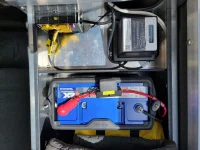
 

Attachments

  • 20220612_150328 charger.webp
    20220612_150328 charger.webp
    255.2 KB · Views: 108
Agree with your logic, and this is why I went with Dual Pro, even after a bad experience with one. I replaced my Dual Pro 4 bank charger (~7 years old) in the boat about a year ago with a more modern version. This is where I noticed the difference in the charge quality. With the original, it was common for the maintenance stage to drop to 12.4 volts on some batteries and start the cycle again on all batteries. Eventually, it would cook one of the batteries and I would replace it. So I purchased new X2Pro batteries (all 4... 😑💲) and didn't want to cook them. So researched many new chargers. The new Dual Pro charger was a game changer. It didn't get hot, it's maintenance cycle "pulses" and keeps the battery topped off at all times, draws way less current during the rest stage than the old one, many advantages. (Similar to the Ctek but a lot more amps.) I check on it often and all batteries are consistently 12.7 to 13 volts. I have purchased two of the Dual Pros now, I use one in the truck as well for my "bed battery". (Aux power in the bed) I also use a Ctek for my Kayak battery. The kayak doesn't see that much use right now. 🥶 My b.tender didn't last 6 months. It simply stopped working. Ironically, I see negative reviews on the Dual Pro as well... Go figure. Last I checked, Dual Pro is still the standard issue in Ranger boats.
those look good, if my pro mariner dies i'll give it a try.
 
Will the CTEK with the added plug that goes into your cabin 12v power port work for maintaining both batteries on a 22 6.7? Are these cabin ports open when the trunk ignition is off, or do I have to connect the clamps directly with one of the batteries?
 
Will the CTEK with the added plug that goes into your cabin 12v power port work for maintaining both batteries on a 22 6.7? Are these cabin ports open when the trunk ignition is off, or do I have to connect the clamps directly with one of the batteries?
If I understand the question correctly, you want to know if the CTEK charger can be connected through the cabin 12V socket. The answer is based on that, however, a charger maintainer should always be connected direct to the battery, or as close as possible.

The batteries are connected in parallel. Therefore, both batteries will be charged/maintained with one connection.

The cabin socket eventually times out and no longer is connected to the battery at that point. That in itself says you should not try to charge through the cabin socket, its computer controlled.

The CTEK that I owned also had a 12V socket adapter, it worked on a battery box for the kayak with the 12V socket directly connected to the battery. (Through a fuse of course) This would be the only reasonable use for that adapter.

Hope this helps.
 
I don't know how I missed this thread when it first started. I have lots of vehicles that do not get used a lot and live in two different states so they sit when I am not in that location. I have used CTEK chargers for years. My mental count is that I own a dozen CTEK chargers, 10 of which are plugged in as I write this. I recently picked up a couple of NOCOs because they are sealed and weatherproof and can be installed under the hood of a couple of vehicles. NOCO seems to have a mostly good reputation so I will give them a try.

The NOCO instruction explicitly say not to install the charger on top of the battery ass toofy and savin yours have done because of the acid gasses from the battery corroding the charger. The chargers are sealed so I don't see why it would be an issue, and with AGM batteries it certainly shouldn't, but I still wanted to take their advice.

I originally purchased an 10x2 charger fro my 6.7 before realizing that the batteries are hard wired in parallel. I contacted NOCO about paralleling the outputs and as expected was told not to do that. They said one side ot the other would error out.

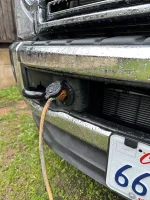
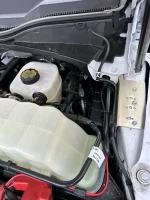
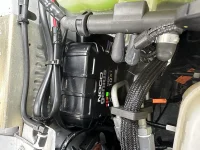
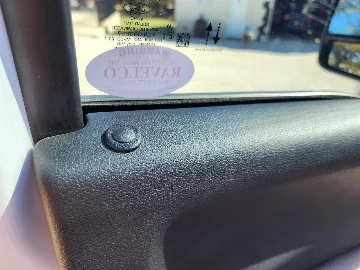
Attached are pictures of my install in my 2022 6.7 standard cab dually in always rainy San Diego. The plug on the front is from NOCO also. There is not a lot of extra room under the hood of a 6.7 and on the left side next o the master was about the only place I could find to fit it. Fishing the 120V power wire was a pain in the ass. I had to remove the left side battery to lift the battery box to get it under there. I had to remove the whole grille to get it through the core support and behind the bumper.
 

Attachments

  • IMG_1391.webp
    IMG_1391.webp
    125 KB · Views: 199
  • IMG_1390.webp
    IMG_1390.webp
    370.3 KB · Views: 198
  • IMG_1389.webp
    IMG_1389.webp
    215.9 KB · Views: 193
  • IMG_1388.webp
    IMG_1388.webp
    262.8 KB · Views: 205
I don't know how I missed this thread when it first started. I have lots of vehicles that do not get used a lot and live in two different states so they sit when I am not in that location. I have used CTEK chargers for years. My mental count is that I own a dozen CTEK chargers, 10 of which are plugged in as I write this. I recently picked up a couple of NOCOs because they are sealed and weatherproof and can be installed under the hood of a couple of vehicles. NOCO seems to have a mostly good reputation so I will give them a try.

The NOCO instruction explicitly say not to install the charger on top of the battery ass toofy and savin yours have done because of the acid gasses from the battery corroding the charger. The chargers are sealed so I don't see why it would be an issue, and with AGM batteries it certainly shouldn't, but I still wanted to take their advice.

I originally purchased an 10x2 charger fro my 6.7 before realizing that the batteries are hard wired in parallel. I contacted NOCO about paralleling the outputs and as expected was told not to do that. They said one side ot the other would error out.

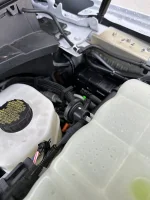
Attached are pictures of my install in my 2022 6.7 standard cab dually in always rainy San Diego. The plug on the front is from NOCO also. There is not a lot of extra room under the hood of a 6.7 and on the left side next o the master was about the only place I could find to fit it. Fishing the 120V power wire was a pain in the ass. I had to remove the left side battery to lift the battery box to get it under there. I had to remove the whole grille to get it through the core support and behind the bumper.
Great photos and info. So are you saying you only plugged into 1 battery and let the parallel wiring charge both?
 
If I understand the question correctly, you want to know if the CTEK charger can be connected through the cabin 12V socket. The answer is based on that, however, a charger maintainer should always be connected direct to the battery, or as close as possible.

The batteries are connected in parallel. Therefore, both batteries will be charged/maintained with one connection.

The cabin socket eventually times out and no longer is connected to the battery at that point. That in itself says you should not try to charge through the cabin socket, its computer controlled.

The CTEK that I owned also had a 12V socket adapter, it worked on a battery box for the kayak with the 12V socket directly connected to the battery. (Through a fuse of course) This would be the only reasonable use for that adapter.

Hope this helps.
So you're saying that I really can't use the 12v plug inside the truck cabin because the trucks computer will shut them off at some point? I have two Porsches and they are designed to allow a maintainer plugged in through the cabin 12v port. There's a specific procedure with plugging them in that's supposed to be followed so that the computer will remain open. I've never had any problems with them working, the Porsche maintainer looks like it may be built by CTEK. So can I just use the alligator clamps directly attached to one battery?
 
Great photos and info. So are you saying you only plugged into 1 battery and let the parallel wiring charge both?
Yes, Since the batteries are hard wired in parallel this is really the only choice. Assuming reasonable sized wire, it really does not matter which battery the charger leads are connected to or even if the positive goes to one battery and the negative to the other or the negative to chassis ground. It is all electrically all the same. It is true as someone mentioned that if we care about the current sense while the truck is shut down and plugged into shore power, then we could connect the charger negative to chassis ground. I don't think this matters and for connivence I connected both charge leads to the left battery.
 
So you're saying that I really can't use the 12v plug inside the truck cabin because the trucks computer will shut them off at some point? I have two Porsches and they are designed to allow a maintainer plugged in through the cabin 12v port. There's a specific procedure with plugging them in that's supposed to be followed so that the computer will remain open. I've never had any problems with them working, the Porsche maintainer looks like it may be built by CTEK. So can I just use the alligator clamps directly attached to one battery?
you probably could do that with forscan as you can turn off the powerpoint timeout .
 
I don't know how I missed this thread when it first started. I have lots of vehicles that do not get used a lot and live in two different states so they sit when I am not in that location. I have used CTEK chargers for years. My mental count is that I own a dozen CTEK chargers, 10 of which are plugged in as I write this. I recently picked up a couple of NOCOs because they are sealed and weatherproof and can be installed under the hood of a couple of vehicles. NOCO seems to have a mostly good reputation so I will give them a try.

The NOCO instruction explicitly say not to install the charger on top of the battery ass toofy and savin yours have done because of the acid gasses from the battery corroding the charger. The chargers are sealed so I don't see why it would be an issue, and with AGM batteries it certainly shouldn't, but I still wanted to take their advice.

I originally purchased an 10x2 charger fro my 6.7 before realizing that the batteries are hard wired in parallel. I contacted NOCO about paralleling the outputs and as expected was told not to do that. They said one side ot the other would error out.

Attached are pictures of my install in my 2022 6.7 standard cab dually in always rainy San Diego. The plug on the front is from NOCO also. There is not a lot of extra room under the hood of a 6.7 and on the left side next o the master was about the only place I could find to fit it. Fishing the 120V power wire was a pain in the ass. I had to remove the left side battery to lift the battery box to get it under there. I had to remove the whole grille to get it through the core support and behind the bumper.
Nice install and great input.
 
So you're saying that I really can't use the 12v plug inside the truck cabin because the trucks computer will shut them off at some point? I have two Porsches and they are designed to allow a maintainer plugged in through the cabin 12v port. There's a specific procedure with plugging them in that's supposed to be followed so that the computer will remain open. I've never had any problems with them working, the Porsche maintainer looks like it may be built by CTEK. So can I just use the alligator clamps directly attached to one battery?
As @JTredway pointed out, it may be possible through Forscan but for me, since I have to plug it in from outside anyway, I use an external cord temporarily up under the hood. (Haven't installed AC access outside yet. Waiting for drier weather.) You can alligator the connection if you want, but my preference is a permanent installation.
 
Back
Top Bottom