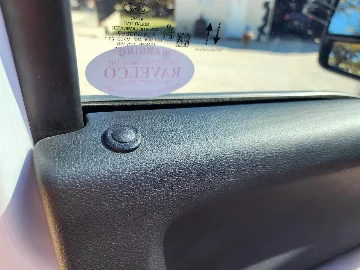
Yep! That’s the one! Worth noting, when you’re looking at RVs on the lot, you’ll find similar stickers on them listing out the payload capacity, GVWR, pin weight, etc. They will be specific to that individual unit and means you can evaluate things on the fly. Usually they’re on the side of the trailer near the front, fully exposed without needing keys.
So starting with how your truck came from the factory (including full tank of gas) you shouldn’t add more than 1780 pounds of weight to the truck at one time. This includes all modifications, gear, cargo, and people.
You say you’re looking at around 650 pounds of people so that leaves you with 1130 pounds of payload capacity from people alone. Let’s take another 100 pounds off for a hitch (could be light for a fifth wheel hitch, could be heavy for a weight distributing one for a bumper pull).
That leaves you with ~1000 pounds of weight for any additional cargo in the truck, modifications, and pin/tongue weight. If you’re carrying gear in the truck (bikes, coolers, hunting/fishing gear, first aid kit, straps, tools, firewood, etc) that all takes away from that number further, but I’ll run with it for the rest of my post.
Given the listed pin weight of that fifth wheel is likely the dry weight and ~1300 pounds, you would be significantly over capacity with that trailer once you add propane, batteries, water, and gear to the trailer. You would easily be a couple hundred pounds over capacity just driving off the lot (assuming your family is with you), don’t mind loaded down for camping.
With a thousand pounds of headroom for pin weight at best I would absolutely recommend moving to a bumper pull.
Bumper pull trailers have a recommended tongue weight of 10-15% of overall trailer weight. If we take the upper end of that to be safe (depends on loading and trailer design where it will actually fall), 1000/0.15 is 6700 pounds.
So 6700 pounds is the maximum loaded trailer weight your truck can carry, limited by payload capacity (based on the remaining payload calculated above; adjust according if that’s actually lower because of additional gear). Nowhere near the “tow rating limit”, but that’s because the truck is loaded down with people as well.
Now, personally I’m pretty conservative with this stuff and I would round that down to 6000 pounds for good measure, but that’s all personal risk evaluation. I don’t want to run my gear at capacity on the regular, or when driving at highway speeds. Others are fine running at or a bit over capacity and have done so for thousands of miles with no issues.
When you’re looking at a trailer, look for the GVWR. That’s the maximum the trailer can safely weigh as determined by the manufacture (same as GVWR for your truck). It will be on a sticker on the side of the trailer. Use that as the loaded weight of the trailer unless you’re confident you’ll be below it.
So to sum up, for your family and truck, IMO you should be looking at bumper pull trailers with a GVWR of 6700 pounds or less, and for me personally it would be 6000 pounds or less to add some margin. This assumes no gear in the truck.
Conveniently, Big Truck Big RV recommends 6000 pounds as a good maximum for half ton bumper pull RVs, and we’re basically in line with that.

(Technically, going purely off of payload capacity, you could tow a fifth wheel if it weighed around 1000/0.25 = 4000 pounds loaded but good luck ever finding one that light.

)