Whipple Installed!

You are correct, there is a limit to the amount of boost it can handle on pump fuel. The 7.3L has knock sensors that the Whipple calibration monitors and will adjust fueling and timing depending on the read (including Manifold Temp, press, etc). The base calibration is for 91 Octane, but if you use 93, it will adjust timing/fueling accordingly giving slightly more power. I use quality (Top Tier) 93 and in all of my data logging rarely have I seen the knock sensor come into play where it has started pulling timing. Either I am not pushing the truck hard enough, or that indicates the fuel is good and that the calibration is conservative and is not pushing the power limits.
After researching what people are getting out of the Whipple on the 7.3 I asked about those numbers versus the kit for the Super Duty. The calibration is conservative. The parts Whipple is using on the kits for the Super Duty can produce much more power with just changes to the tune. Their answer was that the tune is set for CARB compliance, for 91 octane (as you note), stock parts survivability, and the purpose of a heavy duty truck. It's "easy" to get more power but you have to give up these parameters. That is not the purpose of this kit.
 
There is some restriction but don't think of it like a pump directly restricting the airflow. The turbine wheel is using the thermal energy in the gas to spin the shaft, not the physical force of the gas passing by the wheel. That is why the shaft can reach 200,000+ rpm (for instance, in the EcoBoost applications) at low engine speed. It's not just the volumetric flow of gas, it's how much energy is contained. That is based more on engine load.

The turbine wheel is attached to a common shaft that drives the compressor wheel. The design of the wheel can be adjusted depending on the airflow/boost curve desired.


Correct, superchargers require a mechanical connection to the engine to rotate. Most commonly a crankshaft driven belt. That adds parasitic loss (fmep, friction) depending on the size of the supercharger being used. The turbo shaft rotates independent of the mechanical rotation of the engine and doesn't add parasitic loss.

There are losses incurred with a turbo but in general a supercharger has a higher total loss due to the added fmep.
I fully understand the construction of a turbo and the difference between an engine driven blower and an exhaust driven turbo. I was just thinking about it as a kid, way back when, and visualizing the output pressure of the turbo equaling the parasitic load of the blower and how the advantage of the turbo, in that case, was simply a gain in power by eliminating a parasitic load.

Another fun fact: A friend of mine has a dragster from the late 60s or early 70s. The modified 6-71 blower on that Hemi takes approximately 400 HP to drive it. When using the 6-71 blowers for drag racing, they run them so fast that they have to turn the rotors down for extra case clearance or they'll expand and hit the case.
 
@GT-SD Hold on here a second...you're using Mid and Premium grade fuel on testing or on the daily fill up? Seems kinda crazy to not use 87...
 
@GT-SD Hold on here a second...you're using Mid and Premium grade fuel on testing or on the daily fill up? Seems kinda crazy to not use 87...
Using 87 will defeat the purpose of the Whipple kit. No way you can run boost on 87 without the engine doing something to compensate for the pinging. Retard the spark, richen the mixture, or whatever strategy the programming has to prevent pinging. That means reduced power and reduced efficiency. Running Premium, all the time, is one of the negatives with installing a blower.

The 7.3 is designed to run well on 87 only when naturally aspirated. At sea level it might even ping on 87 when working hard.
 
@Raspy Gotcha, yea, completely unaware how that all works. So, I guess its "interesting" that fuel economy stays roughly the same, given the added Octane and HP from the super charger. I'm wondering if Garrett ended up making a turbo that's tuned for 87, similar to how the F150's turbo's are, that could be nice...just a more complicated/costly install upfront I guess.
 
@Raspy Gotcha, yea, completely unaware how that all works. So, I guess its "interesting" that fuel economy stays roughly the same, given the added Octane and HP from the super charger. I'm wondering if Garrett ended up making a turbo that's tuned for 87, similar to how the F150's turbo's are, that could be nice...just a more complicated/costly install upfront I guess.
The turbo itself has nothing to do with the fuel or tune.
 
@Raspy Gotcha, yea, completely unaware how that all works. So, I guess its "interesting" that fuel economy stays roughly the same, given the added Octane and HP from the super charger. I'm wondering if Garrett ended up making a turbo that's tuned for 87, similar to how the F150's turbo's are, that could be nice...just a more complicated/costly install upfront I guess.
Remember that added Octane simply means harder to ignite, not more energy in the fuel. Added horsepower means more fuel is used to make that extra horsepower, not that there is more energy in the fuel.

The way to get more torque and overall horsepower from an engine is to pressurize the intake and then add more fuel. This can be done with an exhaust driven turbocharger or a crankshaft driven supercharger. But more pressure means higher compression pressure and higher temps. Higher temps means pre-ignition problems if the fuel is in the cylinder during the compression stroke.

The Ford Ecoboost engines have direct injection which is not the same as the 7.3 port injection system. Direct injection means the fuel is injected directly into the combustion chamber just before it is ignited for the power stroke. It cannot ping because there is no fuel to pre-ignite before the spark happens. That allows higher boost levels than on the port injected engine, which has fuel in the cylinder during compression. The turbocharged direct injected engine can be tuned to run with a power curve similar to a diesel, lots of low end torque, without the limitation caused by pinging. The 7.3 gets fuel injected into the intake port on the intake stroke. This means the fuel is in the cylinder during the compression stroke and can ignite from heat before the spark. That is pre-ignition, or pinging. It sounds confusing and it sounds like gas can be ignited by compression, like the fuel in a diesel, but it can't. Gas will not run in a diesel because it is harder to ignite than diesel fuel. Pre-ignition, or knocking, or pinging is the fuel igniting before the spark, or at a spot other than at the spark plug. It is lit from something hot in the chamber, such as glowing carbon, not simply compression heat, as in a diesel. So, gas engines that have carburetors, or throttle body injection, or port fuel injection, can only have a limited amount of boost and must run premium fuel to take full advantage of that boost. Diesels can have as much boost as the structure of the engine can stand. Their horsepower can be much higher with boost because the fuel is not injected until the engine is ready to fire. In diesels, the injection timing is the ignition timing. The fuel ignites from the heat of compression. Direct injection engines land somewhere between port engines and diesel engines. They still use spark ignition, but the fuel is not there until it is time to fire, so they can't ping and can run higher boost than the port engine. A big part of the game is to figure out how to get the gas into the engine, but not allow it to burn until the start of the power stroke. Higher compression pressures means higher combustion chamber temperatures, which means more chance of igniting the fuel at the wrong time. But remember, gas will not run in a diesel because it takes more energy to ignite it than diesel compression. Higher octane levels (premium gasoline) means harder to ignite, so higher compression can be used with higher octane fuels. Higher compression in a gas engine will not itself light the fuel, but it makes higher temperatures where glowing carbon or some other hotspot will ignite the gas. You can see from all of this that there is a balance with strict limitations. Manufacturers want lighter, smaller gas engines with more power. They want higher output from diesels but still need reliability and clean burning. Computer controlled electronic fuel injection allows for good performance from modern gas engines. Most are designed to run well on 87 octane. But some have a note that they will perform better on 91 octane. This only means that 91 octane is harder to ignite, not that it has more energy. So the higher performance engine will ping on 87 and reduced power is the result. The engine has strategies to stop pinging that reduce power, such as making the mixture richer and cooler, or changing the timing. I think the valve timing can be used to accomplish this too, by lowering compression pressure, but I don't know if that strategy is actually used or not.
 
Last edited:
@GT-SD Hold on here a second...you're using Mid and Premium grade fuel on testing or on the daily fill up? Seems kinda crazy to not use 87...
To date, the only fuel ever put in the truck is 93. I didn't have the dealer fill it new because it immediately went to the service department for the 58 gallon transfer flow and I supplied 10 gallons of premium to get me to the fuel station afterwards. The Whipple didn't get installed until ~1600 miles, but the 2 - 3 fill ups prior were all 93 to make sure there was nothing but premium in the tank and every fill up since has been 93.

Whipple states not to use anything below 91. On cool days with low load could you get away with 87!? Probably, but pre-detonation in the cylinder can lead to catastrophic failure very quick so it's not worth the risk. I also try to fill up at branded stations that are "qualified" as top tier in an effort to improve the odds that the fuel I am getting actually meets the spec. For my '17 6.7, the local Shell station would pull monthly samples on their diesel tank and they would show me the results on occasion when I would ask. The monthly quality sampling of diesel tank was required by their insurance.
 
Question, have you ever had any stutter or slight hesitation when accelerating from a stop? It might also be described as a delay or slow pedal that some try to fix with a Pedal Monster.
 
Question, have you ever had any stutter or slight hesitation when accelerating from a stop? It might also be described as a delay or slow pedal that some try to fix with a Pedal Monster.
Not that I can relate to. I understand what you are describing, but in the 20k+ miles the truck has had the Whipple installed, the throttle has been very responsive and don't recall any stutter or slight hesitation. The only "quirks" that could be considered to effect performance occur on rare occasions, but you wouldn't really know it if you didn't have a boost gauge. Some of this has already been described, but below is an updated summary.
  1. When towing heavy, there have been occasions that it fails to build boost while using cruise control. For example, you are cruising at 65-70MPH with ~15k lbs. As you start to go up a hill the boost builds but you are still losing speed, since the calibration for cruise control doesn't downshift, you start to lug the engine. To counter act this, you lock out 8th (basically forcing it to downshift) and it goes to 7th. But when you go to 7th, even though the RPMS go up, you don't build boost so it has a very similar power to 8th. Then you lock out 7th and then it downshifts to 6th, revving the engine in a power band you don't need boost but if you then immediately unlock 7th, it shifts and runs in 7th with plenty of boost with similar/same incline and load as before and accelerates to the cruise control speed. It's almost as if the bypass valve is not closing in that condition. You wouldn't know anything otherwise (other than continuing to lose speed up the hill) but when it happens, it doesn't lose power, it just doesn't make as much as it should. This is a rare occurrence, but when it does occur, my experience so far has been when cruise control is engaged (which in my opinion, Whipple should update the calibration on). As previously explained, towing heavy with cruise control is manageable, but takes a lot of user input. Towing heavy without Cruise, no problem and shifts as you would expect to maintain speed. Empty with cruise, no problem. Stays in 10th at anywhere from 65 - 80+ with medium hills just supplementing load with boost as required.
  2. The calibration will occasionally lug the engine before downshifting. Almost like it gets confused by the input and will immediately open the throttle body, closing the bypass valve, creating boost when you press the pedal, but will think a second or two before putting it in the correct gear. Typically this happens simultaneously. The few times it has occurred, it happened in the 40 - 60 mph range and it was in 9/10th gear already when the pedal was pressed aggressively. It takes a special set of circumstances for this to happen, and in all honesty, probably happens with a stock engine too. 99.9% of the time, you hit the gas and it takes off with no problem. I can recall it happening 2 - 3 times over 20k miles; all with an empty truck (unloaded). Just being nit-picky here.
If you had a supercharged vehicle that was experiencing stuttering or hesitation, assuming it was using a latest release calibration and thorough install, a couple of thoughts would come to mind for diagnostic.
  1. The adaptive learning on the transmission is garbage (at least for the 2022's) and turning it off might help determine if it could be a cause. Since I reset and turned off the adaptive learning (5-6k miles so far), it has resolved almost all my shifting sloppiness and the power band is a lot smoother; also shifting in stop & go traffic is more muted and controlled.
  2. If you are on wet slippery surface, the nanny controls are quick to pull power. They will even pull power on dry surfaces sometimes under heavy acceleration. Turning off traction control might be a way to see if that is impacting performance. 99% of the time this is a non-issue with my configuration.
  3. Check your air filter and ensure that the installer made the appropriate modification to the box to allow additional airflow volume to enter. My experience has been that the AFE oiled air filters get dirty after 5k miles. I ordered 2 spares and change them out every oil change (5k miles). That gives me time to clean the one coming out really well, let it dry for a few days to a week, re-oil and let the oil soak in and disperse. You don't want to under oil, but don't want to over oil either. With the filter location being so close to the MAF sensor, my concern would be an over oiled filter might cause the MAF to read not as accurate. (see photo's below) It might be worthwhile to look at the MAF closely as well.
  4. A vacuum leak or improperly installed emission / PCV line. With the way some of the hoses are molded in the kit, it was a challenge to get some of them to seat all the way during install. The shape was just enough out that you had to work the hose a little. If it looks "connected", it may not be. During my final check from the install and prior to starting the engine, I put my hand on every hose and clamp. I found (2) of the vacuum lines that we "thought" were on, were not quite snapped in. Don't know if this would have caused a check engine or some other symptom, but it something that could be easily overlooked.
  5. Make sure the bypass valve is opening! If it is not working correctly or closed all the time, the additional air/load might contribute to some hesitation. This is easy to check.
Hopefully this is helpful, let me know if you need any additional information.

F350 Filter Photo.webp
 
I feel like using cruise control while towing 15k lbs with an aftermarket blower is a terrible idea?
 
I feel like using cruise control while towing 15k lbs with an aftermarket blower is a terrible idea?
The adaptive cruise control is great when towing that heavy. I've done hours of data logging and reviewed engine parameters while towing 10-15k. So far, all temps, fuel ratios and monitored parameters show to be within normal limits for the engine. Even the oil analysis don't appear to show any concerning wear so far. You would be surprised how little the engine is actually in boost. Hopefully in the next week or so blackstone will be done with the 20k mile OC analysis and will be able to post it here soon. So far, I don't have any concern towing that heavy or heavier (cruise control or not) with the setup.
 
Not that I can relate to. I understand what you are describing, but in the 20k+ miles the truck has had the Whipple installed, the throttle has been very responsive and don't recall any stutter or slight hesitation. The only "quirks" that could be considered to effect performance occur on rare occasions, but you wouldn't really know it if you didn't have a boost gauge. Some of this has already been described, but below is an updated summary.
  1. When towing heavy, there have been occasions that it fails to build boost while using cruise control. For example, you are cruising at 65-70MPH with ~15k lbs. As you start to go up a hill the boost builds but you are still losing speed, since the calibration for cruise control doesn't downshift, you start to lug the engine. To counter act this, you lock out 8th (basically forcing it to downshift) and it goes to 7th. But when you go to 7th, even though the RPMS go up, you don't build boost so it has a very similar power to 8th. Then you lock out 7th and then it downshifts to 6th, revving the engine in a power band you don't need boost but if you then immediately unlock 7th, it shifts and runs in 7th with plenty of boost with similar/same incline and load as before and accelerates to the cruise control speed. It's almost as if the bypass valve is not closing in that condition. You wouldn't know anything otherwise (other than continuing to lose speed up the hill) but when it happens, it doesn't lose power, it just doesn't make as much as it should. This is a rare occurrence, but when it does occur, my experience so far has been when cruise control is engaged (which in my opinion, Whipple should update the calibration on). As previously explained, towing heavy with cruise control is manageable, but takes a lot of user input. Towing heavy without Cruise, no problem and shifts as you would expect to maintain speed. Empty with cruise, no problem. Stays in 10th at anywhere from 65 - 80+ with medium hills just supplementing load with boost as required.
  2. The calibration will occasionally lug the engine before downshifting. Almost like it gets confused by the input and will immediately open the throttle body, closing the bypass valve, creating boost when you press the pedal, but will think a second or two before putting it in the correct gear. Typically this happens simultaneously. The few times it has occurred, it happened in the 40 - 60 mph range and it was in 9/10th gear already when the pedal was pressed aggressively. It takes a special set of circumstances for this to happen, and in all honesty, probably happens with a stock engine too. 99.9% of the time, you hit the gas and it takes off with no problem. I can recall it happening 2 - 3 times over 20k miles; all with an empty truck (unloaded). Just being nit-picky here.
If you had a supercharged vehicle that was experiencing stuttering or hesitation, assuming it was using a latest release calibration and thorough install, a couple of thoughts would come to mind for diagnostic.
  1. The adaptive learning on the transmission is garbage (at least for the 2022's) and turning it off might help determine if it could be a cause. Since I reset and turned off the adaptive learning (5-6k miles so far), it has resolved almost all my shifting sloppiness and the power band is a lot smoother; also shifting in stop & go traffic is more muted and controlled.
  2. If you are on wet slippery surface, the nanny controls are quick to pull power. They will even pull power on dry surfaces sometimes under heavy acceleration. Turning off traction control might be a way to see if that is impacting performance. 99% of the time this is a non-issue with my configuration.
  3. Check your air filter and ensure that the installer made the appropriate modification to the box to allow additional airflow volume to enter. My experience has been that the AFE oiled air filters get dirty after 5k miles. I ordered 2 spares and change them out every oil change (5k miles). That gives me time to clean the one coming out really well, let it dry for a few days to a week, re-oil and let the oil soak in and disperse. You don't want to under oil, but don't want to over oil either. With the filter location being so close to the MAF sensor, my concern would be an over oiled filter might cause the MAF to read not as accurate. (see photo's below) It might be worthwhile to look at the MAF closely as well.
  4. A vacuum leak or improperly installed emission / PCV line. With the way some of the hoses are molded in the kit, it was a challenge to get some of them to seat all the way during install. The shape was just enough out that you had to work the hose a little. If it looks "connected", it may not be. During my final check from the install and prior to starting the engine, I put my hand on every hose and clamp. I found (2) of the vacuum lines that we "thought" were on, were not quite snapped in. Don't know if this would have caused a check engine or some other symptom, but it something that could be easily overlooked.
  5. Make sure the bypass valve is opening! If it is not working correctly or closed all the time, the additional air/load might contribute to some hesitation. This is easy to check.
Hopefully this is helpful, let me know if you need any additional information.

View attachment 148622
Thanks for the detail. I asked as I was told Whipple said they had run into a low load hesitation issue off of idle on prior years. I was told this is the last item they are refining before offering the kit for the '23s.

I feel like using cruise control while towing 15k lbs with an aftermarket blower is a terrible idea?
I'll play. Why?
 
Thanks for the detail. I asked as I was told Whipple said they had run into a low load hesitation issue off of idle on prior years. I was told this is the last item they are refining before offering the kit for the '23s.


I'll play. Why?

I just don't think the systems were designed for it. In my personal experience, it doesnt work well on heavily modded vehicles. You can get into some overboost/creep situations, hight EGT's, etc. But I suppose my experience is more in turbo than superchargers.
 
Here is in an update.....

25,3xx miles and counting. So far no CEL's, misfires or problems to speak of. Since the truck has done quite a bit of towing over the last few months, I have elevated the symptom #1 described in a prior post, which is probably calibration related, and am working on it with Whipple. It's intermittent and doesn't affect drivability, but as described above it appears the system sometimes limits power to NA levels for short periods of time. It's not really noticeable unless you are pulling 10 - 15k lbs for hundreds of miles because it is so infrequent, but has happened a time or two unloaded. I'll keep you posted when we get to the bottom of it. Overall the truck is a beast and puts a smile on everyone's face that gets to drive it. They cannot believe the power and throttle response.

Just did another oil change and noticed that the results from March were not posted. The March oil change was a little elevated in iron, but not above break in levels and there were several times during that OCI that my travels were international and required the truck to sit for a week at the airport and then start it in sub-freezing temps. This is first time since being built, the engine/truck had seen operation at temperatures that low or over the winter, especially with sitting for extended times, so that might have contributed to the slight increase in iron wear. The sample has been sent out for most recent OCI ~5k miles (~750 towing heavy) for analysis, so we'll see how it comes back in a week or two. If it comes back with slightly elevated Iron levels as well, might move away from Mobil 1 Extended Performance to a boutique 5w/30 oil such as Amsoil or Redline at the next OCI to see if that will reduce the wear number. My guess is that the colder temps had something to do with it, but we will see; regardless nothing to be concerned about at this point.

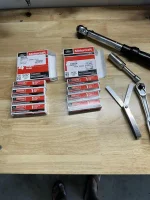
Since we hit 25k miles, the spark plugs and wires were replaced, but they probably had significant life left. It's difficult to see in the photos, but the plug tips were very clean, almost no carbon, uniform color/condition and looked good. The recommended change interval is 20k for the plugs, but based on my duty cycle, they could probably go 50k+. The wires were changed just because to change the plugs you are already there and they have a known issue, might as well replace them at the same time. Either way, it was a 1.5hr project (including gapping the plugs to 0.031") and a cost of ~$150 (plugs and wires), so for now sticking to a change interval of every 25k miles; hopefully preventing any issues.

At 30k miles the truck will get another oil change and likely replace the transmission filter, perform the flush and fluid service along with a new drive belt.

20k Mile Oil Change Analysis.webp


Spark Plug Change.webp

The topside creeper is a game changer. Made reaching everything much, much easier and the job quick. The passenger side is challenging to torque. If I hadn't torqued the passenger side plugs, could have done the change out in <45mins. Thinking about getting a smaller torque wrench to make it easier.

Spark Plug Prep.webp

New Spark Plugs

Spark Plugs.webp

Old ones. Top is passenger side back to front. Bottom is driver side.

Spark Plugs2.webp

No gap loss (or very little) and in good shape. Looks like a little too much anti-seize was put on them when installing the Whipple. Not sure what happened, I'm usually not that sloppy with it. Much better application this time.
 

Attachments

  • Spark Plug Prep.webp
    Spark Plug Prep.webp
    236.2 KB · Views: 46
Here is in an update.....

25,3xx miles and counting. So far no CEL's, misfires or problems to speak of. Since the truck has done quite a bit of towing over the last few months, I have elevated the symptom #1 described in a prior post, which is probably calibration related, and am working on it with Whipple. It's intermittent and doesn't affect drivability, but as described above it appears the system sometimes limits power to NA levels for short periods of time. It's not really noticeable unless you are pulling 10 - 15k lbs for hundreds of miles because it is so infrequent, but has happened a time or two unloaded. I'll keep you posted when we get to the bottom of it. Overall the truck is a beast and puts a smile on everyone's face that gets to drive it. They cannot believe the power and throttle response.

Just did another oil change and noticed that the results from March were not posted. The March oil change was a little elevated in iron, but not above break in levels and there were several times during that OCI that my travels were international and required the truck to sit for a week at the airport and then start it in sub-freezing temps. This is first time since being built, the engine/truck had seen operation at temperatures that low or over the winter, especially with sitting for extended times, so that might have contributed to the slight increase in iron wear. The sample has been sent out for most recent OCI ~5k miles (~750 towing heavy) for analysis, so we'll see how it comes back in a week or two. If it comes back with slightly elevated Iron levels as well, might move away from Mobil 1 Extended Performance to a boutique 5w/30 oil such as Amsoil or Redline at the next OCI to see if that will reduce the wear number. My guess is that the colder temps had something to do with it, but we will see; regardless nothing to be concerned about at this point.

Since we hit 25k miles, the spark plugs and wires were replaced, but they probably had significant life left. It's difficult to see in the photos, but the plug tips were very clean, almost no carbon, uniform color/condition and looked good. The recommended change interval is 20k for the plugs, but based on my duty cycle, they could probably go 50k+. The wires were changed just because to change the plugs you are already there and they have a known issue, might as well replace them at the same time. Either way, it was a 1.5hr project (including gapping the plugs to 0.031") and a cost of ~$150 (plugs and wires), so for now sticking to a change interval of every 25k miles; hopefully preventing any issues.

At 30k miles the truck will get another oil change and likely replace the transmission filter, perform the flush and fluid service along with a new drive belt.

View attachment 157842

View attachment 157843
The topside creeper is a game changer. Made reaching everything much, much easier and the job quick. The passenger side is challenging to torque. If I hadn't torqued the passenger side plugs, could have done the change out in <45mins. Thinking about getting a smaller torque wrench to make it easier.

View attachment 157863
New Spark Plugs

View attachment 157845
Old ones. Top is passenger side back to front. Bottom is driver side.

View attachment 157846
No gap loss (or very little) and in good shape. Looks like a little too much anti-seize was put on them when installing the Whipple. Not sure what happened, I'm usually not that sloppy with it. Much better application this time.
What did you torque your plugs to? Is that conventional aluminum antiseize, or nickel antisense? Thanks.
 
What did you torque your plugs to? Is that conventional aluminum antiseize, or nickel antisense? Thanks.
Not exactly what you asked but for reference:

Torque spec is 15Nm +/- 5. (11lbft +/-3.7)
 
What did you torque your plugs to? Is that conventional aluminum antiseize, or nickel antisense? Thanks.
Modman's numbers are correct. I used 132in-lbs, but all the same. Theoretically you can back the torque spec off ~10 - 15% with the use of anti-seize (I would have to research the K value of the product specifically and calculate), but in the hundreds of spark plugs I have changed over the years, have always gone with the OEM torque spec with a light coat of Anti-Seize and no issues.

As for the type, the Aluminum-Copper-Graphite permatex brand recommended for spark plugs in Aluminum heads was used. The boat motors, jet ski's, generators, etc that get the plugs replaced annually, all have aluminum heads and it has worked well. There is a bottle of nickel anti-seize in my tool box as well, but usually use that when working with stainless bolting. The nickel seems to prevent galling and associated issues with torquing stainless on stainless (300 series) bolting long term better than the Al/Cu, especially in corrosive environments.
 
Ok, just read the entire post,…..now, got me slaubbering all over myself,….gotta get me one of those to go in the below,….. simply gotta

View attachment 157972
This may still be available...

 
Back
Top Bottom