Battery Tender

with a 2 battery system on your truck you have 2 batteries connected in parallel

connect the battery tender however you want, but if you don't connect directly to the battery terminal & you don't connect the positive lead off the battery tender to the positive terminal of one battery & the negative lead of the battery tender to the negative terminal of the other battery you are not maintaining both batteries.

if you have your battery tender connected any other way besides this way and you have never had an issue.

it's because you drive your truck enough to not need a battery tender anyway!!!!!

if you don't do as i say??????
hope you're never stranded just because you didn't listen!!!!!
🤣😂🤣😂🤣😂
 
Regarding higher amperage charging, I have in my little camper's solar electric battery bank three Odyssey Group 31 100 amp hour batteries in parallel using 1/0 marine stranded copper, hydraulically-crimped tinned copper lugs and marine heat shrink. They are now one battery.

I have connected my 50 amp ProMariner ProNautic "shore" charger's positive cable to the positive post of the first battery and this charger's negative to the negative post of the third battery. I get it.

(my solar charge system is lacking PV so right now it's just 420 watts mounted flat, non-tilting, giving maybe 15 -20 amps to this 300 amp hour battery, just barely! enough to keep them happy when in a bulk charge phase - it's a perfect absorption and float setup)

That said,

if you don't connect directly to the battery terminal & you don't connect the positive lead off the battery tender to the positive terminal of one battery & the negative lead of the battery tender to the negative terminal of the other battery you are not maintaining both batteries.


You will please tell us why this is. Does the fact that when the truck is "switched off" the parallel battery connection is not operational?

Ideally, sure, we want to wire to the Positive of the first battery then to the Negative of the second battery, but as our esteemed colleage The E.T. reminds us... for any "float" voltage (virtually no amperage or very little) that the charge maintainer's connection to the first battery is sufficient.

You say otherwise, therefore, and, respectfully! I must say, we require an explanation.

Thank you and have a pleasant tomorrow. :ROFLMAO:

I go nightnight now.
 
I’d like to put it on the left side of that tow hook because my winch hook is connected to that one and would cover up where you have it.
Replace your current hook with a Factor 55 UltraHook and pull it against the fairlead, then use the preferred plug location.
1769838477700.webp

Many other Winch Line Shackle Mount options…

Post in thread 'Front license plate with winch'
https://www.fordtremor.com/threads/front-license-plate-with-winch.1135/post-73195
 
Last edited:
with a 2 battery system on your truck you have 2 batteries connected in parallel

connect the battery tender however you want, but if you don't connect directly to the battery terminal & you don't connect the positive lead off the battery tender to the positive terminal of one battery & the negative lead of the battery tender to the negative terminal of the other battery you are not maintaining both batteries.

if you have your battery tender connected any other way besides this way and you have never had an issue.

it's because you drive your truck enough to not need a battery tender anyway!!!!!

if you don't do as i say??????
hope you're never stranded just because you didn't listen!!!!!
🤣😂🤣😂🤣😂
I will respectfully disagree. 😔 I have been attached to one battery (In a parallel configuration) for near three years, let my truck sit weeks at a time, and both batteries are maintained. I have the exact same condition in the bed with two AGM batteries on either side of the bed for balance, and they have been hooked up similarly, and almost never get used. They both are also good. (I check them occasionally to insure they are charging OK)

Absolutely, it will not be bad to hook them as described but absolutely, they will both charge if hooked up with one connection. The exact same conditions exist if you don't have a maintainer and just allow the generator to charge the batteries. They still both charge, and one does not deteriorate more than the other.

I get it. The manufacturer says to hook them up the way they said to cover any situation. In these trucks, the maintainer running on two batteries in parallel while connected to one battery, is innocuous.

If your batteries both go dead, and you put the maintainer on one battery in a parallel configuration, the initial battery closest to the maintainer will draw more current than the secondary battery because the resistance in the wire between the two will allow some drop going to the second battery until they equalize. If both batteries are near the same level and greater than ~12.6, the current drop difference is miniscule due to the very low resistance in the parallel wires.

The key is current flowing in a parallel circuit can be different in a high current flow rate depending on the resistive differences between the two batteries. 10 amps is not a high current rate in this situation, and the biggest factor is that you will not be drawing 10A if the batteries are close to the same as the charge voltage. In fact, if you had a battery at 12.6 and a charger/maintainer that can only reach 14.8V (AGM safe charge) the current will be far less than 10A once the battery comes up to the 14.7 voltage point. (Which can vary depending on state of charge and internal resistance.) And until they reach equal, the max current they could even draw in that situation is 2.2A. And that would be if the battery was at 0 ohms internal resistance.
There may be an initial surge when first hooked up but will settle down in milliseconds to a few seconds as the two battery voltage levels will equal the charge voltage.

In a solar situation where you may discharge multiple batteries by a huge amount and then put a high current charger on them, it would probably be more beneficial to hook them up as described. Again, it's all about how much current is flowing and the resistance of the connecting wires.
 
with a 2 battery system on your truck you have 2 batteries connected in parallel

connect the battery tender however you want, but if you don't connect directly to the battery terminal & you don't connect the positive lead off the battery tender to the positive terminal of one battery & the negative lead of the battery tender to the negative terminal of the other battery you are not maintaining both batteries.

if you have your battery tender connected any other way besides this way and you have never had an issue.

it's because you drive your truck enough to not need a battery tender anyway!!!!!

if you don't do as i say??????
hope you're never stranded just because you didn't listen!!!!!
🤣😂🤣😂🤣😂
I was waiting to see what the CanyonTrekker would say.

Back in the day when the Optima's first came out we would run them so low at the car audio shows they would not take a charge by a traditional charger. Old school charges would think there is a short or under voltage and not charge. We would put a full Optima hooked to jumper cables in parallel to the low voltage battery with the same charger and it would charge both batteries to full. Now they have AGM chargers that have the limits where they need to be.
 
1st was just playin being a smart 🫏earlier!!!!

glad anyone who has their systems connected to the first battery in their parallel multi battery systems are getting the results they are happy with.

electricity will flow to the connection which has the least resistance. therefore the only way to insure the charge level is equivalent through all batteries is to connect your maintainer to the 1st battery & the last battery in the series whether it's parallel or a series connection. reminder connected in series adds the voltage, parallel adds the amperage.

we're talking about trickle charge maintainers. so amperage is minimal. especially through everything our trucks have draining the system.

i still contend, 1st battery postive & last battery negative is the only way to insure balanced flow & charge levels through all batteries in the system system.

just like diy battery packs folks have for camping. you pull off the 1st battery positive & the last battery negative to insure equal draw from all batteries. helps the system be most efficient. charging the same way will help charging be most efficient.

maybe it works with only the first battery connection only. but it's not the most efficient way for the system & most certainly not a balanced drain or charge.

it's just basic physics

if what you're doing is working for you, awesome!!!!
Can't argue with your logic, I appreciate the research. You are spot on for best assurance of an equal charge on both batteries in a parallel configuration. This is also the recommendation based on limited knowledge of any particular system configuration as described on the net and by manufacturers. But there are oodles of variables that can be factored in that makes either way effective or counter effective.

One example: if you have two batteries connected in parallel with copper bars between the two batteries and only have 2.2 amps charging current, (Difference of a battery at rest @12.6 and 14.8 charge voltage, with 0 ohms internal resistance) how much drop is there between the two batteries if you hook direct to one only? Virtually none. How much drop if the battery voltage comes up to the 14.8V across the two batteries? (which happens in seconds) Also virtually none.

Now increase that bar resistance to .01 ohm. (approximate resistance of a #1 wire between the two batteries calculated with 10 feet of wire worse case (Approximately 0.0009989 ohms per foot)) Initial difference between the two will dictate .022A difference until both batteries equalize, then, virtually no difference in current draw once again. This is not enough difference to cause any issues with the two lead acid batteries charging in parallel, nor does it guarantee that the internal resistance of each battery isn't different (Or change while heating up) or that the connection resistances are different. It's a moving target. Point being, both batteries will charge in either configuration.

It's a convenience thing. The shortest conduction path is always best when it comes to charging to avoid drops in the wires of the charger itself. As a maintainer system, it is seldom going to draw enough current to have a negative effect across batteries.

I always say, if in doubt, follow the manufacturers recommendations. And I promise, if I ever get stranded with a dead battery in close proximity to you, I will call you first to come rescue me just so you can say, see I told you so! :ROFLMAO: :ROFLMAO: :ROFLMAO: :ROFLMAO: :ROFLMAO:
(No hard feelings. 🍻)
 
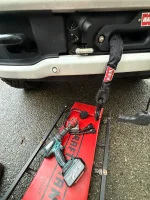
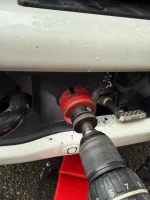
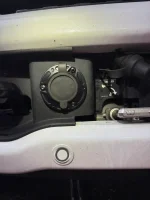
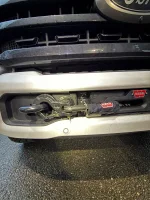
All set and patiently waiting for my factory 55 super hook💪🏻 Much cleaner setup and if I want to add a trickle charger, I’m all ready👍🏻
 

Attachments

  • IMG_7568.webp
    IMG_7568.webp
    419.5 KB · Views: 31
  • IMG_7569.webp
    IMG_7569.webp
    157.9 KB · Views: 33
  • IMG_7570.webp
    IMG_7570.webp
    120.6 KB · Views: 31
  • IMG_7571.webp
    IMG_7571.webp
    369.7 KB · Views: 34
And I promise, if I ever get stranded with a dead battery in close proximity to you, I will call you first to come rescue me just so you can say, see I told you so! :ROFLMAO: :ROFLMAO: :ROFLMAO: :ROFLMAO: :ROFLMAO:
(No hard feelings. 🍻)
actually
hope you never need to!!!!!

if ya do, I'd be glad to help you out if you ever need a hand!!!!!!

👍

kinda like the two sided saying

"call me if you need me, but leave me alone"

folks don't get the whole meaning

hope you never need help, but I'm here to lean on if you do.

take care!!!!!!

look forward to the occasion we can meet.

hope it's not cause of a dead battery😂🤣😂🤣😂
 
You're welcome! Enjoy the Track +10 setting 🤪.
I tried that last weekend when I finally installed mine. Good lord, why not just replace the throttle with a button at that point 😂

City 8 felt closest to linear.
 
I tried that last weekend when I finally installed mine. Good lord, why not just replace the throttle with a button at that point 😂

City 8 felt closest to linear.
That's the sweet spot, higher end City.
 
Same. Ran one on my 22 and now one on the 24. No issues. View attachment 212010
I’m looking at this picture of your NOCO installation, and I’m curious where you got, or maybe you made that bracket, but I was looking to do something similar because right now it’s sitting next to the battery on top, but the hood’s pressing up against it firmly.
 
I’m looking at this picture of your NOCO installation, and I’m curious where you got, or maybe you made that bracket, but I was looking to do something similar because right now it’s sitting next to the battery on top, but the hood’s pressing up against it firmly.
To make it easy I just used double sided clear silicone tape. It's extremely strong, and can be removed with zero residue. I have the NOCO Genius 5 as well and it's a ten minute install process.
1784503694113.webp
 
I’m looking at this picture of your NOCO installation, and I’m curious where you got, or maybe you made that bracket, but I was looking to do something similar because right now it’s sitting next to the battery on top, but the hood’s pressing up against it firmly.
I asked the same question a while back. He made it. Pretty nifty!
 
I’m looking at this picture of your NOCO installation, and I’m curious where you got, or maybe you made that bracket, but I was looking to do something similar because right now it’s sitting next to the battery on top, but the hood’s pressing up against it firmly.
Just tuck it in the back! I have the NOCO GENIUSPRO 10x1 and it sits comfortably in that little area.

23194.webp
 
Back
Top Bottom