I’ll apologize in advance for the length of this story, but I’ve responded to car crashes for decades, and I see crappy tire advice all the time, so I feel strongly about this topic. The truth is, many or most tire criticisms are rooted in poorly trained drivers or poor decision-making. My own stupidity provides a good case on point, so I’m sharing it here.
Forty-plus years ago I had to drive from central Oregon to the valley on Christmas Eve. It was snowing and blowing so hard the passes were closed, so we were checking the ODOT recording (long before internet) every hour or so hoping for a window to get over the pass. Our window came in the early evening, so we left Bend for the pass.
The State Police had a check point, as only 4x4 vehicles were being allowed up the hill. I was driving a 3/4 ton truck with BFG ATs and I got waived through. (I later learned that the pass was closed again after I was allowed through, as the conditions quickly deteriorated again.)
It had been a heavy snow year, so the snow banks on either side of the road grew to over 8 feet tall near the top. It was snowing hard and blowing the snow off the banks into the road, so the drive was a full butt-pucker. The two ODOT plows working the pass on opposing routes couldn't keep up with the snowfall and wind. With a white road, white walls, and full blizzard with 20 mph winds it was extremely difficult to see where road stopped and the snow banks began. At times I slowed to only 10 mph, and ran with only parking lights and amber fog lights, as the headlights made the visibility worse. It was a long trip through the worst of it. Up top, my front license plate was dragging in the snow in the middle of the highway.
By the time I got down to about 1800’, the snow had turned to rain, so the road was clear, black, and wet. It was after midnight on Christmas Eve, so there was zero traffic. After two hours of white-knuckle driving and lots of coffee, I needed to pee, so I pulled over at a wide spot. When I stepped out of my truck my feet immediately slipped out from under me. I caught myself on the door and door sill.
As it turns out, the rain had been freezing on contact. My hood, radio antennae, and most surfaces of the truck were coated in a quarter-inch or more of ice. There were icicles hanging from the bottom of the mirrors, door, and bumper, but I hadn’t noticed any of this, because the windshield was clear, and I’d been so focused on seeing black pavement again.
I tried to walk around the truck while leaning on it with one hand, but I had zero traction, so I returned to the door jamb, lowered the window, and pissed while hanging on the door. When I got going again, I got up to about 10 mph and stomped to the brakes to check traction. I locked up and skidded for two or three seconds… The most amazing part of this experience is that I’d been driving on this pavement at speeds up to 50 mph for more than ten miles — because I had no idea it was solid ice. (Since that time I have seen conditions like this many times. On one such occasion I was working I-5 and we had dozens of crashes in one ten mile stretch of highway. After the sand-truck came through we started the traffic behind a slow-moving pace car, but the freezing rain quickly covered the sand and restored full-slick. I watched as the two vehicles in front of me slid off the road, one to the right and one to the left, as the camber of the road was enough slope to induce the slide. We all wore boot-chains, because without them we couldn’t walk to place flares.)
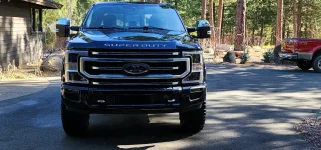
I learned a lot of lessons that Christmas Eve on the pass. First, the original all-position AT tread design on BFG KO tires was darn good on snow and ice. Amazing, really. We still run KO2s on my wife’s Grand Cherokees, and we’ve had many demonstrations of that tire’s superiority on ice, including one day when my Superduty couldn’t make it half way up our driveway in 4-wheel drive (running Toyota MTs) and her cherokee easily made it up with nary a slip. I also ran BFG KO2’s on my work Tahoe the last two years at work.
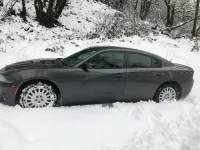
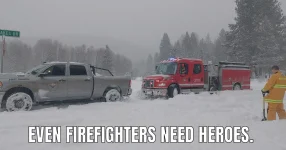
Next, all tire testimonials have to be taken with a grain of salt, because they’re never weighted by experience, driving skill, or decision-making: For the ten-plus miles I was driving on polished sheet-ice at speed, I was driving like an idiot. I didn’t know what I didn’t know. If I had crashed, I might well have blamed the tires for poor wet traction, when it was obviously my own stupidity that was putting them to an unreasonable test on ice, not water. Finally, on the internet, the opinion of a guy who survived a single 100 mile ski trip is weighted equally with the guy who works and drives on snow and ice every day for four months of every year for forty years. I’ve seen dozens if not hundreds of online opinions about how bad BFG tires “suck” on snow and ice, but as a state trooper in a western mountain state, I relied upon them for years. The same is true of studded Duratracs, which is my favorite snow and ice solution for a vehicle that won’t be run at high speeds. Prior to the Tahoe I drove Dodge Chargers at work, the last few of those were AWD hemi-powered Chargers running Goodyear Eagles which could tolerate the 150 mph speeds we occasionally had to run. Those tires were winter-rated, and amazing. I was bumper-deep in snow on many occasions and never got stuck once. (See photo below). Contrary to popular belief, huge-lugged tread patterns that are optimized for digging in mud are generally lousy on hard-packed snow and ice. (Think about running on polished concrete with golf shoes or football cleats, as opposed to tennis shoes.)
I’m old now and recently retired, so my opinions are based upon yesterday’s technology. Tires have improved a lot over the last forty years (think Blizzak), so your mileage may vary.





 :
: