Truck Campers Only, w/ an Overland & Off-roading theme

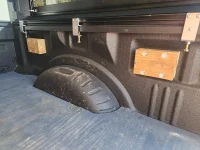
I have my kitchen side setup/dimensions mostly figured out, but I've been struggling trying to figure out how to best build a couch/bed on the passenger side that can flip up and allow for much of the truck bed to still be used. I don't have too much time to get real fancy, so I decided to try to use the factory M6 bolt holes from the side tie down points. The plan is to secure a ~2x10 horizontally between the two points, and have the middle of the 2x10 sitting on wheel well. I plan on attaching the bed/couch frame to the 2x10 with hinges so it can fold up out of the way when not in use. I'll let you know how it works out.
20241030_165659.jpg
20241030_190928.jpg
20241030_191237.jpg
 
Method 305 HD 18x9 with Toyo Open Country RT Trail 37x12.5R18LT

Very happy with that choice. Please note, you will need the Carli Trophy Hitch if you want to carry a matching spare tire. Even deflated, this tire will not fit into the factory spare tire location.
I'm thinking of sticking with 35's for that reason. given your travel do you feel a 35 is adequate?
 
I have my kitchen side setup/dimensions mostly figured out, but I've been struggling trying to figure out how to best build a couch/bed on the passenger side that can flip up and allow for much of the truck bed to still be used. I don't have too much time to get real fancy, so I decided to try to use the factory M6 bolt holes from the side tie down points. The plan is to secure a ~2x10 horizontally between the two points, and have the middle of the 2x10 sitting on wheel well. I plan on attaching the bed/couch frame to the 2x10 with hinges so it can fold up out of the way when not in use. I'll let you know how it works out. View attachment 177573View attachment 177576View attachment 177577
1000009001.jpg
1000009002.jpg
1000009003.jpg

Doing the frame for the couch/bed later today. I was surprised how solid the 2x10 feels mounted this way.
 
Last edited:
I have my kitchen side setup/dimensions mostly figured out, but I've been struggling trying to figure out how to best build a couch/bed on the passenger side that can flip up and allow for much of the truck bed to still be used. I don't have too much time to get real fancy, so I decided to try to use the factory M6 bolt holes from the side tie down points. The plan is to secure a ~2x10 horizontally between the two points, and have the middle of the 2x10 sitting on wheel well. I plan on attaching the bed/couch frame to the 2x10 with hinges so it can fold up out of the way when not in use. I'll let you know how it works out. View attachment 177573View attachment 177576View attachment 177577
Functional comes before fancy, IMO. Besides, you can make wood look good. A guy i know has a complete plywood build-out in the bed of his SAS'd LBZ. It is, hands down, the most functional built out truck i've ever seen but the guy has been wheelin for a very long time and knows exactly what he wants. He's also insanely good with his hands so its has as many points in aesthetics as it does in usefullness.
 
I'm thinking of sticking with 35's for that reason. given your travel do you feel a 35 is adequate?

Problem with that questions is everyone has a different definition of adequate. Ha. And you have to consider the disadvantages of bigger tires (weight, suspension mods to support, component wear and tear, mpg impacts, performance (acceleration and braking) impacts, overall width of the vehicle, fitting in stock spare tire location, expense, etc.) along with the advantages (improved ground clearance and approach/departure/breakover angles, better rollover, etc.)

I can say that my previous 1/2 ton pickup/slide-in camper rig had 33" and no lift and I took that thing places that had people scratching their heads when they wondered how we got where we did. On my non-Tremor, Supercab '24 F250 and slide-in, pop-up camper, I'm running 285/75R18 (34.8" tall) and have not yet done a lift. We've been in some pretty gnarly places this summer, but have not yet had the chance to push it as far as my previous rig. I am going to add Tremor springs/rear block over the winter and do some good shocks. I promised myself I'd drive it stock for a season, and collect data, so I could better compare before and after. I don't want much lift and so will not do a kit with 2.5"+ of lift like the Carli offerings because, on the tree-line, branch-infested trails we frequent, we already scrape our way down the trails. If we mainly did open desert trails, I'd have to reweigh my choice, but for our use, there are still advantages to sticking with this tire size.

Some are: 285 are about 11.2" wide. I didn't want 35 x 12.5 because I didn't want tire poke and we mostly drive dry, rocky terrain where there is zero advantage to a wider tire. For us, wider tires (especially if paired with with wider wheels with more offset) is a disadvantage. On narrow and/or rocky trails, I want my width as narrow as possible. Several times a year I squeeze between rocks with literally 1/2" clearance on each side. And, I often place my tires between rocks or so close that even 1.5" wider would Wider tires/wheels would be a disadvantage for me.

35" have plenty of sidewall to air down and drive comfortably. We regularly air down from camper and fully loaded tire pressures of 50f/55r psi to 30f/30r on the trails (sometimes higher when dealing only with washboard gravel an sometimes lower).

Also, I have a second set of wheels/tires and run dedicated winter tires (Blizzak LT) in the winter when the camper is off. So I do tire swaps at least twice a year. This tire/wheel combo is heavy enough without going to some crazy large size that weight 30lb more than my current tire.

Once I've installed the Tremor springs and rear blocks, I could fit a narrow 36". Some have fit 37", but the way I articulate, I'm not confident a 37" would work for me even a 11.5" width on narrow stock wheels.

Some sizes I might consider if they existed in a brand and model/tread I liked:
285/80R18 - 36" tall. 11.2" wide.
295/75R18 - 35.4" tall. 11.6" wide.
295/80R18 - 36.6" tall. 11.6" wide.

So my criteria/considerations include weight, what will fit in suspension mods I'm willing to do, component wear and tear, mpg impacts, performance (acceleration and braking) impacts, overall width of the vehicle, overall height of the vehicle, what will fit in stock spare tire carrier.
For now, the 285/75R18 is the best choice for our use. Once I do the Tremor springs and rear blocks, there may be some other choices that I'd consider, but I'd want a max height of about 36.5" (to fit in stock spare tire and for clearance when articulating) and max width of 11.6".
thank you for writing such detail on WHY you do things the way you do.

If you find a 36" ish tire you like, i'd like to hear what it is.(y)
 
thank you for writing such detail on WHY you do things the way you do.

If you find a 36" ish tire you like, i'd like to hear what it is.(y)

Yep. And everyone has to weight the pros and cons for their use case (terrain, suspension and other criteria). Heck, some will weigh looks as their number 1 priority and all other traits as secondary, which is all good. The things that weigh the heaviest on my list may be way down the list for other folks. That is why it's hard to get advice on a forum. Building a spreadsheet, or at least jotting down your criteria, will help each person think through the various traits and at least mentally weight them on importance for their use.

For our rig, the overall height of the truck and camper were the biggest impact. That limits the suspension lift I'm willing to do which limits the tire size that will fit when fully articulated. Then the impacts related to the tire weight weight and the overall width of the rig (fitting through tight spaces and also avoiding tire poke) are close seconds to importance for us. I also highly value a tall overall height because I want the best rollover, but that desire is constrained by the other metrics. Then, finding a manufacturer and tread I like within those constraints.

Looks are important to me (even though what looks good to one person does not to another). Looks (and price) are on my list, but weighted much lower than the functional trait. Dang do I love the look of a 37", 38" and 40" tire, but if I owned a rig with those, I could only fit down about 1/4 of the local trails we frequent here in Montana which I'm not willing to compromise. I often have to turn around due to not enough overhead clearance the way it is now. it would impact me on plenty of trails that I've experienced in UT and other States as well (overhanging overhead rocks limiting height or space to squeeze between rocks at wheel/tire level). If I lived near and primarily frequented the Southwest's open deserts where overall height was not a limit, my weighted factors would shift around a lot.
 
Last edited:
I still need to get cushions and build a back for the couch (will probably build the back to attach to the T track of the Tune). Overall though I'm pretty happy with how the couch/bed structure turned out...especially because I was pretty much just winging it as I went without too much planning. I was able to use a lot of what I had laying around, which is always a bonus.
20241030_165659.webp
20241031_135431.webp
20241031_151914.webp
20241101_152524.webp
20241101_175937.webp
20241102_135109.webp
20241102_143258.webp
20241102_143314.webp
20241102_143705.webp
 

Attachments

  • 20241031_135438.webp
    20241031_135438.webp
    511.8 KB · Views: 39
Alrighty boys, help me plan for arctic winter camping up into the arctic circle.

I've got my FWC hawk, and planning on these changes/additions:
  1. 1 or 2 extra bottles of propane for heat.
  2. Freeze dried meals and a small electric water boiler to reduce humidity.
  3. Light bar on the truck since the sun won't rise for the entire trip.
  4. Electric blankets.
  5. Diesel antifreeze for the 6.7.
  6. Should I figure out a grill cover?
  7. I'm debating if I should get a bigger inverter to run the block heater off batteries for an hour before starting. I don't have much experience with that part of the world, so maybe everywhere I'd be sleeping has outlets anyway?
FYI - When i did the WYO BDR, I slept in my pickup on a plywood deck. I got cold the first night (lows in the mid-20s) so i bought an electric blanket at the one walmart we passed during the entire trip thinking my 420w Schumacher inverter should be enough juice to power it. Math worked but the blanket did not. Granted, it wasnt an expensive inverter. I did verify when i got home that the blanket was just fine when plugged into grid power. I didnt have a pure sine at the time. No telling if that would have powered it.

Check to make sure it works before you go. Mine would power up and run for about 30s-1 min before flashing and then shutting off (the blanket that is).
 
I still need to get cushions and build a back for the couch (will probably build the back to attach to the T track of the Tune). Overall though I'm pretty happy with how the couch/bed structure turned out...especially because I was pretty much just winging it as I went without too much planning. I was able to use a lot of what I had laying around, which is always a bonus.
View attachment 177893View attachment 177895View attachment 177896View attachment 177897View attachment 177898View attachment 177899View attachment 177900View attachment 177901View attachment 177902
The drawer packouts are a good idea. Now you got make wishing i would have bought a bunch earlier this week when HD screwed up the pricing and you could pick them up for ~$50
 
The drawer packouts are a good idea. Now you got make wishing i would have bought a bunch earlier this week when HD screwed up the pricing and you could pick them up for ~$50
Hmmm...I didn't get them that cheap. There was no sale listed when I bought mine, but when I rang them up I got $150 off the listed price. I wasn't going to argue.
 
Hmmm...I didn't get them that cheap. There was no sale listed when I bought mine, but when I rang them up I got $150 off the listed price. I wasn't going to argue.
at the beginning, if you spent $399 they knocked off $300. It didnt last long and most that were able to take advantage picked up in store.
 
Here is our recently installed weekender set up. The only issue that I have is with the tailgate deleted and the aftermarket camera is that I'm no longer getting my parking sensors. It did take some work to get the rear camera to work as the original one was not compatible with the 360 degree Birdseye view. The camper shell dealer that did the install is not sure how to get the sensors back up and running. We will be consulting with the dealer next week. I do understand that it is impossible to get rid of the "tailgate open" warning at startup, I just have to cancel it out manually. I'm sure someone else has had this issue?

IMG_6880.webp
 
Alrighty boys, help me plan for arctic winter camping up into the arctic circle.

I've got my FWC hawk, and planning on these changes/additions:
  1. 1 or 2 extra bottles of propane for heat.
  2. Freeze dried meals and a small electric water boiler to reduce humidity.
  3. Light bar on the truck since the sun won't rise for the entire trip.
  4. Electric blankets.
  5. Diesel antifreeze for the 6.7.
  6. Should I figure out a grill cover?
  7. I'm debating if I should get a bigger inverter to run the block heater off batteries for an hour before starting. I don't have much experience with that part of the world, so maybe everywhere I'd be sleeping has outlets anyway?
Sounds like a good trip… i know I saw a few other YouTubers do it without too much drama so hopefully your trip is similar.

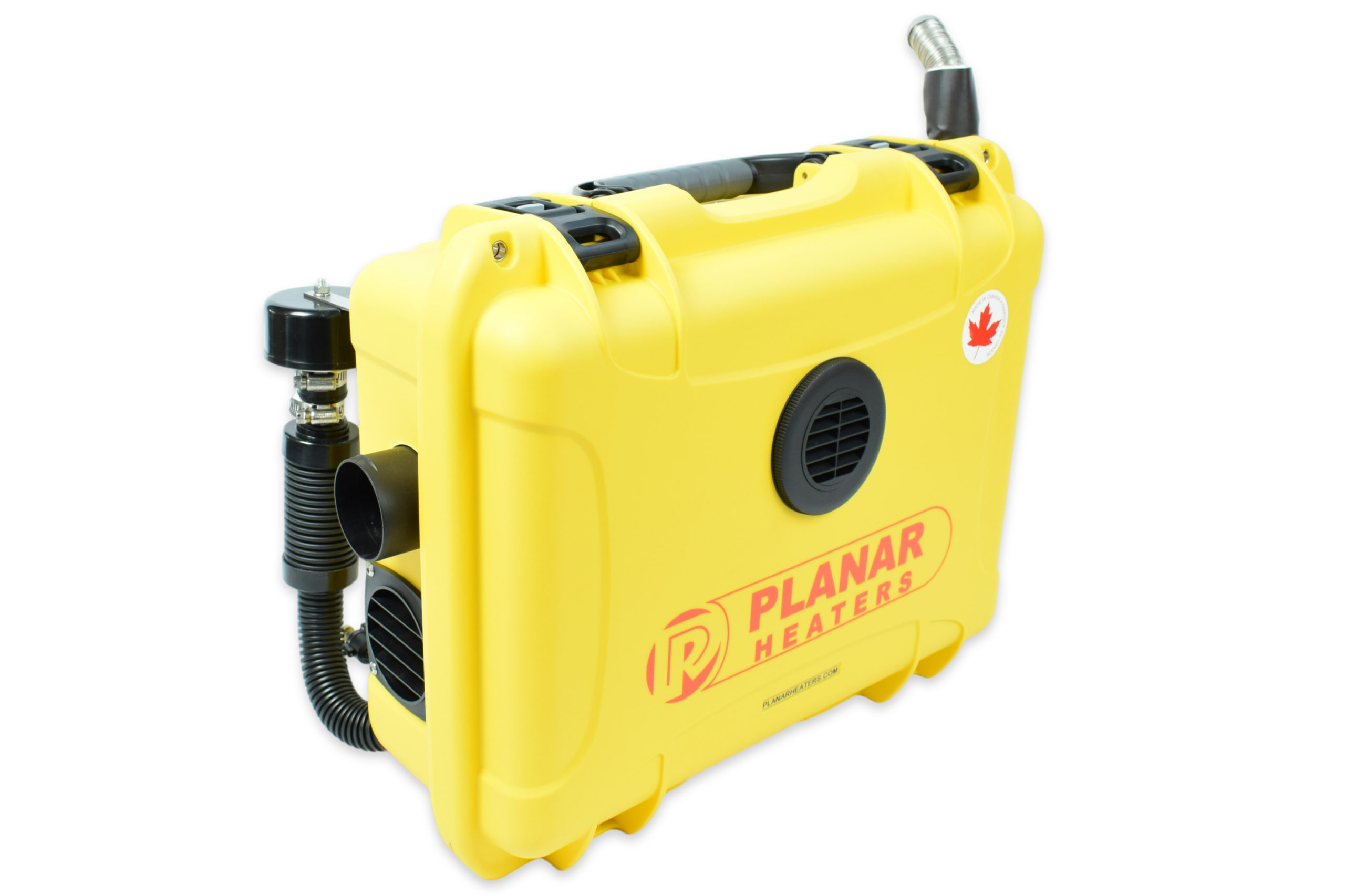
1) how many days are you planning on? Choose your fuel needs by that. You can buy propane along that route but better safe than sorry. Alternative would be a diesel heater. They are amazing. I had a Planar in my previous camper and it was a beast!!!! Maybe an alternative heat source would be better than extra fuel. Two is one one is none…
2) sure, whatever you like to eat. Food is very very expensive as you travel north so I’d bring what you can. Not sure on your current power supply but we use a 1200W electric kettle and it’s amazing for dried food and coffee. FAST, and simple. Tbh I doubt you’ll have a lot of humidity…. Arctic in the winter is going to be about as dry as you’ve ever seen.
3) More lights is always better. Why not? Certainly don’t need it but why not…
4). If you have able battery power an electric blanket sounds nice.
5). You’ll be running winter blend diesel anyway (that’s all you can buy) but I’d get some diesel 911 or other emergency anti gelling mix.
6) I’m sure Ford has one, you’ll probably want it if you’re going to run an oil burner that far up north.
7). Idk, how big is your inverter now? Block heaters are probably 15A (to run on a standard outlet) so your internet would need to power 12A x 120v or about 1500W continuous to power a heater. If it’s a 20A plug then you’d need a 2000W inverter (16x120) battery size is more important than inverter power.

Roamimg Reckless and Living The Van Life are the two that come to mind to watch on YouTube. They both did the Arctic in winter.
 
FYI - When i did the WYO BDR, I slept in my pickup on a plywood deck. I got cold the first night (lows in the mid-20s) so i bought an electric blanket at the one walmart we passed during the entire trip thinking my 420w Schumacher inverter should be enough juice to power it. Math worked but the blanket did not. Granted, it wasnt an expensive inverter. I did verify when i got home that the blanket was just fine when plugged into grid power. I didnt have a pure sine at the time. No telling if that would have powered it.

Check to make sure it works before you go. Mine would power up and run for about 30s-1 min before flashing and then shutting off (the blanket that is).

Excellent point. I ran into that issue last year too before Labrador. This inverter worked great for me. https://www.amazon.com/gp/product/B07KQ4Q2L5/

how many days are you planning on?

Roughly a month in Alaska/Yukon/NWT, maybe a week in the arctic circle.

You can buy propane along that route but better safe than sorry.

Ideally I'd have enough to get home, but I just can't possibly carry that much. Realistically I'd have enough to get back to the nearest "major" town.

Maybe an alternative heat source would be better than extra fuel. Two is one one is none…

I've been thinking about that, but I don't have a great way to mount it (yes, I know I could figure something out) and my truck is the backup source of heat.

7). Idk, how big is your inverter now? Block heaters are probably 15A (to run on a standard outlet) so your internet would need to power 12A x 120v or about 1500W continuous to power a heater. If it’s a 20A plug then you’d need a 2000W inverter (16x120) battery size is more important than inverter power.

I only have a 300 watt inverter (linked above). It's a 15A plug.
 
Excellent point. I ran into that issue last year too before Labrador. This inverter worked great for me. https://www.amazon.com/gp/product/B07KQ4Q2L5/


Roughly a month in Alaska/Yukon/NWT, maybe a week in the arctic circle.


Ideally I'd have enough to get home, but I just can't possibly carry that much. Realistically I'd have enough to get back to the nearest "major" town.


I've been thinking about that, but I don't have a great way to mount it (yes, I know I could figure something out) and my truck is the backup source of heat.


I only have a 300 watt inverter (linked above). It's a 15A plug.
Oh…. 300W at 120V is only like 2.5A, that’s basically nothing. You need a bigger inverter for sure if you want to use it for more than a lightbulb or two. I have a 1500W which seems big enough but if I were you I’d just do a 2000W.

I’d also make sure you batteries are either heated or in a heated location assuming they are LiFePo.

A month is quite a trip. I’d just get gas a long the way. Before you really get up north just make sure all tanks are topped off.

Not much to mounting a diesel heater.


Something like this just need a hole to blow the heat in. My buddy used an RV sewer connection if I remember right. If you want to be fancy you can make a bracket to set it on. Shouldn’t require much effort at all honestly. Diesel is everywhere and those heaters are HOT.
 
Excellent point. I ran into that issue last year too before Labrador. This inverter worked great for me. https://www.amazon.com/gp/product/B07KQ4Q2L5/
Maybe the pure sine wave is what does it? Glad you figured it out. Thanks for advising!
I agree
Something like this just need a hole to blow the heat in. My buddy used an RV sewer connection if I remember right. If you want to be fancy you can make a bracket to set it on. Shouldn’t require much effort at all honestly. Diesel is everywhere and those heaters are HOT.
This is no joke. I have a 8kw heater. It puts out some serious heat. It barely consumes fuel. I'd recommend looking into one of these contraptions. BUT... carry an extra glow plug.
 
I've been rethinking the diesel heater...I could take it instead of the 2 extra propane cylinders and it probably wouldn't take up any extra storage space (maybe even less).
 
You could also get something like a Webasto that feeds off your tank. They make them for Diesel and gas. My Aqua-Hot does that and I am considering adding a Webasto as a backup or for when I conquer Canada/Alaska in deep winter maybe.
 
Back
Top Bottom