Long drain periods like this will close the gap between what is called the "initial fill" and the "service fill". The service fill is meant to maintain the correct dynamic oil level with shorter, more typical, drain times. Some amount of oil will always be retained in the engine, however. Certainly if you "lean" the truck you can get some additional out as well.
Let's talk about dynamic oil levels a bit... The static level you measure with the dipstick really doesn't matter in and of itself - it's the oil level while the engine is running that is important. Too much or too little can be detrimental. Obviously there is a relationship and the static level is established to provide the correct dynamic level.
Checking sump part #s, etc is important but I would also be concerned with the oil pump map and oil consumers over the years that have most likely changed multiple times. Turbo, bearings, coolers, tensioners, hydraulic lash adjusters, etc - anything that has oil flow. How about other system impacts - vehicle usage, transmission and/or final drive gearing, etc that would change engine rpm and loading? My point is that within the same sump and bottom end of the engine, an equivalent dynamic level can be achieved with different initial static fill levels.
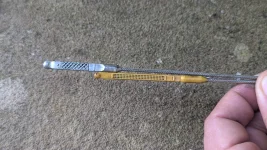
The OEM dipstick and oil level specification have been extensively tested and verified, both with engine dyno and vehicle level development and durability testing. Sure you can add more, but what provides any confidence that it's better? In some engines removing oil is safer than adding, when we're talking a magnitude of 1-2 quarts . I can't speak specifically to the latest gen 6.7, but the only reason I can see to add oil is if you are continually operating and biased to a high engine rpm condition. Even then it's somewhat questionable.

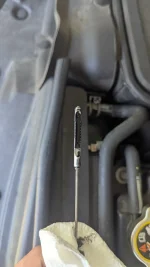
 (shut up @Optimus🤖 )

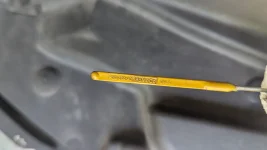







 .