My DPF % rarely climbs above 0%. So I must always be passively regenerating. I’ve noticed if I baby it, the % goes up, but I have a heavy foot so I wonder if that keeps it cleared out.
Navigation
Install the app
How to install the app on iOS
Follow along with the video below to see how to install our site as a web app on your home screen.
Note: This feature may not be available in some browsers.
More options
Style variation
You are using an out of date browser. It may not display this or other websites correctly.
You should upgrade or use an alternative browser.
You should upgrade or use an alternative browser.
Help me understand regen on a 23 6.7
- OP 🔹 Borg
- Start date



So there isn't a special message that notifies you its in REGEN?There’s A LOT OF TALK on this page but no one seems to want to answer your simple question.
The only way you would know for certain that you are in a regen is if you are constantly watching this parameter and seeing the value drop at increments of 5%. When it’s going down every 30 seconds or so you are in a regen.
You could also deduce an active regen from looking at your mpg average, it drops when you’re regening, but you have to be paying attention to your mph and previous mpg, not everyone can detect it that way, but it’s doable.
View attachment 172846
That would answer his question - there is not a message (as I believe there are in the RAM Cummin's models) that actually notifies you its currently under the REGEN process.
He had already noted he observed the DEF % drop giving an indication something is going on but wasn't sure if it's actually in REGEN?
My DPF % rarely climbs above 0%. So I must always be passively regenerating. I’ve noticed if I baby it, the % goes up, but I have a heavy foot so I wonder if that keeps it cleared out.
Could the '23+MY offer a "self-cleaning" process when under load, say towing, without using fluid? Could this be a thing (serious question)?
I know that in the '22- MY, there is not a message that indicates you're under a current REGEN cycle and if my memory serves correctly, it would clean the diaper bag when under load differently or not let it build up so quickly. I cannot remember quite frankly since I moved away from the diaper bag shortly after inception.
Maybe I'm just not the guy to attempt to answer his question?

The Banks iDash does the same stuff. There’s a huge menu of options, sensor packages, and screen options. You can pick the number of gauges you want displayed on the screen, pick all the background and display colors, set alarms if you want notifications, and download all the diagnostics to the memory chip, if there’s something to share, track, or diagnose.Past experiences with Active Regens says when you throw the truck into Park, the PCM shuts down the active regen process. As @JTredway showed the CTS3 does a great job of showing you when the Active Regen process starts.
Yes...the 2023+ has changed the way this is all done. If I were you I'd figure out a device to use, pay what you want, buy whatever brand. You WANT to know trust me.
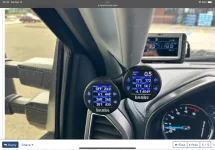
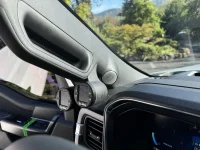
Shameless device plug : The CTS3 has a wide variety of PIDs you can select on the display. Add to that SEVERAL different display screens. TO which you can mix-match when you swipe as @JTredway has shown in the pics. Now...Edge has quite a few add-on sensors IF you want to run them. Now here's a cool thing...setup all three pages to the same 16 PID screen, you can swipe to read up to 48 different PIDs. OR use whatever Edge sensors and PIDs you want to configure as well.
Cool new PID I found was Fuel Temperature (FRT_A-SAE), and Oil Dist (since last oil change). Jury is still out but I did see the value changing during my drive today...13+ hours.
View attachment 172817
I should have addressed this directly. I have one of my iDash screens set up to to display DEF level, DPF %, exhaust temp, and regen status - so I can watch the trigger get approached and then follow all the parameters.There’s A LOT OF TALK on this page but no one seems to want to answer your simple question.
The only way you would know for certain that you are in a regen is if you are constantly watching this parameter and seeing the value drop at increments of 5%. When it’s going down every 30 seconds or so you are in a regen.
You could also deduce an active regen from looking at your mpg average, it drops when you’re regening, but you have to be paying attention to your mph and previous mpg, not everyone can detect it that way, but it’s doable.
Attachments

- Nov 22, 2023
- 2,227
- 9,863
- '23 AMB F-350 Lariat Ultimate 6.7
- '25 F-150 Tremor, '21 Land Cruiser, '26 Tesla Model S Plaid
My '23 is my first ever diesel and I am not aware of any notice or indicator shown by the truck that it's in regen. However - besides the obvious signs many others have noted, terrible spot fuel milage & steadily decreasing DPF % by fives - I have noticed a couple other clues that alert me to a possible regen in progress. One is a difficult to describe smell that reminds me a little of my hot tub when I first open the cover; call it "used DEF smell", that I catch a whiff of from time to time when the truck is running. (this is not the acrid pee smell you catch while refilling the DEF tank).So there isn't a special message that notifies you its in REGEN?
That would answer his question - there is not a message (as I believe there are in the RAM Cummin's models) that actually notifies you its currently under the REGEN process.
I arrived home once and was backing to my parking spot when I noticed the idle was a little faster than normal and caught a whiff of that smell so I called up the diesel gauge display instead of shutting off the engine and sure enough, saw the DPF drop 5%. Played along by driving back to town to get something I forgot at my shop so it would have time to finish, sure enough it reached 0% about the time I got there. Having to intuit what the truck's doing to treat it right kinda sucks, I think I want me some of those fancy accessory gauges.
Could the '23+MY offer a "self-cleaning" process when under load, say towing, without using fluid? Could this be a thing (serious question)?
Given sufficient load, my '23 definitely does some passive regeneration. Sustained speeds above 70 and towing are factors as is ambient air temperature. A good highway leg stretch will often freeze the DPF % for quite a long time and add a trailer and warm day into the mix and I've actually seen it go down by 5-10% but I've never seen more than that. Perhaps I would if I towed heavier than what I've been doing lately and went faster. Regen always comes eventually but wow does it like to stretch its legs and run. When the DPF is getting close to full, 80-90% I try to use the truck for a longer trip even if I don't need it's capabilities just to let it regen effectively and efficiently. Plus it's just damn fun to drive.
Not so different from walking a dog because you could both use the exercise and so it can poop.


- Jun 25, 2020
- 6,471
- 10,982
- >>US Army<<
- Is she DAF or just ignoring me??
- 2022 F350 CCLB (11/2022)
- 2015 F350 CCLB 225k // 2006 F350 CCLB 280k
The Banks iDash does the same stuff.
How much did the Dual Banks w/mount cost ??
Could the '23+MY offer a "self-cleaning" process when under load, say towing, without using fluid? Could this be a thing (serious question)?
Passive regens are happening when you have EGTs higher then 1000*F. Generally speaking that's towing, but you need to be driving for a good bit of time to get the best results.
For my '22 I make the effort to control the Active Regens. I use the menu checkbox, watch the LAST DPF MILES to know I'm getting to 497.1, then once at or over the magic number I'll hit the HWY. I know where to start the Active Regen, driving 20mins....done. Hit the cruise control for 70+MPH. Burns that boo boo diaper down in 10mins (maybe 15), burns a few more mins till complete. Given the CTS3 usually does not follow the Ford dash DPF% numbers for some reason. CTS DPF% tends to be lower at Active Regen start compared to the dash. But the Ford DPF% burns down WAY faster than the CTS3 reports. At the end of it all the CTS3 reports in the DPF% sitting in single digits (from 3-9% depending). Just the way it is.

Today I had some regen strangeness.
On the way to the tire store the DPF climbed up to 99% and the regen went active. I watched the exhaust temp climb and the fuel economy drop when I was about two miles from the tire store, so I left the truck idling while I did five minutes worth of business and headed back out. A few miles later the regen turned off and the DPF showed 76%. I drove another 8 miles with it off and stopped for an appointment. When I got back in the truck the DPF value climbed from 76% to 100% over less than ten miles and, after four more miles, the regen kicked on again. This time it remained on for about 14 minutes. When the regen turned off the DPF showed 5%.
This seems odd because…
1) It turned off regen before completing the job
2) It was reporting only 76% when it must have been much higher.
3) Sometimes it goes into regen at 98% or 99%, but is can also whistle along the highway for miles at 100% before it kicks on.
you guys see numbers higher than 50% on the DPF?????
I've seen 50% one time and then it kicks down to 0% like clock work. Usually never going beyond 25%.
The gauges are $279 each and the double pod was $109, I think. The Data Monster is less expensive and does much of the same. I could have saved about half the expense if I was willing to do more scrolling, but I like having more visible without screwing with it.How much did the Dual Banks w/mount cost ??
Passive regens are happening when you have EGTs higher then 1000*F. Generally speaking that's towing, but you need to be driving for a good bit of time to get the best results.
For my '22 I make the effort to control the Active Regens. I use the menu checkbox, watch the LAST DPF MILES to know I'm getting to 497.1, then once at or over the magic number I'll hit the HWY. I know where to start the Active Regen, driving 20mins....done. Hit the cruise control for 70+MPH. Burns that boo boo diaper down in 10mins (maybe 15), burns a few more mins till complete. Given the CTS3 usually does not follow the Ford dash DPF% numbers for some reason. CTS DPF% tends to be lower at Active Regen start compared to the dash. But the Ford DPF% burns down WAY faster than the CTS3 reports. At the end of it all the CTS3 reports in the DPF% sitting in single digits (from 3-9% depending). Just the way it is.
Here’s a banks summary tutorial. There are better set-up videos I can link if anybody is interested.
Banks iDash Overview
I also like the appearance of the Banks gauges and the sanitary installation in the A-pillar. I’ve had gauges mounted there since the 90s, so it just feels familiar. I hate suction cup mounts, as they look sloppy and I’ve never found one that will last and tolerate bumpy roads in extreme environments.
Yup. I climb to the upper 90s or 100.you guys see numbers higher than 50% on the DPF?????
I've seen 50% one time and then it kicks down to 0% like clock work. Usually never going beyond 25%.

Passive regens happen when exhaust temps are above 500°F or 600°F. The hotter the more it works.
DEF usage is constantly variable and always used. When NOx over a threshold is detected in the exhaust DEF is injected at variable rates to neutralize the NOx, its reduced rate is detected by a second downstream sensor to ensure its effectiveness. The EGR and DEF work separately but together to reduce NOx. EGR reduces combustion temperatures to reduced how much NOx is created while DEF neutralizes it and converts it to nitrogen and water.
DEF has nothing to do with the DPF or regen process although its usage may increase if NOx increases while regening. DEF does not clean the DPF.


- Sep 26, 2021
- 2,803
- 7,122
- Navy 68
- 22 Stone Grey Tremor, Lariat, Ultimate
- Ranger 620VS, ATAK 120
@Himni Well said and useful information.Passive regens happen when exhaust temps are above 500°F or 600°F. The hotter the more it works.
DEF usage is constantly variable and always used. When NOx over a threshold is detected in the exhaust DEF is injected at variable rates to neutralize the NOx, its reduced rate is detected by a second downstream sensor to ensure its effectiveness. The EGR and DEF work separately but together to reduce NOx. EGR reduces combustion temperatures to reduced how much NOx is created while DEF neutralizes it and converts it to nitrogen and water.
DEF has nothing to do with the DPF or regen process although its usage may increase if NOx increases while regening. DEF does not clean the DPF.
 I always forget to mention that the DEF is used in the catalytic converter, not the DPF. Both burn hot but the DPF regeneration is extremely hot, as well as the timing and duration can vary a lot.
I found an old, but descriptive video explaining the DEF purpose and gives some assemblance to how much is used per mileage and use but newer trucks will likely use a different ratio. This gives the general idea of its use.
DEF description
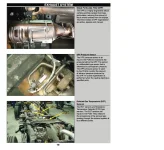
The DPF regen process has evolved over the years and different manufacturers have their own schemes on how they are incorporated. Some manufacturers even reverse the process, the catalyst is before the DPF, including Ford in some cases. However, they essentially perform the same process, reduction or elimination of the particulate matter. Here's an old Ford description, this is on the 2011-16 and 2017 schemes, the new trucks are somewhat different.
Quite a few months ago, I posted a block diagram of the process but cannot locate it easily in the search field. So here it is again.
Attachments
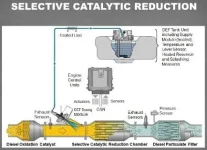
Diesel exhaust fluid (urea) has nothing to do with diesel particulate filter(DPF) regeneration. DEF reacts with oxides of nitrogen to reduce NOx emissions; diesel fuel is burned to remove excess particulate from the DPF. Two completely different processes.DEF is injected downstream of the DPF in the exhaust, and has NOx sensors upstream / downstream of the inject point to monitor NOx reduction. DEF has zero effect on differential pressure across the DPF. At time constant or pressure differential across the filter increase, regens will start to burn soot off the filter.

Old thread, but seems like it's as good of a place as any for my question. Background, current truck (2025 F250) is my first diesel and just got back from my first really long highway trip with it (close to 3,600 miles cross country from LA back to TX for the week of thanksgiving) and noticed some curious things about regens along the way and wondering if anyone has similar experiences:
- First curious behavior, on longer stretches of highway driving the truck still did the periodic "500 mile" auto regens, but I noticed that for nearly all of the 500miles filter % basically stayed at 0% for the first 400miles or so, but then in the last 50-100miles before the next regen would start it would somewhat suddenly shoot up from 0% to somewhere in the 20-40% range over the course of 20-30 miles and then stay constant until the active regen kicked off right at about 500miles from when the last one finished... nothing was really changing on driving style during that period of time, almost all of the trip was Interstate/State Highways with cruise set at 75-85MPH
- Second curious behavior, going based off of instantaneous MPG readout, the regen would continue for what seemed like an unusually long time after filter % went back to zero, easily 15mins+ and one that seemed to stay active for almost 20mins, always with with speed/load more or less constant. Granted, I am basing this solely on paying attention to the instantaneous mileage (I would pay attention to when it would drop and consistently stay somewhere in the 10-15MPG range when on flat ground/constant speed, then I'd click to the Diesel Measurements screen and could see the filter % dropping steadily down in 5% increments, then when it hit 0% I'd click back to the MPG screen and watch till it recovered back closer to the average)... does this sound about right/normal to folks? It seems like a long time unless 0% doesnt really mean "empty/clean".
For some background, in the first few months I had the truck mostly commuting back and forth to work (~17miles each, almost all Interstate) regen kick off like clockwork basically right at the 500mile mark, filter never got full enough to regen sooner than the "automatic" regen based on distance. This usually happens sometime 1/3 to 1/2 way through my trip to or from the office (basically as soon as the engine hits operating temp) and then takes at tops 3-5mins to get the filter from 50-60% down to 0% and then seemed to run for 5mins or less after hitting 0% and only on one occasion was it still running when I pulled into my office parking lot (engine was idled up to ~800RPM and could smell it still doing its thing) for maybe a minute or two while parked until it idled back down to the normal "warm" idle point before I shut off the truck. Interestingly enough, the last/most recent regen happened as we were rolling back into town Sunday morning, filter jumped up to 45% over the course of ~20miles right before the 500mile mark and then the cycle seemed to run for at least 15-20mins after filter hit 0% which ended up being about few miles before I got off the highway and while driving the last 3-5miles in the city back to my house, I did notice that the exhaust note from the engine seemed noticeably clearer/louder, much more of the low growl than I think I've noticed before. So IDK maybe I wasnt paying close enough attention before and was inadvertently shutting the truck off with a regen still going on all of those times prior to this long trip.
Sorry for the novel in an old thread, but genuinely curious if other people have noticed similar behavior or if this is normal? i.e. filter staying at 0% for long stretches of highway but then jumping up suddenly in the last ~50-100miles before the automatic/500 mile regen happens or noticing that the truck stays in regen for what seems like an unusually long time after the filter % reads 0. When I queried ChatGPT last night the response was that this could signal an issue with a sensor or something else internal in the emissions system causing it to stay in regen after the filter is clean.
- Nov 22, 2023
- 2,227
- 9,863
- '23 AMB F-350 Lariat Ultimate 6.7
- '25 F-150 Tremor, '21 Land Cruiser, '26 Tesla Model S Plaid
Old thread, but seems like it's as good of a place as any for my question. Background, current truck (2025 F250) is my first diesel and just got back from my first really long highway trip with it (close to 3,600 miles cross country from LA back to TX for the week of thanksgiving) and noticed some curious things about regens along the way and wondering if anyone has similar experiences:
- First curious behavior, on longer stretches of highway driving the truck still did the periodic "500 mile" auto regens, but I noticed that for nearly all of the 500miles filter % basically stayed at 0% for the first 400miles or so, but then in the last 50-100miles before the next regen would start it would somewhat suddenly shoot up from 0% to somewhere in the 20-40% range over the course of 20-30 miles and then stay constant until the active regen kicked off right at about 500miles from when the last one finished... nothing was really changing on driving style during that period of time, almost all of the trip was Interstate/State Highways with cruise set at 75-85MPH
- Second curious behavior, going based off of instantaneous MPG readout, the regen would continue for what seemed like an unusually long time after filter % went back to zero, easily 15mins+ and one that seemed to stay active for almost 20mins, always with with speed/load more or less constant. Granted, I am basing this solely on paying attention to the instantaneous mileage (I would pay attention to when it would drop and consistently stay somewhere in the 10-15MPG range when on flat ground/constant speed, then I'd click to the Diesel Measurements screen and could see the filter % dropping steadily down in 5% increments, then when it hit 0% I'd click back to the MPG screen and watch till it recovered back closer to the average)... does this sound about right/normal to folks? It seems like a long time unless 0% doesnt really mean "empty/clean".
For some background, in the first few months I had the truck mostly commuting back and forth to work (~17miles each, almost all Interstate) regen kick off like clockwork basically right at the 500mile mark, filter never got full enough to regen sooner than the "automatic" regen based on distance. This usually happens sometime 1/3 to 1/2 way through my trip to or from the office (basically as soon as the engine hits operating temp) and then takes at tops 3-5mins to get the filter from 50-60% down to 0% and then seemed to run for 5mins or less after hitting 0% and only on one occasion was it still running when I pulled into my office parking lot (engine was idled up to ~800RPM and could smell it still doing its thing) for maybe a minute or two while parked until it idled back down to the normal "warm" idle point before I shut off the truck. Interestingly enough, the last/most recent regen happened as we were rolling back into town Sunday morning, filter jumped up to 45% over the course of ~20miles right before the 500mile mark and then the cycle seemed to run for at least 15-20mins after filter hit 0% which ended up being about few miles before I got off the highway and while driving the last 3-5miles in the city back to my house, I did notice that the exhaust note from the engine seemed noticeably clearer/louder, much more of the low growl than I think I've noticed before. So IDK maybe I wasnt paying close enough attention before and was inadvertently shutting the truck off with a regen still going on all of those times prior to this long trip.
Sorry for the novel in an old thread, but genuinely curious if other people have noticed similar behavior or if this is normal? i.e. filter staying at 0% for long stretches of highway but then jumping up suddenly in the last ~50-100miles before the automatic/500 mile regen happens or noticing that the truck stays in regen for what seems like an unusually long time after the filter % reads 0. When I queried ChatGPT last night the response was that this could signal an issue with a sensor or something else internal in the emissions system causing it to stay in regen after the filter is clean.
This is more or less what I've observed and come to expect from my 23.
 Long time 0% followed by a fairly rapid "hockey stick" rise. Short regens or mini regens but once in a while a long one. Getting annoyed because I shut it off while a regen was in its late stage and I didn't know because the truck tells me nothing.
Your experience seems normal and comparable to mine. The emissions systems have a long warranty, probably longer than my patience with it will last before I hit a bump and they fall off so I decided not to worry about it too much.

I have yet to experience a regen on my '22. Maybe I just dont know what to notice or I keep it cleaned out with all the towing in the hills ????


This is more or less what I've observed and come to expect from my 23.
Your experience seems normal and comparable to mine. The emissions systems have a long warranty, probably longer than my patience with it will last before I hit a bump and they fall off so I decided not to worry about it too much.
I also noticed recently by looking at mpg values during the regen that even though the truck says it is down to 0%, it actually continues to regen for about 2-3 minutes longer until mpgs get back to normal range. So it is a good idea to keep the truck running for a little while even after it is down to 0%.
- Nov 22, 2023
- 2,227
- 9,863
- '23 AMB F-350 Lariat Ultimate 6.7
- '25 F-150 Tremor, '21 Land Cruiser, '26 Tesla Model S Plaid
I also noticed recently by looking at mpg values during the regen that even though the truck says it is down to 0%, it actually continues to regen for about 2-3 minutes longer until mpgs get back to normal range. So it is a good idea to keep the truck running for a little while even after it is down to 0%.
I so wish there were a little warning indicator when the truck is in regen, maybe a little blue one located with the regular status lights or at least imposed on the filter % line in Diesel Measurements.
Last time I got "caught" was pulling in to Discount Tire barely in time for my appointment after a long highway drive at speed. I hadn't noticed the regen happening until I parked, noticed Filter % at zero but didn't smell the last bits of regen until I shut it off and climbed out.