- Feb 2, 2020
- 285
- 628
- U.S. ARMY 96-99
- 2020 F250 7.3 LARIAT TREMOR
- Too many toyz that are ever changing to list :)
Follow along with the video below to see how to install our site as a web app on your home screen.
Note: This feature may not be available in some browsers.
Just measured mine, same, wasn't quite as bad as I was recalling but is still very sloppy. There is absolutely zero functional reason to have that much oversize. Anyone that wants to claim its so things don't get bound up is full of it. Keep a rust inhibitor applied and if needed wire brush any rust on one and reapply rust inhibitor. Adding an extra 0.05-0.06" of unneeded clearance to avoid that minimal user effort is not worth the functional downsides, which is a properly dimensioned shank having more to move and slam side to side with force when pulling a camper for instance.Mine miced out to 2.58xxx using a cheap digital micrometer. That's how I came up with a little under 3/32" over 2.5". It will be interesting to see what yours is and how much Fords receivers may or may not fluctuate.

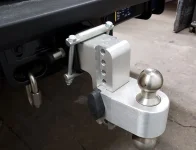
I have one of these and it solved my issues. I also have the IronGrip @Vecman posted. The combo is great.Every hitch will rattle in this truck. I have a Bulletproof, a B&W, and a WeighSafe. They'll all rattle. Anyone saying they won't is either deaf or means their hitch doesn't rattle on smooth roads. Take your truck on a rough road and every hitch will rattle without one of these:

2.5
BulletProof Hitches™ are manufactured to a very tight tolerance of +/- .010 of an inch. Unfortunately, hitch receivers cannot always live up to these standards. Tolerances can vary as much as .100 of an inch and could cause some unwanted movement or rattle in the hitch. To solve this, we have...www.bulletproofhitches.com

3.0
BulletProof Hitches™ are manufactured to a very tight tolerance of +/- .010 of an inch. Unfortunately, hitch receivers cannot always live up to these standards. Tolerances can vary as much as .100 of an inch and could cause some unwanted movement or rattle in the hitch. To solve this, we have...
I just bought this to go along with my new hitch. thanksThis works for me and zero movement, except I turn it sideways for left to right slop. 23 bux
View attachment 114329
Do you have any real life examples of this actually happening? I’ve towed with fords most of my life and never experienced it or heard of this?Its not the sound of a rattle that irritates me about the oversized recievers ford puts on these trucks its the fact the shank on a properly sized hitch can functionally move around and beat the crap out of the reciever and wallow out the hitch pin hole (when there is a trailer back there moving it around with force), all because the reciever (not the hitch shank) is built oversized. Forces the users to modify a hitch shank to make it oversized if they want it to properly fit what ford provides.
Just measured mine, same, wasn't quite as bad as I was recalling but is still very sloppy. There is absolutely zero functional reason to have that much oversize. Anyone that wants to claim its so things don't get bound up is full of it. Keep a rust inhibitor applied and if needed wire brush any rust on one and reapply rust inhibitor. Adding an extra 0.05-0.06" of unneeded clearance to avoid that minimal user effort is not worth the functional downsides, which is a properly dimensioned shank having more to move and slam side to side with force when pulling a camper for instance.
Google readily pulls up real folks having real issues. I personally haven't because I haven't tolerated having a sloppy fit that I can move the hitch back and forth any appreciable amount. Prior vehicles had properly sized recievers (my 2007 dodge receiver snuggly fit a properly sized shank, it was gutless but it had a good reciever, haha), its only dealing with newer fords (2019 expedition and 2022 superduty) that I've had to deal with addressing the slop. I don't imagine its nearly as much of an issue with towing small trailers or flatbeds, but air buffeting a camper is going to created plenty of back and forth forces.Do you have any real life examples of this actually happening? I’ve towed with fords most of my life and never experienced it or heard of this?
I have thousands of things in my life more important than worrying about hitch tolerances.

It won't stop side to side motion with force behind it imposed from a trailer.Here you go:
The one I have does, I had to mount it sideways instead of vertical.... It doesn't move.It won't stop side to side motion with force behind it imposed from a trailer.

It hasnt shown any signs of side to side movement which would be evident on the aluminum hitch the times I have removed it. If your trailer is swaying that much there are bigger issues going on here. 100% the rear tires would absorb the sway before the hitch would rock that little bit back and forth before overcoming those bolts cranked down on the hitch.It won't stop side to side motion with force behind it imposed from a trailer.

This doesn’t make any sense unless I am misreading. How would force from the trailer being pushed by the wind not first be applied to the shank through the receiver and into the truck frame to get to the truck tires? The shank will move side to side in the receiver till it contacts the wall of the receiver if there is room to move.It hasnt shown any signs of side to side movement which would be evident on the aluminum hitch the times I have removed it. If your trailer is swaying that much there are bigger issues going on here. 100% the rear tires would absorb the sway before the hitch would rock that little bit back and forth before overcoming those bolts cranked down on the hitch.

I understand your point about side-to-side movement and agree that clearances should be tighter on these ( especially 3-4-500$ hitches ). Point I was bringing up was about the side to side on my particular anti-rattle. You stated that ( since you quoted my picture ) that it would not stop the side-to-side in the hitch. With the side bolts of my anti-rattle tight and torqued, there is 100% zero side-to-side movement. Statement I made is accurate, that before any side force that would cause the metals from the receiver and hitch to slide against each other when those bolts on my anti-rattle are tight, would transfer to the tires of the truck.This doesn’t make any sense unless I am misreading. How would force from the trailer being pushed by the wind not first be applied to the shank through the receiver and into the truck frame to get to the truck tires? The shank will move side to side in the receiver till it contacts the wall of the receiver if there is room to move.
There is no legitimate argument that some of the factory receivers aren’t oversized more than needed. Some might not have issues with it but it’s far from ideal and creates a problem for some that didn’t previously exist on receivers built truer to size. Its less than ideal.
1) Is NOT THE HITCH, its Fords receiver. A 1.99-2" shank (properly sized) is still sloppy in Fords oversized receiver. Sure an undersized hitch shank will make things worse but there is still a problem, in my opinion, even with a perfectly built hitch when you have a receiver sized at 2.08".I understand your point about side-to-side movement and agree that clearances should be tighter on these ( especially 3-4-500$ hitches ). Point I was bringing up was about the side to side on my particular anti-rattle. You stated that ( since you quoted my picture ) that it would not stop the side-to-side in the hitch. With the side bolts of my anti-rattle tight and torqued, there is 100% zero side-to-side movement. Statement I made is accurate, that before any side force that would cause the metals from the receiver and hitch to slide against each other when those bolts on my anti-rattle are tight, would transfer to the tires of the truck.