On the legal front, there are two considerations.
When it comes to payload, there’s no law I’m aware of, after lots of research, that dictates you must stay under GVWR for personal use. There may be a legal risk created in the case of an accident. While I’ve found no documented cases of insurance being denied as a result of being over GVWR, I certainly wouldn’t be surprised if an insurance company did that.
Worth noting that there are generic laws (e.g. dangerous driving or negligence) that will apply if you are grossly overweight. But I strongly doubt one of those would stand up in court, or even be applied, if you’re just 500 pounds over GVWR with a Super Duty (or whatever).
On the other hand, it is definitively illegal to drive a combination vehicle weighing 26,001 pounds or more, where weight is the greater of combined GVWR or scale weight, on an interstate without a CDL.
(There are key exceptions to that. RVs for personal use - not being transported commercially - are excepted for sure, and I believe there’s a exceptions around horse trailers and farming. I’m less familiar with those. Depending on the state RVs putting you over 26,000 pounds combined GVWR may require additional licensing, so do your research if you’re over the magic number.)
As a result, the F-250, with its lower GVWR and without a CDL, is capable of towing more than the F-350, depending on what you’re towing. This is purely a result of the listed GVWR and not the mechanical construction. A derated F-350 would be the same in this regard.
As for OP and changing the badge, what
@Vermonster said! The law will only ever care about the GVWR on the sticker, not the badge on the fender. Changing the fender badge has no legal implications (not a lawyer, not legal advice). Do what works for you!








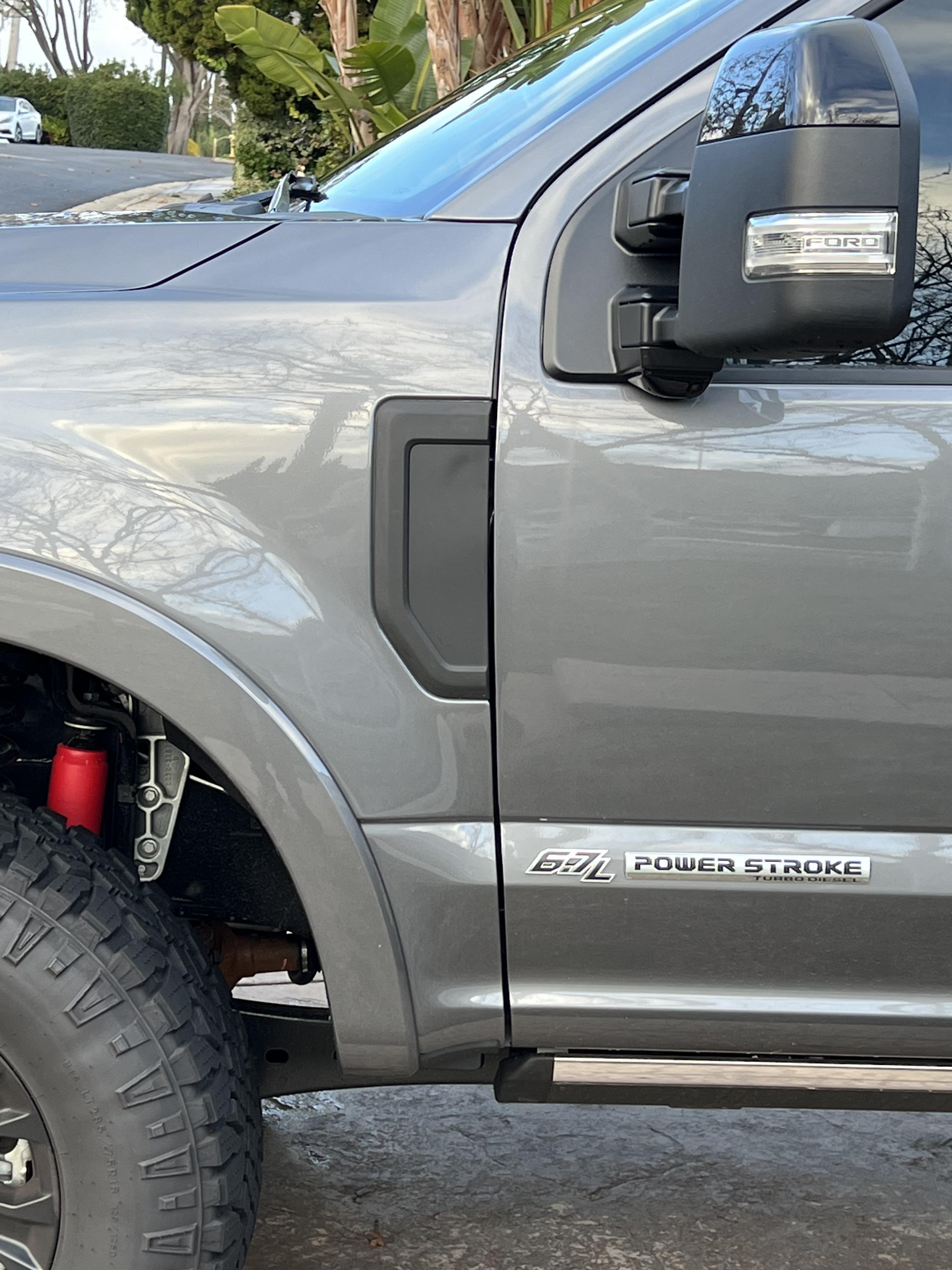

 non binary super duty