Intakes at 110K — Carbon Buildup

KBTremor

Tremor Buff
Joined
Jul 6, 2024
Messages
58
Reaction Points
90
Location
Waco, Texas
Current Ride #1
2021 Ford F-250 6.7L Lariat Tremor
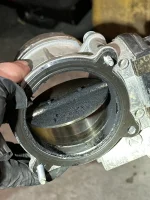
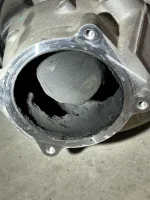
Well after rolling over 100k I decided to do a deep dive on the Tremor as it pertains to maintenance. Threw on new shocks, new track bar, new drag link and tie rod, new steering stabilizer, oil change, rear differential fluid, front differential fluid, transfer case fluid, transmission fluid and filter, and since my old style CCV has never been changed either, I finally got around to installing the S&S Disaster Prevention Kit I’ve had sitting in the garage as well. After pulling off the intakes on my way to the CP4, I thought it might be good to share what I found for any of those curious about what things might look like at 100k.

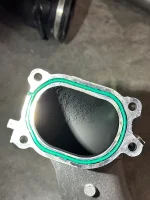
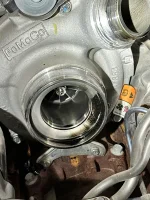
I run Archoil extensively. Every tank gets the recommended dose of the regular 6500 and the full system cleaner goes in every other oil change or so. My Tremor doesn’t do a ton of idling. I’m constantly running hard on the highways and towing a loaded gooseneck deckover often, and light off-roading during hunting season. My intake at the throttle body was probably 10-20% restricted. The throttle body wasn’t exactly clean, and the charge pipes were quite oily, but only a little bit of oil sitting at the compressor inlet. The lower intake manifold was fairly clean with only a thin film of oily residue. I also noticed that one of my upper intake manifold gaskets was showing some wear as a result of all the heat cycles.

I mention the fuel additive because I strongly believe that without it, things would look much worse. Yeah, the upper intake was quite nasty and restricted. But everything else including the EGR intakes, while sooty, really wasn’t that bad. What I found does tell me though that if you don’t have a delete, 100k miles is too long to go without cleaning these intakes, and if you don’t have the 23+ CCV box, you should swap now. I am also much less worried about a grenaded CP4 now that my kit is installed.
 

Attachments

  • IMG_0348.webp
    IMG_0348.webp
    284.2 KB · Views: 113
  • IMG_0349.webp
    IMG_0349.webp
    223.2 KB · Views: 110
  • IMG_0352.webp
    IMG_0352.webp
    227.5 KB · Views: 110
  • IMG_0350.webp
    IMG_0350.webp
    286.5 KB · Views: 109
I am hoping mine pops under warranty…
What is your oil change interval?

I do oil every 5k, run Howes at least once per oil change. Have done all the services you have excluding shocks, tie rods etc. those are my 115k items.

I have also done coolant flush, and front brakes were just done 5k miles ago. I just rolled 105,500 today
 
All this and no drivability report? How did it run after the intake service?
 
Threw on new shocks, new track bar, new drag link and tie rod, new steering stabilizer, oil change, rear differential fluid, front differential fluid, transfer case fluid, transmission fluid and filter, and since my old style CCV has never been changed either, I finally got around to installing the S&S Disaster Prevention Kit I’ve had sitting in the garage as well.


This report on it's own is outstanding, and then one adds the EGR report, the type of fuel additive used, etc... and photos.

I'm not a Powerstroke owner but I am impressed w/ the care you've given your truck and the contribution you make to this place.

🏁

/my .02
 
All this and no drivability report? How did it run after the intake service?
I know I know.. I only left that part out because.... I haven't driven it yet! Lol. Had to leave town for a wedding and haven't returned yet. But I will update back here once I've had a chance to drive it and let everybody know if there is a noticeable driving change.
 
I am hoping mine pops under warranty…
What is your oil change interval?

I do oil every 5k, run Howes at least once per oil change. Have done all the services you have excluding shocks, tie rods etc. those are my 115k items.

I have also done coolant flush, and front brakes were just done 5k miles ago. I just rolled 105,500 today
I've been sticking to the factory recommended 7500mi oil change interval. I had a limited service plan when I bought the truck for like 60k miles (or 8 oil changes) so that is why. One thing I have not done is an oil analysis -- which is on my short list of things to do next. When the service plan runs out, I will be switching to the 5w-40 full synthetic but keeping the same 7500mi OCI unless an oil analysis suggests I change that up. Regardless, I'm hoping that running the 5-40 synthetic also runs cleaner -- but that may be a pipe dream without a CCV reroute and EGR delete. Been heavily considering a bypass oil filter as well but money only comes in so fast, and I really don't like that the Amsoil kit locks me into using THEIR filter. Insane Diesel has a kit that seems to allow me to continue using the OEM Motorcraft filter (or any other I may choose) but still doing some research on that.
 
Not the worst I’ve seen by far. You definitely did the right thing though. This goes to show what kind of poison the EPA forces our engines to ingest.
You're absolutely correct. And it's whole purpose is completely defeated when I powerwash this crap down my driveway and into the sewage.... (sorry did I say that out loud?)

I implore everyone that does not have a delete to take the time to pull your intakes off every 50k miles or so and clean things up, especially if your warranty period has elapsed. It's my understanding that some deposits can break off in big enough chunks and essentially get on a highway straight to the turbo spinning 10's of thousands of RPM. You can imagine what happens next. I have all kinds of things to say about the EPA.. lol
 
How mine looked at 48k miles

View attachment 242620
View attachment 242621

makes me wonder how that charge air cooler looks like on the inside.
Yours looks a bit more moist than mine did. Not that that's better or worse, but just making the observation. If you haven't already, I'd consider upgrading to the 23+ CCV and running good fuel additive. What are your driving habits like? Are you doing lots of short drives or are you getting things good and hot on the hwy/towing?
 
Last edited:
Yours looks a bit more moist than mine did. Not that that's better or worse, but must making the observation. If you haven't already, I'd consider upgrading to the 23+ CCV and running good fuel additive. What are your driving habits like? Are you doing lots of short drives or are you getting things good and hot on the hwy/towing?
80%ish of the miles are long trips, cruising at 60-70mph for 8+ hours at a time, with a healthy amount of low-speed trail crawling mixed in. Not towing but have a bit of aerodynamic drag with the tires/lift/racks/lights, rolling 5 tons with gear.

5w-40 full synthetic since the first oil change every 6k miles - Motorcraft then Rotella T6 about 30k miles ago.

Hot Shot's Secret Everyday Diesel every fill up, Diesel Extreme every oil change, anti-gel 2 months a year.

Plan is to do the CCV catch can, along with PPE tubes, Mishimoto intercooler, and Garrett PowerMax (when it comes out for the 2020+).
 
Sorry for the ignorant question, but not familiar with the topic. Is the CCV on the 2023+ generally accepted as better? Obviously still a good idea to clean intake system every 50k and run a fuel additive, but anything else for newbie's to look out for regarding this topic of carbon build up without going down the path of deleting?

Thank you all, this forum has so much knowledge. And sarcasm.
 
That is really disappointing. It reminds me of the EGR valve in my 2005 6.0 F250 that would carbon up and fail. Happened to me twice in 60k miles.
 
Sorry for the ignorant question, but not familiar with the topic. Is the CCV on the 2023+ generally accepted as better? Obviously still a good idea to clean intake system every 50k and run a fuel additive, but anything else for newbie's to look out for regarding this topic of carbon build up without going down the path of deleting?

Thank you all, this forum has so much knowledge. And sarcasm.
Yes, it seems to be regarded as an upgrade. The first thing you'll notice about it is that it has a much smaller profile, taking up about half the space in the engine bay as the old one. The older style one I believe actually had a removable filter element that was supposedly "serviceable" but it's been known to clog up, leading to pressure buildup in the crankcase and eventually causing blown seals in the upper oil pan. Cue the oil leaks.

Apparently that design has been revisited and improved upon with the new filter box, providing better ventilation and filtration while also having a slimmer profile. That's what they claim anyway... idk. For me, just the smaller profile was an upgrade in and of itself, because it is a huge pain to get to the backside bolts anytime you need to remove it.

There is always the option of re-routing the CCV and deleting the box entirely. Either with the "catch can" mod, or rerouting it to vent to atmosphere or exhaust. In theory this reduces some of the sludgy build-up you'd get in the intakes because while you still have EGR, you're no longer introducing oily crankcase vapor into the intake to mix with the EGR. Actually I guess it's not much of a theory -- it's pretty well proven. For me, I don't need the wife complaining about the stinky truck by venting to atmosphere 😂, and I had concerns about routing to exhaust drawing a vacuum. Catch can seems to be a solid way to approach it. Maybe I'll do that at some point. For now, 23+ CCV it is...
 
Last edited:
  • Like
Reactions: DFS
Yes, it seems to be regarded as an upgrade. The first thing you'll notice about it is that it has a much smaller profile, taking up about half the space in the engine bay as the old one. The older style one I believe actually had a removable filter element that was supposedly "serviceable" but it's been known to clog up, leading to pressure buildup in the crankcase and eventually causing blown seals in the upper oil pan. Cue the oil leaks.

Apparently that design has been revisited and improved upon with the new filter box, providing better ventilation and filtration while also having a slimmer profile. That's what they claim anyway... idk. For me, just the smaller profile was an upgrade in and of itself, because it is a huge pain to get to the backside bolts anytime you need to remove it.

There is always the option of re-routing the CCV and deleting the box entirely. Either with the "catch can" mod, or rerouting it to vent to atmosphere or exhaust. In theory this reduces some of the sludgy build-up you'd get in the intakes because while you still have EGR, you're no longer introducing oily crankcase vapor into the intake to mix with the EGR. Actually I guess it's not much of a theory -- it's pretty well proven. For me, I don't need the wife complaining about the stinky truck by venting to atmosphere 😂, and I had concerns about routing to exhaust drawing a vacuum. Catch can seems to be a solid way to approach it. Maybe I'll do that at some point. For now, 23+ CCV it is...
As a note- the 2026 trucks (and maybe 23+) use a pressure transmitter on the tube between the CCV box and the intake. It measures vacuum. No one has figured out how to bypass that to my knowledge.
Speaking of the vacuum….. the Venturi exhaust port shouldn’t be too much of a vacuum. It already uses a Venturi effect when it is plugged into the intake. I don’t have hard measurements on the vacuum with both set ups, but it would be neat to see.
 
  • Like
Reactions: DFS
That is a frightening amount of crud (technical term) to find in the intake. At just over 50k myself, you've now given me something else to worry about.

If someone has an aftermarket intake, it would be great to hear their long term experience on the buildup of crud. The marketing of these intakes from Pusher, SPE, etc. all focus on the performance gains which is the immediate benefit, but it would seem that the elimination of the EGR boss and the straitening of the intake flow would help to reduce crud by having it move through the intake and into the combustion chamber.

I know, I know, just put you're Powerstoke on a crash diet and "F" the EPA. These are possible solutions, but for those of us who have to sustain vehicle inspections this is not easy option.

Aftermarket intakes are not exactly cheap, but they are cheaper than a new turbo, or possibly worse, if some chunks of that crud break off and go on a road trip through the engine.
 
looks like mine at around 30k miles when I did the pusher powerflow kit, I do a lot of short drives at that time though with sometimes even in Atlanta GA area not getting to full operating temps in the winter (sub 10mile drive to our main office if i am destined for there).
 
That is a frightening amount of crud (technical term) to find in the intake. At just over 50k myself, you've now given me something else to worry about.

If someone has an aftermarket intake, it would be great to hear their long term experience on the buildup of crud. The marketing of these intakes from Pusher, SPE, etc. all focus on the performance gains which is the immediate benefit, but it would seem that the elimination of the EGR boss and the straitening of the intake flow would help to reduce crud by having it move through the intake and into the combustion chamber.

I know, I know, just put you're Powerstoke on a crash diet and "F" the EPA. These are possible solutions, but for those of us who have to sustain vehicle inspections this is not easy option.

Aftermarket intakes are not exactly cheap, but they are cheaper than a new turbo, or possibly worse, if some chunks of that crud break off and go on a road trip through the engine.
I'm interested to hear about the crud buildup on aftermarket intakes as well. In my opinion, if you are rolling over 50k now, it is probably worth pulling your intakes off for a cleaning. It looks scary but I found it to really not be that difficult as long as you have basic experience turning a wrench along with a little bit of patience. After all... it is just nuts and bolts.

In any event, keeping things hot will serve us best. Limit short drives and idling as much as possible and use good quality fuel additives. Any advantage we can get towards complete combustion is always a net benefit in my mind, and keeping things hot will in theory keep some of that crap burning instead of accumulating.
 

Latest Discussions

Back
Top Bottom