Same here. 12,000 miles, cupping badly. Bump, bump, bump. I am thinking of changing to Toya OCs.I have 25k miles on my truck and have rotated the tires with every oil change and the tires are now cupped and noisy with some chunks coming off of the rearward side of several tread blocks. When new the tires were unstable and truck was all over the road. With some miles on them they settled down and were much better. Now, with more miles on them the wear is absurd. Have others had.a similar experience? I know the unstable when new issue has been more widespread, but I’m curious about the wear with more miles.
For context, I’ve run BFG K02 (and previous BFG A/Ts) on most of my trucks to this point and haven’t seen these issues.
Navigation
Install the app
How to install the app on iOS
Follow along with the video below to see how to install our site as a web app on your home screen.
Note: This feature may not be available in some browsers.
More options
Style variation
You are using an out of date browser. It may not display this or other websites correctly.
You should upgrade or use an alternative browser.
Goodyear Duratrac - The Worst Tire, Or Just Junk?
- OP 🔹 UNDRPSI
- Start date

I haven’t tried this version yet but have a set waiting to go on once the Duratrac’s wear out. According to the reviews on here the sidewalks are stiffer than the Duratrac’s and are 3 ply. The side biters are much deeper on the Mickies vs the Duratrac’s.have you found these tyres to have strong sidewalls and is quiet?
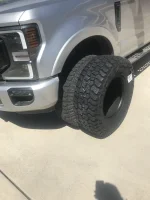
The Duratrac’s have been a pretty decent tire for me with good winter (not so applicable down under) and trail performance with soso on road performance. Far from the worst set I’ve ever run. My worst experiences not on the Tremor have been with the Bridgestone Duler AT Revos, belt separation after a year, and the Falken Wild Peak AT3W, worst performance I’ve experienced on any tire in wet or snowy conditions which is only reported in small numbers of cases in the reviews so suspect a bad batch. The biggest issue I have with the Duratrac’s is they are a little squirmy on the handling but tolerable for me and find it that gets worse at lower tire pressures m. Full disclosure my truck spends a fair amount of time with a load on which contributes to not liking lower tire pressures. The Mickies are supposed to match the winter and trail performance with better road manners and less noise. I will be able to report more when I install the 295/70-R18 this fall or winter.

The BFG KO2 was my go to tire until I got the Tremor. I regularly got over 60K miles on a set and once got 70K miles. They were perfect for most of the So Cal off roading too. They worked so I never put much thought into using anything else. We still run them on a Scout, an older F-250, and the Bronco. If they offered them in the right size I would put them on the Tremor when the Duratracs wear out.The bfg all terrain ko2 was the gold standard for Az for quite some time until they changed the tread design and compound circa 2015. They are too soft for the heat now. I personally would love a tire made specifically for the desert, high heat and towing. Unfortunately, the bigger the tires get the more limited the options. A little over 5k and 1 rotation my ridge grapplers and so far so good but time will tell.

I went to a reputable big brand tire center yesterday and he said he had KO2’s I could run. I think they were 285/70/17. I wasn’t there for that so I wasn’t really paying attention. I didn’t think it was possible but maybe it is?The BFG KO2 was my go to tire until I got the Tremor. I regularly got over 60K miles on a set and once got 70K miles. They were perfect for most of the So Cal off roading too. They worked so I never put much thought into using anything else. We still run them on a Scout, an older F-250, and the Bronco. If they offered them in the right size I would put them on the Tremor when the Duratracs wear out.

I’ve got 27k on mine and love them. Had them on another truck also. I should get 50k easy out of them if not more. I have not had any of the issues you are talking about. The tires are great on and off road.
If you really mean the 17, that is the C rated version they put on the Bronco Badlands. Its fine for that. They do sell a 285/75R17 that is about 34 inches tall with an E rating but still the wrong rim.I went to a reputable big brand tire center yesterday and he said he had KO2’s I could run. I think they were 285/70/17. I wasn’t there for that so I wasn’t really paying attention. I didn’t think it was possible but maybe it is?
I Googled to see if maybe they had a new size in the KO2 and found this BFGOODRICH® HD-TERRAIN T/A® KT 285/75R18 129Q ORBL. Interesting.

BFGoodrich HD Terrain T/A KT - Built for Heavy-Duty Adventures | BFGoodrich USA
Introducing the BFGoodrich HD Terrain T/A KT, the ultimate tire for the toughest job. Find the right size for your vehicle, find the nearest tire dealership to you and get your new set of tires fitted today!
 www.bfgoodrichtires.com
Sorry meant 18” rimIf you really mean the 17, that is the C rated version they put on the Bronco Badlands. Its fine for that. They do sell a 285/75R17 that is about 34 inches tall with an E rating but still the wrong rim.
I Googled to see if maybe they had a new size in the KO2 and found this BFGOODRICH® HD-TERRAIN T/A® KT 285/75R18 129Q ORBL. Interesting.
BFGoodrich HD Terrain T/A KT - Built for Heavy-Duty Adventures | BFGoodrich USA
Introducing the BFGoodrich HD Terrain T/A KT, the ultimate tire for the toughest job. Find the right size for your vehicle, find the nearest tire dealership to you and get your new set of tires fitted today!


This comes up every 6 months or so. The Duratacs are great snow and mud tires. They are terrible on the freeway and towing, besides being noisy. I switched wheels and tire. Nitto Ridge Grappler tires. Never looked back. Smooth and work great off-road
What about snow and ice? I'd like to hear real experience with RGs.This comes up every 6 months or so. The Duratacs are great snow and mud tires. They are terrible on the freeway and towing, besides being noisy. I switched wheels and tire. Nitto Ridge Grappler tires. Never looked back. Smooth and work great off-road

- Aug 19, 2020
- 1,619
- 4,670
- 2018 Subaru Outback
- 1999 Subaru WRX Club Spec Evo 3
I’ve made some phone calls and written some emails and I have made some headway into what tyres I can legally run. The main problem was the load rating. The Duratrac has a load rating of 129/126. What did that mean???Not sure if you can get them but Mickey Thompson offers the Baja Boss AT in a 295/70-R18 that will fit on stock wheels just a hair shorter than the Duratrac’s. Or you can get that tire a little taller in a 305/70-R18 that will also fit on the stock wheels but has a lower load rating than the Duratrac’s but it’s still above a Tremors GAWR’s
Of course, I knew what the number 129 meant, and I knew what 126 meant, but not 129/126. So I rang up the state registration body, the RMS. After being transferred here and there and being on hold for long periods of time, I finally was put through to the technical section. They didn’t know either!
They suggested I contact Ford Australia, but then I told them the truck isn’t officially sold here. Then I was asked about compliance plates until finally he said to get it in writing from the second stage manufacture- the ones who did the conversion-what tyres I could run.
They confirmed I could run any tyre with a load rating of 126 or higher. He said the 129 applied to DRW applications in case one tyre lost pressure the remaining tyre could handle the load. Not sure how as the difference between the 2 load ratings is only about 50kgs or so, but that’s what he said.
The thing is though that as I have this in writing, I can legally use a 126 tyre which opens up the number of available tyres. Not by much, but it does help.

DTX2023Tremor
Bourbon & Tremor Enthusiast
Tremor of the Month 🏆
Founding Member 📜
Meetup Organizer 🚧
GB Coordinator 📢
Trail Captain 🧭
 Moab Trail Run 2026
 Kentucky Ford Plant Tour 2026
 Flagstaff Trail Run 2026
 Big Bend Trail Run 2025
+5


This is mostly correct, just have to swap the numbers in terms of what they mean.I’ve made some phone calls and written some emails and I have made some headway into what tyres I can legally run. The main problem was the load rating. The Duratrac has a load rating of 129/126. What did that mean???
Of course, I knew what the number 129 meant, and I knew what 126 meant, but not 129/126. So I rang up the state registration body, the RMS. After being transferred here and there and being on hold for long periods of time, I finally was put through to the technical section. They didn’t know either!
They suggested I contact Ford Australia, but then I told them the truck isn’t officially sold here. Then I was asked about compliance plates until finally he said to get it in writing from the second stage manufacture- the ones who did the conversion-what tyres I could run.
They confirmed I could run any tyre with a load rating of 126 or higher. He said the 129 applied to DRW applications in case one tyre lost pressure the remaining tyre could handle the load. Not sure how as the difference between the 2 load ratings is only about 50kgs or so, but that’s what he said.
The thing is though that as I have this in writing, I can legally use a 126 tyre which opens up the number of available tyres. Not by much, but it does help.
The first number indicates the load carrying capacity if the tire is installed on a truck with a single-wheel rear axle, and the second number applies when the tire is used in a dual rear application. Though it may seem counterintuitive that a tire is rated to carry less weight when working in tandem with another tire in the dual pair, given the greater payload limits of a DRW, the purpose is to build in additional reserve capacity should one of the two tires fail, leaving the sole remaining tire to carry the load normally handled by two tires.
So if your example, the 129 is the rating for a SRW application while the 126 is the rating when using the tire in a DRW application. So your total load the tires can handle is 4,079 x 4 = 16,316. This exceeds the GVWR of a F-250 / 350 which is generally less than 11,500.
You need to do this calculation per axle, not all four as a whole. I think that the rear GAWR for a F-350 Tremor is 7050 at least in the US, so you need tires (tyres) with a load rating of at least 3525 lbs. I don't know anything about the laws of OZ, but that is the basic engineering calculation. Also, if you run tires with less than a 129 load rating, you will need to adjust the pressure upward from what is on the door sticker.So if your example, the 129 is the rating for a SRW application while the 126 is the rating when using the tire in a DRW application. So your total load the tires can handle is 4,079 x 4 = 16,316. This exceeds the GVWR of a F-250 / 350 which is generally less than 11,500.
Last edited:
- Aug 19, 2020
- 1,619
- 4,670
- 2018 Subaru Outback
- 1999 Subaru WRX Club Spec Evo 3
What you wrote is what I thought would be the case. However, at least here in Oz the second number, 126, refers to SRW according to the second stage manufacturer, which the government authorities accept. I have also asked one of the big tyre chain resellers and they say the same thing. No wonder it’s so confusing.This is mostly correct, just have to swap the numbers in terms of what they mean.
The first number indicates the load carrying capacity if the tire is installed on a truck with a single-wheel rear axle, and the second number applies when the tire is used in a dual rear application. Though it may seem counterintuitive that a tire is rated to carry less weight when working in tandem with another tire in the dual pair, given the greater payload limits of a DRW, the purpose is to build in additional reserve capacity should one of the two tires fail, leaving the sole remaining tire to carry the load normally handled by two tires.
So if your example, the 129 is the rating for a SRW application while the 126 is the rating when using the tire in a DRW application. So your total load the tires can handle is 4,079 x 4 = 16,316. This exceeds the GVWR of a F-250 / 350 which is generally less than 11,500.
DTX2023Tremor
Bourbon & Tremor Enthusiast
Tremor of the Month 🏆
Founding Member 📜
Meetup Organizer 🚧
GB Coordinator 📢
Trail Captain 🧭
Moab Trail Run 2026
Kentucky Ford Plant Tour 2026
Flagstaff Trail Run 2026
Big Bend Trail Run 2025
+5
That's interesting that is how they approach it. So they would permit the higher weight rating in a DRW?What you wrote is what I thought would be the case. However, at least here in Oz the second number, 126, refers to SRW according to the second stage manufacturer, which the government authorities accept. I have also asked one of the big tyre chain resellers and they say the same thing. No wonder it’s so confusing.
For an SRW, worst case you then go with a tire that has a higher rating to get a second number that would be appropriate for your truck.
Clear as mudd must be a reverse rotation of the toilets causing the numbers to be reversed. Another tidbit on the lower second # in the US, having the 2 tires so close but not touching each increases heat retention in the rubber which does truly reduce payload the tire can handle.What you wrote is what I thought would be the case. However, at least here in Oz the second number, 126, refers to SRW according to the second stage manufacturer, which the government authorities accept. I have also asked one of the big tyre chain resellers and they say the same thing. No wonder it’s so confusing.
I would say the Nitto RGs are ‘good’ on snow and ice. The Duratacs are ‘great’. If your travels are on snow and ice I would stick with the Duratacs. The RGs and Duratacs are a push in the mud from my experience. On the highway and streets, the RGs are way better. CheersWhat about snow and ice? I'd like to hear real experience with RGs.

I had ridge graps and honestly wouldn’t buy again, winter traction sucked and if I recall wasn’t going to get much mileage out of them I traded the truck when I had about 15k miles or so on them and they were more than half gone maybe another 5-10kWhat about snow and ice? I'd like to hear real experience with RGs.
That's pretty much the consensus I've gathered from talking with Ridge Grappler owners. They're great out of the box and a nice quality tire, but not the tread pattern isn't the best in true winter conditions. Wear is probably a reflection on softer rubber compound which is why people report great ride and handling. More sipping would probably make them better for snow and ice.I had ridge graps and honestly wouldn’t buy again, winter traction sucked and if I recall wasn’t going to get much mileage out of them I traded the truck when I had about 15k miles or so on them and they were more than half gone maybe another 5-10k

I have 50K on my Duratracs (Jan 2022 delivery), 30K towing. Run 60/70 towing, 60/60 otherwise. No issues; haven't really run much in deep snow or ice.
Treadwear even, 8-9/32nds remaining, so probably 10-20K miles remaining.
I have 40K on my 22 and tires are about done. Running 60 front and 65 back. They are cupped and noisy. Lots of movement when hitting rougher road. I have been getting rotations at 3K miles.