Exhaust Filter cleared without going into Regen?

It will catch up to you, trust me.

It doesn't take much to start building up carbon, by the time you've reached 50K, your intake will look like clogged arteries. Your engine will be starving for air most of its life.
There might be few cases of that depending how the vehicle was operated and maintained, worst case scenario including bad fuel.

In reality things are not that bad. Especially not at 50k.

I've replaced heads and did EGR delete on my 2006 6.0 at 250k miles. Had it since new. EGR valve needed occasional cleaning because it was small and in bad spot. Inside of heads and on back of the valves there was no carbon build up and that engine always had oil in the intake (stock pcv) + exhaust gases flowing trough.
Opened stock Turbo as well and it was clean and functional because Ford added command whenever it idles to fully open and close VGT veins.

The only thing apart from EGR valve that was clogged was intake air temperature sensor. Didn't even know it was there and in 250k was completely covered but still reading the temperature.

That's all on the old engine from which they have learned few things. 6.7 has much bigger air flow openings, let alone EGR cooler and valve in different place.

I've seen carbon build up on intake ports and back of the valves on direct injection turbo gasoline engines. It's more common because of the different operating temperatures and fuel chemistry. Those can build up and affect idling speeds.
Not so much in diesels.

These days everything is exaggerated because so many companies are trying to sell aftermarket products.

Have to add I will delete this one as well but she'll be good for at least 100k while under warranty with occasional sensor needed to be replaced.
Two totally different engines. One had ONE EGR valve, the other has six times that.

She'll be toast by the time she reaches 100K and you're out of warranty.
 
Two totally different engines. One had ONE EGR valve, the other has six times that.

She'll be toast by the time she reaches 100K and you're out of warranty.
in a way is similar due to 9th injector. No dumping extra fuel in the engine under regen. Just an EGR with much better fuel burn.

Six times what? 6.7 has one EGR valve, 1 exhaust inlet and outlet port, kinda the same as majority of diesels including 6.0.

So dealerships should be soon filled with 23+ trucks for warranty work since I'm sure many are getting close to 50k you have mentioned before.
I'm starting to think you're being sarcastic in these posts.
You are more than welcome to believe what you want; I'm am just addressing some facts.

The Ford 6.0L is nothing like the 6.7L; two different engines by design and has no where near the emissions component the 6.7L has.

So they're alike because they both have 8 cylinders? Fine, you win.

What you're failing to comprehend is how quickly they will accumulate carbon deposits with this system in place. That is the whole purpose, to collect all the unburnt fuel a diesel combustion engine produces. You won't see any of this from the outside and you certainly won't notice it, for now. The intent of the design is to ingest anything that has not been burnt by the combustion chamber (cylinder). A portion of the soot goes to the diaper (your 9th injector), the other portion goes back into the engine to what designers think will be burnt then. Wrong. You really think the engine is then going to burn off that reintroduced "unburnt fuel", now soot? I'm not a mechanic. I'm not an engine builder much less an engineer but I don't feel truly convinced.

Why believe me? Put 20K on your '24MY and then pull the intake, the EGR valve and the cooler. Ever heard of an EGR getting clogged? You wonder why? You will see what I'm talking about. Then multiply that times 2 or 3 times, you get the idea.

1750441067581.webp


This all happens over time but it will build up until the engine can no longer operate under these conditions -- carbon. It's air flow has been restricted and the severity will only compound itself.

All these emissions components are designed to collect all these harmful deposits that cannot be expelled into the environment; they will clog after time.

Whether it's 50K, 75K, 100K+, it will all vary depending on the actual operation of the vehicle, but rest assured they are designed to only last so long or collect so much.

Ever heard of sticking turbo vanes? You think people make these things up?

Your engine will be starving for air most of its life and once again, you will not notice it until it has become so bad, your performance will simply be depleted.

A clogged EGR cooler then also leads to increased exhaust soot so your diaper bag will collect more deposits leading to more frequent regens and it all becomes a snowball effect from here on out.

What they need to do is truly design an engine that will run off of carbon deposits, then you've resolved all these issues. Until then, you're simply trying to run a marathon your entire life with clogged arteries.

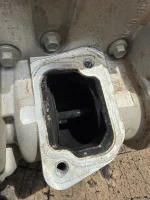
Below is my EGR valve with only 12K on it, when it was disabeled.

1750442476130.webp


I kept it in place and finally pulled it last month after 60K. This is what they look like with only 12K of use. Pretty bad if you ask me.

1750442476226.webp

1750442715225.webp


You may be covered under warranty but the longevity of the engine by now has taken a huge impact and surely reduced its lifespan.

They make more engines with the same crap so it'll just repeat itself each and every time.
 

Attachments

  • 1750442401522.webp
    1750442401522.webp
    356.8 KB · Views: 28
@AZsurveyor I love that youre passionate about removing these components. They truly are bad for the engines health and longevity in most cases.

I do want to address a couple things.

The EGR is not solely meant to burn what was not burnt in the combustion process. A big reason EGRs are so effective at reducing emissions(primarily NOx) is because they reduce the amount of effective displacement an engine has. When an egr system can reduce the displacement of each cylinder or rather the engine as a whole, less air and fuel is required. This can actually increase mpg(if you idle or drive in traffic alot) and reduce emissions.

Sticking turbo vanes are not directly correlated to egrs in my knowledge. Excessive unburnt fuel(soot/particulate matter) is what causes vgt vanes to stick.

Yes egrs introduce carbon deposits back into the engine, and they arent good. Combine this with stock ccv systems and this compounds into the sludge you see in the intake manifold.

All in all do i like emissions systems? No. But they have their place. I feel too many of these aftermarket companies use fear mongering as a marketing strategy.
The EGR cooler can be effective when its clean; indeed, but how often should it be cleaned to maintain its intended performance? Should it be removed and cleaned internally, or replaced entirely? Perhaps this task can be added to the CCV maintenance interval.

I shared what mine looked like after 12K, probably still suitable for normal operating conditions but that sludge will only multiply with time -- this is assuming you minimize idling, keep the vehicle on long highway stretches, avoid stop-and-go traffic, and allow the engine to constantly work hard enough to burn off the soot it tends to collect. Again, like a marathon runner, you nourish yourself so that you have the energy to run, so you need to load up on calories so you can later burn them. I remember when the 6.0s were first introduced and you had this new EGR valve system; the advise that quickly became known was to make sure you gun after it had been idling for more than a few minutes to avoid the sluge build up or a sticky valve. That seemed to figuratively work then because it would open the EGR valve and get those gasses moving, ultimately to the end of the tail pipe. That no longer works because it will eventually still be dumped into another collection department to then burn off, mind you with lots of added stress to the engine to effectively achieve that.

Which is what we often fail to realize, the stress the engine is put through to keep that oven cookin'.

All these emissions components are meant to be replaced but is it worth it at that point?
 
You are more than welcome to believe what you want; I'm am just addressing some facts.

The Ford 6.0L is nothing like the 6.7L; two different engines by design and has no where near the emissions component the 6.7L has.

So they're alike because they both have 8 cylinders? Fine, you win.

What you're failing to comprehend is how quickly they will accumulate carbon deposits with this system in place. That is the whole purpose, to collect all the unburnt fuel a diesel combustion engine produces. You won't see any of this from the outside and you certainly won't notice it, for now. The intent of the design is to ingest anything that has not been burnt by the combustion chamber (cylinder). A portion of the soot goes to the diaper (your 9th injector), the other portion goes back into the engine to what designers think will be burnt then. Wrong. You really think the engine is then going to burn off that reintroduced "unburnt fuel", now soot? I'm not a mechanic. I'm not an engine builder much less an engineer but I don't feel truly convinced.

Why believe me? Put 20K on your '24MY and then pull the intake, the EGR valve and the cooler. Ever heard of an EGR getting clogged? You wonder why? You will see what I'm talking about. Then multiply that times 2 or 3 times, you get the idea.

View attachment 214571

This all happens over time but it will build up until the engine can no longer operate under these conditions -- carbon. It's air flow has been restricted and the severity will only compound itself.

All these emissions components are designed to collect all these harmful deposits that cannot be expelled into the environment; they will clog after time.

Whether it's 50K, 75K, 100K+, it will all vary depending on the actual operation of the vehicle, but rest assured they are designed to only last so long or collect so much.

Ever heard of sticking turbo vanes? You think people make these things up?

Your engine will be starving for air most of its life and once again, you will not notice it until it has become so bad, your performance will simply be depleted.

A clogged EGR cooler then also leads to increased exhaust soot so your diaper bag will collect more deposits leading to more frequent regens and it all becomes a snowball effect from here on out.

What they need to do is truly design an engine that will run off of carbon deposits, then you've resolved all these issues. Until then, you're simply trying to run a marathon your entire life with clogged arteries.

Below is my EGR valve with only 12K on it, when it was disabeled.

View attachment 214574

I kept it in place and finally pulled it last month after 60K. This is what they look like with only 12K of use. Pretty bad if you ask me.

View attachment 214573
View attachment 214575

You may be covered under warranty but the longevity of the engine by now has taken a huge impact and surely reduced its lifespan.

They make more engines with the same crap so it'll just repeat itself each and every time.
Because of 9th injector their emissions components are exactly the same. EGR and CCV or PCV are the only thing gumming up the intake on both. Everything past that injector is different and it's all in the exhaust, doesn't come back to the engine.
This doesn't apply to engines prior to 2023.


Difference is in EGR design, valve is on the hot side. Cooler is much bigger, also internal diameter of exhaust passages was increased from '17 or '19 can't remember exactly but it gave it much longer life span aka no clogging.

It's explained in post above how it works and what does it affect.

Your pictures show minimum amount of soot which won't grow to clog up the whole diameter of the intake. The only weak position is where EGR comes back to the intake with the weird angle just behind the throttle plate. If it gets clogged engine error will show up and it requires cleaning. This error affects exhaust flow coming into the intake so error will be emissions related. Fresh air still comes in as it should.
Another one is map sensor, again cleaning or replacing and possibly exhaust back pressure tube with sensor.

Soot won't score cylinder bores od damage anything apart from making the oil dirty. That's why the regular maintenance was mentioned before. It'll include staying on top PCV as well even though the new one doesn't have a filter inside.

What kind of engine damage can we see from "air starvation"? That's a bit strange term when talking about Turbo Diesel this size or in general. Poor mileage or lack of performance isn't something that will require rebuild.

Could you elaborate what components will be affected when you talk about longevity and life span of the engine?
Just keep your diaper tank full of animal urine and let me know when you get to 250K free and clear of any "engine" problems.
 
Just keep your diaper tank full of animal urine and let me know when you get to 250K free and clear of any "engine" problems.
Thanks for the support 🤠
6.0 still runs and its delete happened when it needed new EGR valve. After multiple times of cleaning it finally gave up and instead od spending $400 on the part it got deleted. Engine hours hit 9999 at 250k because on cold winter days it would run for 12 hours a day idling for 9 hours. It would leak oil like smudge on the exhaust tip and never had Turbo sticktion.
Can't confirm if 6.7 exercise VGT vanes on idle because "diaper" muffles the sound. If they learned anything it should. Since you're deleted does it occasionally changes the sound on idle?

In a nutshell I'm trying to say emissions components will fail and won't affect the engine itself as it's portrayed in online community.

I've seen some study mentioned about diesel running with EGR and without. Apparently if it runs with it it'll wear out oil piston rings faster. Without EGR it's the top compression ring in question. Assuming it's because without EGR power stroke is under higher temperature. Both of those examples didn't fail, it was just a wear so to have best of both worlds it won't hurt to have delete done after warranty runs out.
 
Back
Top Bottom