Anyone use/hear of Mojab Offroad

Absolutely! Got for it.

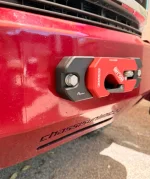
The feel of the hook itself feels unlike any hook I’ve held before and they’re cerakoted which makes the color even more resistant to the outside elements.

I was truly blown away by all his work, just seem like everything was so well thought out and best of all, it’s backed by a lifetime warranty, no questions asked.

I may sound bias because it’s a local shop but I just admire the innovation that seems behind each of his products.
Just the "no questions asked" warranty is enough of a tell, if you ask me.👍
 
I may look into hooks for both winches on my Can Am. I don’t run a winch on my Tremor.

Appreciate the sincere review.
 
Threw on the new toy on the rig today—what a beauty, I must say!

Absolutely worth the wait. Easily one of my favorite additions to this truck; I couldn't be happier with this purchase.

And honestly, I'm relieved I never shelled out $300 for the Factor 55 Ultra Hook.

This is so well made; it is worth ever penny.

Highly recommend this from MOJAB


1755493061087.webp

1755493078765.webp


1755493130682.webp


1755493168096.webp


1755493247956.webp
 

Attachments

  • 1755493112366.webp
    1755493112366.webp
    53 KB · Views: 16
Threw on the new toy on the rig today—what a beauty, I must say!

Absolutely worth the wait. Easily one of my favorite additions to this truck; I couldn't be happier with this purchase.

And honestly, I'm relieved I never shelled out $300 for the Factor 55 Ultra Hook.

This is so well made; it is worth ever penny.

Highly recommend this from MOJAB


View attachment 222138
View attachment 222139

View attachment 222141

View attachment 222142

View attachment 222143
Look awesome.

I’m jealous that I can’t order what I initially wanted/posted/started this thread about since it won’t fit OEM winch.

However I do really like the hooks and will order one. 👍🏼. Love to support up and coming companies that do it right.
 
Threw on the new toy on the rig today—what a beauty, I must say!

Absolutely worth the wait. Easily one of my favorite additions to this truck; I couldn't be happier with this purchase.

And honestly, I'm relieved I never shelled out $300 for the Factor 55 Ultra Hook.

This is so well made; it is worth ever penny.

Highly recommend this from MOJAB


View attachment 222138
View attachment 222139

View attachment 222141

View attachment 222142

View attachment 222143
Your 2nd and 4th pic showing how it integrates and recesses is beautiful. Looks incredible on your truck. Like functional, well engineered, artwork. Should send the owner images for his site so he can use if you are inclined. I didn’t see many truck images so could help show off both your truck, his product, and get him exposure to new market.
 
Your 2nd and 4th pic showing how it integrates and recesses is beautiful. Looks incredible on your truck. Like functional, well engineered, artwork. Should send the owner images for his site so he can use if you are inclined. I didn’t see many truck images so could help show off both your truck, his product, and get him exposure to new market.
Good thinking!
 
If I’m understanding the comments here correctly this awesome shackle will not just bolt up to the Ford OEM winch bracketry. What does it take to modify it? Has anyone done the required Modifications? Degree of difficulty?

Do any one of you guys who went to their shop inquire if they might be moving in a direction to create an OEM compatible version?
 
This is a neat innovation, but I’d be wary of the acute radius of the hawse on side pulls. Synthetic rope manufacturers specify a minimum radius for bends that the rope takes around equipment. Samson recommends three times the diameter of the rope. On heavy trucks like ours running bigger ropes, that radius can be pretty big. Also, while the hook does look slick nested in like that, I still don’t understand why anyone would bother using such equipment anyway? I have no metal in either winch system - the rope ends in a soft eye and I use only soft shackles throughout (except when using a redirect/pully). Some winch ropes come with soft shackles spliced in to save an additional connection.

Source: https://www.samsonrope.com/warning-...e should be,the object it will be placed over.

BENDING RADIUS

SIZING THE RADIUS OF BITTS, FAIRLEADS, AND CHOCKS


Any sharp bend in a rope under load decreases its strength and may cause premature damage or failure. In sizing the radius of bitts, fairleads, sheaves, and chocks for best performance, the following guidelines are offered: Where a rope is deflected more than 10 degrees around a surface (e.g., bitts or chocks), the effective diameter of that surface should be at least three times the rope diameter. Larger diameters may be required by specific industry guidelines and are better because the durability of the rope increases substantially as the diameter of the surface over which it is worked increases.
 
If I’m understanding the comments here correctly this awesome shackle will not just bolt up to the Ford OEM winch bracketry. What does it take to modify it? Has anyone done the required Modifications? Degree of difficulty?

Do any one of you guys who went to their shop inquire if they might be moving in a direction to create an OEM compatible version?
By shackle, do you mean the hook?

While the hook can be used universally, its purpose is to seat recessed into the fairlead and lock itself in place when the line is spooled in.

Regarding the fairlead, it uses a standard 10" bolt pattern, while the Ford Winch has an 8" fairlead bolt pattern.

I'm sure you could make it work by modifying it, but then you'd lose the front prong connector that the Ford fairlead has.

There would have to be a strong market on the 8" bolt pattern for them to design something that fits the Ford Winch application and aside from a few interested folks, I don't think there's any strong potential.

This is a neat innovation, but I’d be wary of the acute radius of the hawse on side pulls. Synthetic rope manufacturers specify a minimum radius for bends that the rope takes around equipment. Samson recommends three times the diameter of the rope. On heavy trucks like ours running bigger ropes, that radius can be pretty big. Also, while the hook does look slick nested in like that, I still don’t understand why anyone would bother using such equipment anyway? I have no metal in either winch system - the rope ends in a soft eye and I use only soft shackles throughout (except when using a redirect/pully). Some winch ropes come with soft shackles spliced in to save an additional connection.

Source: https://www.samsonrope.com/warning-statement#:~:text=Diameter of the bearing surface should be,the object it will be placed over.
I noticed it too, but ideally, one should avoid angle pulls when possible due to various factors, not just concerns about contact with the fairlead.

I also raised this point when considering this product before purchasing, and the developer assured me they had done extensive testing with both standard 3/8" and 1/2" lines, using single and double-braid lines, with no reported issues.

The product is made from alloy aluminum, but only time will tell if it causes any potential damage to the line.

Regarding the hook, going soft is preferred by some users, as it eliminates risks of damage or injury. There's nothing wrong with that recovery method. I considered it when I wasn't pleased with other hooks I tried and wasn't commited to droping 3 bills on the Ultra Hook by Factor 55. However, when I saw how clean this setup was, I was sold, and so far, it's been great.

I've only had it a few months but have used my winch multiple times. By practicing safe spooling and being smart with winching, I’m very pleased.

Finally, depending on the recovery method, some hard material will always be introduced into the rigging, whether it's a pulley or snatch block. A soft end is a good practice, but sometimes I feel we overdo it, no pun intended.

My main concern with a soft loop end is storage and potential damage from exposure to the desert sun due to where I live.
 
By shackle, do you mean the hook?

While the hook can be used universally, its purpose is to seat recessed into the fairlead and lock itself in place when the line is spooled in.

Regarding the fairlead, it uses a standard 10" bolt pattern, while the Ford Winch has an 8" fairlead bolt pattern.

I'm sure you could make it work by modifying it, but then you'd lose the front prong connector that the Ford fairlead has.

There would have to be a strong market on the 8" bolt pattern for them to design something that fits the Ford Winch application and aside from a few interested folks, I don't think there's any strong potential.


I noticed it too, but ideally, one should avoid angle pulls when possible due to various factors, not just concerns about contact with the fairlead.

I also raised this point when considering this product before purchasing, and the developer assured me they had done extensive testing with both standard 3/8" and 1/2" lines, using single and double-braid lines, with no reported issues.

The product is made from alloy aluminum, but only time will tell if it causes any potential damage to the line.

Regarding the hook, going soft is preferred by some users, as it eliminates risks of damage or injury. There's nothing wrong with that recovery method. I considered it when I wasn't pleased with other hooks I tried and wasn't commited to droping 3 bills on the Ultra Hook by Factor 55. However, when I saw how clean this setup was, I was sold, and so far, it's been great.

I've only had it a few months but have used my winch multiple times. By practicing safe spooling and being smart with winching, I’m very pleased.

Finally, depending on the recovery method, some hard material will always be introduced into the rigging, whether it's a pulley or snatch block. A soft end is a good practice, but sometimes I feel we overdo it, no pun intended.

My main concern with a soft loop end is storage and potential damage from exposure to the desert sun due to where I live.

For context, not trying to crap on this cool idea but I have some concerns that hadn’t been mentioned.

I agree that high angle pulls should be avoided. However, once you’re pulling rope, that suggests that plans have gone awry somewhat (but not always). I like the whole “plan for the worst, hope for the best” mindset.

Respectfully, I doubt that the manufacturer of the part in question has done nearly enough testing, especially when compared to the knowledge base that commercial shipping has developed for the use of synthetic lines; I’d be even more skeptical about it when they’re trying to sell me something.

I live in the desert. I use this device: https://www.masterpull.com/winch-puck/. While there may be circumstances that add metal into the system (eg - redirects/pulley), that isn’t every time. What I do use every time is the rope itself so the fact that there isn’t any metal in that system for 98% of my use, that really lowers the chance of something untoward happening. Below is how much rope is exposed (which itself is within a nylon sheath). Overall, works great. My only complaint is that the puck itself is expensive for what it is. But, in comparison to the cost of this or other solutions, it is way, way, cheaper.

thumbnail_IMG_2241.webp
 
Last edited:
For context, not trying to crap on this cool idea but I have some concerns that hadn’t been mentioned.

I agree that high angle pulls should be avoided. However, once you’re pulling rope, that suggests that plans have gone awry somewhat (but not always). I like the whole “plan for the worst, hope for the best” mindset.

Respectfully, I doubt that the manufacturer of the part in question has done nearly enough testing, especially when compared to the knowledge base that commercial shipping has developed for the use of synthetic lines; I’d be even more skeptical about it when they’re trying to sell me something.

I live in the desert. I use this device: https://www.masterpull.com/winch-puck/. While there may be circumstances that add metal into the system (eg - redirects/pulley), that isn’t every time. What I do use every time is the rope itself so the fact that there isn’t any metal in that system for 98% of my use, that really lowers the chance of something untoward happening. Below is how much rope is exposed (which itself is within a nylon sheath). Overall, works great. My only complaint is that the puck itself is expensive for what it is.

View attachment 229021
I have forwarded your concern to the developer. I'm sure he's open to receiving feedback.

While he is relatively new to the market, he has a background in automotive engineering and his products are gaining significant attention in the off-road community. So much that even Matt from MORR uses his hydraluic jack now. Subsequently, the owner leads a team of rock crawlers who extensively use his products, he's no stranger to the hobby and remains very active in extreme crawling events. His products endure intense usage and are well-acquainted with extreme recoveries.

Your puck undermines the goal of avoiding hard materials.

For a fraction of the weight of standard hooks, I’ll continue using this aluminum alloy hook.

I already own two winches but next time I am in the market for a winch, I will considering his winch system. The only drawback that I saw in person, was the shorter line at 82 feet.
The puck is plastic, weighs only a few ounces. Less weight, less inertia, less problems.
 
The puck is plastic, weighs only a few ounces. Less weight, less inertia, less problems.
Objects can still become projectiles in the event of a failure.

Soft shackles, for instance, have been known to fail and penetrate windshields.

There are various options available, so choose what works best for you.

Nothing is entirely risk-free when handling thousands of pounds of load on tensed lines.
Totally agree, hence my rationale to avoid metal whenever possible.
 
Back
Top Bottom