Adding an Anderson Connect to Charge Fifth Wheel while Towing

My truck (7.3L) has a single 240A alternator and easily handles our 50A Victron DC-DC charger, along with my stereo amplifier, lights, etc.
9-2-24.webp
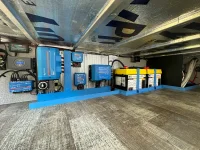
OMG, that's electric porn right there.

Lots of companies make good components.
But Victron makes by far the best system. But you'll pay for it.
 
Your sine wave inverter won't care. It's just converts to a 120v output.

I was referring to the converter in your camper.
It will try to charge the batteries in the camper when you are connected to shore power.
It should have a setting/switch/jumper to tell it Lipo.
The manual would be a good place to start or google if you can find a model # on it.
Confirmed i have a lead acid specific converter and would also need to replace this as well. At least the MPPT and inverter can remain the same though
 
You don't have to switch to a lithium compatible converter right away, or ever. The factory converter for lead acid will still charge the lithium batteries but not top them off. I ran my setup this way for several years because my solar always topped off my batteries for me. If my factory converter didn't fail, I would still be using the same setup.

Also, when before putting additional solar panels up, make sure your wire gauge is large enough for the additional amperage.
I am learning so many new things! Thank you
 
This is a very broad topic that many are exploring these days. System design and component choice very widely depending on application.

For us currently most of our dry camping situations are short term overnight while en route. If it’s warm outside AC is a must for my wife. Even for overnight this can require a pretty robust system. For this reason I always recommend folks go bigger if possible. That being said you’ll never have enough solar to make up for these kind of demands, so a DC/Dc is a great solution. Also upgrading to a 3000w inverter/charger wouldn’t hurt down the road.

Regarding batteries, I would advise researching quality. Don’t just shop price as there are unreliable knock-offs out there. Also there are features you want in your batteries like Bluetooth connectivity and built in heaters with internal control. Some even have battery management systems built in that protect from damage due to operator error. Again research is your friend, no need to reinvent what has been proven to work.

If you are on Facebook, here’s a couple great group pages with very helpful people.


Regarding batteries, I would advise researching quality. Don’t just shop price as there are unreliable knock-offs out there. Also there are features you want in your batteries like Bluetooth connectivity and built in heaters with internal control. Some even have battery management systems built in that protect from damage due to operator error.

FYI for anyone interested, Epoch is have a 15% off this weekend.
Their 'essential' series batteries seem like a good bang for the buck with both bluetooth & heating and now 15% off.
 
Last edited:
Does anyone that is using LiPo batteries have an onboard generator? I have an Onan 5500 and im curious if there is any issue getting this started when all the lead acid batteries are removed?
 
If your two 12 volt batteries are new/newer they should last way longer than a few hours.
Another opinion is to get two 6 volt golf cart batteries and run them in series to get 12 volts and a longer Reserve capacity.
 
Okay all my battery experts. I think i may just upgrade my batteries prior to doing the DC-DC charger and see how that goes for me.

I am looking to get two of these (200ah mini) for 400ah total:

Then this converter (55 amp)

This will net me about the same amp hours as my current lead acid setup (2 batteries @ 225 ah) but roughly double the capacity seeing as they are LiPo. The converter is to swap out my old one that is lead acid charging only. A 300W solar panel will also supplement some of the charging as well. I know i probably wont have enough solar for this much battery but i can upgrade that later. Here are some of the last questions i am trying to figure out:

-Does the converter charge the lipo to 100% whenever it is plugged in to shore power? Can i limit that to a lower number using the bluetooth app on the batteries? Or is that a setting on the converter itself?

-What SHOULD i charge the batteries to? 100% most of the time and then discharge it to like 50% prior to storing? Does the converter just take care of most of this for me? Would i just do some kind of bulk charge prior to a road trip where i need my fridge etc to be running off the inverter for as long as possible?

-Assuming i swap out the new converter to the old one, can i simply just replace all the terminals on the two batteries i have now to these two new batteries and call it a day?

-I have an Onan 5500 generator. The reason i am doing two batteries instead of one larger one is to get the BMS amperage higher with two. My understanding is that 2 200ah batteries with 200A BMS each will have 400A of total BMS, in effect more "starting" power for the generator when i need to use it. Any single 400ah lipo battery i can find that may be slightly cheaper usually has a max of 250A BMS and im concerned that wouldnt be enough to start the generator?

Thanks in advance for any help you guys can offer. Trying to go into this considering all the important things. Im researching everything i can but its a lot to take in!
 
This will net me about the same amp hours as my current lead acid setup (2 batteries @ 225 ah) but roughly double the capacity seeing as they are LiPo. The converter is to swap out my old one that is lead acid charging only. A 300W solar panel will also supplement some of the charging as well. I know i probably wont have enough solar for this much battery but i can upgrade that later. Here are some of the last questions i am trying to figure out:
That's a lot of battery. But too much is just about right in this case. :)

I'll take a stab at some of the other questions, but you are getting into more product specific question - worth double checking with the manufacturer.

-Does the converter charge the lipo to 100% whenever it is plugged in to shore power? Can i limit that to a lower number using the bluetooth app on the batteries? Or is that a setting on the converter itself?
When the converter is charging, it is charging. With Lipo mode, it should output a constant voltage, that you can set. But it's up to the battery BMS to control the amount of charging of the battery and go into float/trickle mode when the battery is at 100%. SOME batteries can be set to limit the amount of charge, but not the cheaper ones. And I doubt those ones have that feature.

-What SHOULD i charge the batteries to? 100% most of the time and then discharge it to like 50% prior to storing? Does the converter just take care of most of this for me? Would i just do some kind of bulk charge prior to a road trip where i need my fridge etc to be running off the inverter for as long as possible?
My plan charging plan would be - charge to 100% during camping season. Use whatever during camping, but in general try to keep it above 30%. The capacity during use will vary a lot, not worth worrying about. Then for winter storage/long term, drain to 80% and store. Then charge to 100% at the start of next season. Lipo will last 'slightly' longer if kept between 30-80%. It's not something to worry about. Many people use more than that. If it gets low, it won't kill the battery the same way it can with lead acid.

-Assuming i swap out the new converter to the old one, can i simply just replace all the terminals on the two batteries i have now to these two new batteries and call it a day?
Hard to answer without knowing exactly what you have. But in general, if the charger is set to Lipo mode and the voltage is set correct for the battery, then it's just a matter of bolting the batteries in.

-I have an Onan 5500 generator. The reason i am doing two batteries instead of one larger one is to get the BMS amperage higher with two. My understanding is that 2 200ah batteries with 200A BMS each will have 400A of total BMS, in effect more "starting" power for the generator when i need to use it. Any single 400ah lipo battery i can find that may be slightly cheaper usually has a max of 250A BMS and im concerned that wouldnt be enough to start the generator?
This is a very interesting question. Of the top of my head I would have said you'd be fine with 1 battery. But according to google the Onan recommends requires 350amp min to start the 5500.
That seems high to me. And then I found this:

So I guess my answer is - 2 couldn't hurt, but 1 might work just fine too. Depends how well your 5500 starts and how cold it is when you camp.

Thanks in advance for any help you guys can offer. Trying to go into this considering all the important things. Im researching everything i can but its a lot to take in!
You're asking all the right questions.
 
That's a lot of battery. But too much is just about right in this case. :)

I'll take a stab at some of the other questions, but you are getting into more product specific question - worth double checking with the manufacturer.


When the converter is charging, it is charging. With Lipo mode, it should output a constant voltage, that you can set. But it's up to the battery BMS to control the amount of charging of the battery and go into float/trickle mode when the battery is at 100%. SOME batteries can be set to limit the amount of charge, but not the cheaper ones. And I doubt those ones have that feature.


My plan charging plan would be - charge to 100% during camping season. Use whatever during camping, but in general try to keep it above 30%. The capacity during use will vary a lot, not worth worrying about. Then for winter storage/long term, drain to 80% and store. Then charge to 100% at the start of next season. Lipo will last 'slightly' longer if kept between 30-80%. It's not something to worry about. Many people use more than that. If it gets low, it won't kill the battery the same way it can with lead acid.


Hard to answer without knowing exactly what you have. But in general, if the charger is set to Lipo mode and the voltage is set correct for the battery, then it's just a matter of bolting the batteries in.


This is a very interesting question. Of the top of my head I would have said you'd be fine with 1 battery. But according to google the Onan recommends requires 350amp min to start the 5500.
That seems high to me. And then I found this:

So I guess my answer is - 2 couldn't hurt, but 1 might work just fine too. Depends how well your 5500 starts and how cold it is when you camp.


You're asking all the right questions.
EXTREMELY helpful! Thank you. This video has me considering if i want to do just one battery but i still think two is a safer bet at the end of the day. Was reading the comments from the video you sent - one guy said there may have been up to a 250A draw that the app didnt reflect because it happened so fast. I could see this being true and helps me lean more towards the 2 batteries still.

Secondly - check this out:

1748983874199.webp


Should we be worried about having the 7 pin charger still hooked up when we switch to LiPo? This seems crazy to me (especially with our trucks alternators) but it has me worried now.
 
EXTREMELY helpful! Thank you. This video has me considering if i want to do just one battery but i still think two is a safer bet at the end of the day. Was reading the comments from the video you sent - one guy said there may have been up to a 250A draw that the app didnt reflect because it happened so fast. I could see this being true and helps me lean more towards the 2 batteries still.
This could certainly be true. Not sure how fast the app updates.
But even in that case it's a surge. That wouldn't trip the BMS into cutting off. Most BMS will allow a higher surge. There cutoff rating is more for continues current and won't trip unless the current is above the rating for a few seconds.
This is assuming that all battery manufactures do their ratings the same way. And they don't because there really isn't any 1 standard. Not all batteries are created equal. This is part of the reason getting a somewhat reputable name battery is a good idea.

Secondly - check this out:

View attachment 212894

Should we be worried about having the 7 pin charger still hooked up when we switch to LiPo? This seems crazy to me (especially with our trucks alternators) but it has me worried now.

Yes, I've see that type of comment before. I'm fairly sure it's mostly fear and ignorance. 7 pin connector wires are very small. The wire itself will limit the current to much less than the Alt is putting out. If you somehow did draw a huge amount of current, the wires would melt long before the Alt got damaged. And nobody is complaining about melted wires.
In addition, that wire is not directly connected to the alt or battery. At least not in any more modern vehicle. So the current will be limited by the vehicle anyway, regardless of the battery type. 7-pin supplies very low current, to the point that it's almost useless. That's why people install dc-dc. My guess is that someone somewhere did there own wiring job and connected things directly and managed to fubar things up and that's how this rumor got started.
Fords in particular, the power pin gets turned off by the truck. It doesn't always have power, so it really makes no difference in that case. If it was a Dodge, then it is best to disconnect the power pin. But that is because Dodge has it as a constant power and it will eventually drain the trucks battery if parked and left connected to the trailer.
 
This could certainly be true. Not sure how fast the app updates.
But even in that case it's a surge. That wouldn't trip the BMS into cutting off. Most BMS will allow a higher surge. There cutoff rating is more for continues current and won't trip unless the current is above the rating for a few seconds.
This is assuming that all battery manufactures do their ratings the same way. And they don't because there really isn't any 1 standard. Not all batteries are created equal. This is part of the reason getting a somewhat reputable name battery is a good idea.


Yes, I've see that type of comment before. I'm fairly sure it's mostly fear and ignorance. 7 pin connector wires are very small. The wire itself will limit the current to much less than the Alt is putting out. If you somehow did draw a huge amount of current, the wires would melt long before the Alt got damaged. And nobody is complaining about melted wires.
In addition, that wire is not directly connected to the alt or battery. At least not in any more modern vehicle. So the current will be limited by the vehicle anyway, regardless of the battery type. 7-pin supplies very low current, to the point that it's almost useless. That's why people install dc-dc. My guess is that someone somewhere did there own wiring job and connected things directly and managed to fubar things up and that's how this rumor got started.
Fords in particular, the power pin turns gets turned off by the truck. It doesn't always have power, so it really makes no difference in that case. If it was a Dodge, then it is best to disconnect the power pin. But that is because Dodge has it as a constant power and it will eventually drain the trucks battery if parked and left connected to the trailer.
Again, much appreciated. All of this being said, im wondering if this is the route i go for a similar price and 100ah less:


I believe this is a somewhat more reputable brand, and gains the heating function.
 

Reviews I've seen seem to say that the Vatrer is a decent battery.
It's just really hard to tell how many of these companies will stick around long term.
Chances are any battery you get will last a long time with occasional camping use.
 
How has this cap been for you regarding being weatherproof? I see these all over amazon but none of them have any kind of silicon or rubber seal to keep out water. Is that not really a concern? I was looking at this one for in the bed (for the fifth wheel) as it seemed a little more waterproof:

I have this one:

And it says keeps dust and dirt out. I looked into it the other day, and it was packed with dirt, and looks like one of the connectors has that water reaction build up. Not happy about it at all. Took me a bit to get it installed where I wanted it, and now I'll have to eventually redo this.
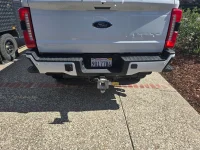
I have it mounted on the passenger side, in the rear, just above/behind the bumper, out of sight
 
Back
Top Bottom