Whipple Installed!

GT-SD

Tremor Fanatic
Founding Member 📜
Joined
Jan 22, 2023
Messages
146
Reaction Points
570
Location
Houston Texas
Current Ride #1
2022 F350 Tremor
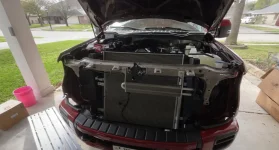
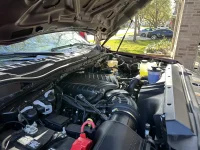
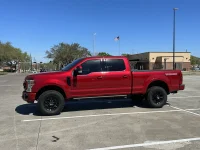
The Whipple is installed! It took a buddy and I a little over 20 hours total in my driveway. Neither of us are “Auto Mechanics”, but we have an engineering background and frequently work on boats, side by sides, auto’s (when necessary) so wrenching, troubleshooting and electrical modifications are nothing new. This project was no more difficult than some of the boat/sidexside modifications and repairs that have been performed. So if you don’t have a problem working on things, this is very doable. Was able to get it installed with no calls to Whipple Support! Took some videos along the way, so hopefully I’ll have time in the next few weeks to process and post it.

A few things that are helpful if you are going to install a Whipple.

- Send in your config file early. They try to get it done in 2 - 3 days, but with this particular setup they are currently taking a little longer. Don’t start the install until you get this. It took about 5 minutes to download and submit. Once you get the Whipple and their programmer, follow the instructions and download the file to submit. It took them 2 weeks to turn my calibration around.
- Inventory everything. I broke the parts list down by instruction number and then cross referenced it which will be posted later for others. There were a few parts missing, but I submitted a support ticket and they shipped the parts the next day.
- Most of the tools required are fairly standard. The only ”specialty tools” that I had to buy were the fan wrench, holder and plastic trim removal tools. There are quite a few items that require torqueing, so it is helpful if you have (2) setups.
- You could theoretically do it with 1 person, but it is extremely beneficial to have 2. You will need some step platforms and setting the Whipple on top of the engine could almost use 3 people. It is heavy.
- The Whipple instructions are good, but there are a few details that are missing from some of the steps. That led to a few items we had to back up on.
- Take your time, some of the areas are difficult to reach and properly torque and secure. We would spend and hour or so just working on 2 bolts in just a few areas. There are probably some tools or tricks that would speed that up, but we made sure it was 100%.
- Measure where your bumper is and use some blue tape to mark measurements. You have to drop the bumper down to get the headlights out (if you have LED) and that made us aligning the bumper and tightening it back up a 15 minute job. If we had not done that, it might have taken us a while to get it straight again.

A few things that I have noticed in the ~50 miles or so I’ve driven it since the install:

- My truck only has 1600 miles on it when the Whipple was installed, so the only data point on the base engine performance is to that point.
- I am a true believer in all things mechanical need to be broken in, so there have been no WOT pulls or anything past 2/3 throttle until I feel comfortable that there is no air in the cooling systems and the engine parts have had an opportuntity to “break in” and adjust to the different heat and pressure loads.
- The idle is signficantly improved. It used to have a little stumble at idle, that is gone. Don’t know if it’s that new lower gapped spark plugs or larger injectors or tune, but it now idles smooth as butter.
- The transmission does not “hunt” for a gear really at all. It does tend to shift later overall as the engine likes to hold a 1500 - 1700 range vs 1100 - 1400 stock. So instead of it being in 6th or 7th gear at 25mph, it stays in 4th or 5th.
- The ford performance exhaust sounds MUCH better now and the small drone that it had between 65-70mph is gone. It’s almost as if it was tuned for the Whipple.
- There is a “supercharger whine” at low speeds. Once you get above 25 MPH it goes away. It’s not very loud though.
- It behaves very similar if not better to my 2017 F250 6.7L now. It loves 3000-3800 RPM and just shifts through the gears and the speedometer just goes up. Before, you would need to get the engine to wrap out at 4500-5000 or so RPM’s to get the same or less accelleration.
- Unlike some of the other people, I loaded my calibration, started the engine up and have driven it. No Codes, performance or check engine light issues.

Hope this post helps some of the people on the fence. We’ll see how the engine and drivetrain hold up long term as this will be my daily driver and occasionally pulling 7k - 16k trailers. It will be a month or two before I hook anything up to it which is great as that gives me some time to make sure everything is working properly.
 

Attachments
  • F16EC5C5-7B32-4E40-8294-2F0C5B623AA7.webp
    F16EC5C5-7B32-4E40-8294-2F0C5B623AA7.webp
    263.8 KB · Views: 5,875
  • 917F9FA9-F389-4F0E-80B6-9E6B8DDB74A2.webp
    917F9FA9-F389-4F0E-80B6-9E6B8DDB74A2.webp
    117.4 KB · Views: 1,760
  • 12AECA88-41A2-4825-A10F-FE2460EB047B.webp
    12AECA88-41A2-4825-A10F-FE2460EB047B.webp
    310.7 KB · Views: 1,757
Last edited:
Congratulations. This is on my list for this year.

Are you going to do break in for 1000 miles? Any plans for a quick oil change after break in? What motor oil will you be using?
 
- The idle is signficantly improved. It used to have a little stumble at idle, that is gone. Don’t know if it’s that new lower gapped spark plugs or larger injectors or tune, but it now idles smooth as butter.
Great info @GT-SD !!

Is it idling at the same rpm? If so, probably due to the increased load on the engine. The combination of trying to achieve a low idle rpm and a relatively lean AFR can result in borderline stability depending on fuel quality, etc. Having a bit more load helps with stability and may have resulted in a bit richer idle map. With the larger injectors required for flow, you will inherently get more fuel at idle unless they compensated. The other possibility is that they also bumped the idle speed a little in their cal. You would be surprised what 50 rpm can do to idle smoothness...
 
Congratulations. This is on my list for this year.

Are you going to do break in for 1000 miles? Any plans for a quick oil change after break in? What motor oil will you be using?
Yes. The oil change will happen this weekend and I’m going to send a sample to Blackstone. I’ll do another oil change at the 5k (~3300 from now) and see how it looks. According to Whipple, the same 5w30 oil weight is recommended. I will be switching over to Mobil 1 Extended Performance and a Motorcraft Oil Filter. The new OCI will need to be every 5k miles, but that is what I do anyway, so it won‘t be any different.

The only recommended major maintenance schedule changes on the engine are:
- Change Oil Every 5k, use synthetic
- Clean Air Filter every 10k
- Replace Belt every 25k
- Replace Spark Plugs every 20k (although if you go with the Whipple recommended, they are the same ones used in the GT500 engine, so chances are they can go much longer which is what I did instead of re-gapping the ones in the engine)
- Change Supercharger Oil every 100k.
 
Great info @GT-SD !!

Is it idling at the same rpm? If so, probably due to the increased load on the engine. The combination of trying to achieve a low idle rpm and a relatively lean AFR can result in borderline stability depending on fuel quality, etc. Having a bit more load helps with stability and may have resulted in a bit richer idle map. With the larger injectors required for flow, you will inherently get more fuel at idle unless they compensated. The other possibility is that they also bumped the idle speed a little in their cal. You would be surprised what 50 rpm can do to idle smoothness...
The idle seems to be the same, but I didn’t check the idle speed specifically before the install. The needle appears to be in the same spot, but 50rpm may not be all that noticeable on the tach unless you were paying attention really close. If I get a chance, I’ll hook up forscan and take a warm idle reading and maybe compare it to someone‘s that doesn‘t have the Whipple.
 
Sounds like an excellent and productive weekend ..!!
 
The idle seems to be the same, but I didn’t check the idle speed specifically before the install. The needle appears to be in the same spot, but 50rpm may not be all that noticeable on the tach unless you were paying attention really close. If I get a chance, I’ll hook up forscan and take a warm idle reading and maybe compare it to someone‘s that doesn‘t have the Whipple.
I'll check mine as a reference... I think the OBDLink MX+ will give me an accurate idle through the phone app. If not I'll do the same via Forscan...
 
I'll check mine as a reference... I think the OBDLink MX+ will give me an accurate idle through the phone app. If not I'll do the same via Forscan...
Hooked up to it just to check for codes. No DTC's, but here is where the idle was today:
Warmed Up Idle in Park: ~690 - 720
Warmed Up Idle in Forward Gear with Brake Applied (not moving): ~600 - 635
 
With the added torque, would traction control bars be needed? Wondering if axle wrap would be an issue when you really put it to work. My inclination is they wouldn't since the diesel puts out greater torque than the gas, plus whatever tech limits torque as well.

I've got this mod on my list, but also want to add the transfer flow 58 gal tank and some of the traction bars out there say they're not compatible with extended fuel tanks.
 
What decrease in mpg are you seeing or anticipating?

How many hours would it take for a competent mechanic? I'm wondering how much in labor cost to have it installed at local shop.

Thanks,

DA
 
With the added torque, would traction control bars be needed? Wondering if axle wrap would be an issue when you really put it to work. My inclination is they wouldn't since the diesel puts out greater torque than the gas, plus whatever tech limits torque as well.

I've got this mod on my list, but also want to add the transfer flow 58 gal tank and some of the traction bars out there say they're not compatible with extended fuel tanks.
I don't think Traction control bars would be necessary. The ProCharger guys have been running boosted levels for several years and don't seem to have any issues. Given the torque from the Diesel, you would think that the parts would not be significantly different and just overkill for the gas.

I did the transfer flow tank day 1. So far it's been great.
 
What decrease in mpg are you seeing or anticipating?

How many hours would it take for a competent mechanic? I'm wondering how much in labor cost to have it installed at local shop.

Thanks,

DA
Not sure on the fuel economy. Most of my mileage lately has been stop and go in construction and traffic around town, so that always kills the mileage. My 2017 F250 6.7L would only get 13 - 14 MPG driven daily with a level and 35's. For the 2 - 3 tanks of fuel I put into it before the Whipple install, it was averaging 11MPG but getting better as the engine broke in.

Since the Whipple is still new, I've been probably putting more acceleration than usual because it is a blast to drive, even though I'm keeping it below the 4k RPM range it's probably drinking the fuel with the stop, accelerate, stop, accelerate..... It's every bit as or more powerful (not towing so far of course) than my 2017 6.7. I filled up right after the install, so that should give me a good idea after the first 2 - 3 tanks. Don't know how much PCM/TCM optimization and learning is going to go on.

Once there are some miles put on it, I'll post up what the real economy is. It's all tracked in an App and "hand" calculated off of miles and gallons put in the tank.

As far as hours to install at an experienced shop, I would think it should be a ~12hr project. In my install, there was a significant amount of time just checking, double checking, thinking about it and if there were doubts trying to find a YouTube video and watching it just to confirm the assumption. Everything was carefully placed, torqued, checked, and double checked. My guess would be a mechanic familiar with working and disassembling these trucks could go a lot faster and would have a helper for several of those hours as there are several steps that are just easier and quicker with another set of hands, so 18 - 20 billable hrs maybe!? Depends if all of the materials and tools are there. Hope this helps.
 
Hooked up to it just to check for codes. No DTC's, but here is where the idle was today:
Warmed Up Idle in Park: ~690 - 720
Warmed Up Idle in Forward Gear with Brake Applied (not moving): ~600 - 635
Finally remembered to check... my truck is a 22 with no engine or exhaust mods:
Warmed up idle in Park: ~590-610
Warmed up idle in F w/brake: ~585-600

Makes it clear to me why you you are experiencing a smoother idle - higher load and rpm.
 
Finally remembered to check... my truck is a 22 with no engine or exhaust mods:
Warmed up idle in Park: ~590-610
Warmed up idle in F w/brake: ~585-600

Makes it clear to me why you you are experiencing a smoother idle - higher load and rpm.
So I have been playing around with monitoring different PID's. There is a PID that monitors "Target RPM" for idle.

The "Target" RPM Warm, in Park: 725 RPM's
The "Target" RPM Warm, in Gear: 625 RPM's

Seems like the stock profile possibly has a single Warm Idle "Target" of 600 RPM's and drops slightly in gear.

Appreciate input and checking.
 
The Whipple is installed! It took a buddy and I a little over 20 hours total in my driveway. Neither of us are “Auto Mechanics”, but we have an engineering background and frequently work on boats, side by sides, auto’s (when necessary) so wrenching, troubleshooting and electrical modifications are nothing new. This project was no more difficult than some of the boat/sidexside modifications and repairs that have been performed. So if you don’t have a problem working on things, this is very doable. Was able to get it installed with no calls to Whipple Support! Took some videos along the way, so hopefully I’ll have time in the next few weeks to process and post it.

A few things that are helpful if you are going to install a Whipple.

- Send in your config file early. They try to get it done in 2 - 3 days, but with this particular setup they are currently taking a little longer. Don’t start the install until you get this. It took about 5 minutes to download and submit. Once you get the Whipple and their programmer, follow the instructions and download the file to submit. It took them 2 weeks to turn my calibration around.
- Inventory everything. I broke the parts list down by instruction number and then cross referenced it which will be posted later for others. There were a few parts missing, but I submitted a support ticket and they shipped the parts the next day.
- Most of the tools required are fairly standard. The only ”specialty tools” that I had to buy were the fan wrench, holder and plastic trim removal tools. There are quite a few items that require torqueing, so it is helpful if you have (2) setups.
- You could theoretically do it with 1 person, but it is extremely beneficial to have 2. You will need some step platforms and setting the Whipple on top of the engine could almost use 3 people. It is heavy.
- The Whipple instructions are good, but there are a few details that are missing from some of the steps. That led to a few items we had to back up on.
- Take your time, some of the areas are difficult to reach and properly torque and secure. We would spend and hour or so just working on 2 bolts in just a few areas. There are probably some tools or tricks that would speed that up, but we made sure it was 100%.
- Measure where your bumper is and use some blue tape to mark measurements. You have to drop the bumper down to get the headlights out (if you have LED) and that made us aligning the bumper and tightening it back up a 15 minute job. If we had not done that, it might have taken us a while to get it straight again.

A few things that I have noticed in the ~50 miles or so I’ve driven it since the install:

- My truck only has 1600 miles on it when the Whipple was installed, so the only data point on the base engine performance is to that point.
- I am a true believer in all things mechanical need to be broken in, so there have been no WOT pulls or anything past 2/3 throttle until I feel comfortable that there is no air in the cooling systems and the engine parts have had an opportuntity to “break in” and adjust to the different heat and pressure loads.
- The idle is signficantly improved. It used to have a little stumble at idle, that is gone. Don’t know if it’s that new lower gapped spark plugs or larger injectors or tune, but it now idles smooth as butter.
- The transmission does not “hunt” for a gear really at all. It does tend to shift later overall as the engine likes to hold a 1500 - 1700 range vs 1100 - 1400 stock. So instead of it being in 6th or 7th gear at 25mph, it stays in 4th or 5th.
- The ford performance exhaust sounds MUCH better now and the small drone that it had between 65-70mph is gone. It’s almost as if it was tuned for the Whipple.
- There is a “supercharger whine” at low speeds. Once you get above 25 MPH it goes away. It’s not very loud though.
- It behaves very similar if not better to my 2017 F250 6.7L now. It loves 3000-3800 RPM and just shifts through the gears and the speedometer just goes up. Before, you would need to get the engine to wrap out at 4500-5000 or so RPM’s to get the same or less accelleration.
- Unlike some of the other people, I loaded my calibration, started the engine up and have driven it. No Codes, performance or check engine light issues.

Hope this post helps some of the people on the fence. We’ll see how the engine and drivetrain hold up long term as this will be my daily driver and occasionally pulling 7k - 16k trailers. It will be a month or two before I hook anything up to it which is great as that gives me some time to make sure everything is working properly.
I may have missed them, but are there any updates? like it or love it?
 
I may have missed them, but are there any updates? like it or love it?
There are a few discussions and reviews from a towing perspective in the 7.3L section. I now have over 4k miles since the install and to date very happy. So far no check engine lights, no stored diagnostic codes, no misfires and haven't had to chase any gremlins (knock on wood). The system performs well, great throttle response and lots of power when you ask for it. The extra air from the throttle body and premium fuel tune add extra base power so it accelerates and performs better than stock without boost. When driving unloaded and normal daily, the system rarely needs to provide any boost; but when you ask for power the truck takes off. I've been very pleased with it so far. There are a few tuning issues that could be improved for the towing experience, but that is explained in the other posts. Unloaded and normal driving performs well.
 
There are a few discussions and reviews from a towing perspective in the 7.3L section. I now have over 4k miles since the install and to date very happy. So far no check engine lights, no stored diagnostic codes, no misfires and haven't had to chase any gremlins (knock on wood). The system performs well, great throttle response and lots of power when you ask for it. The extra air from the throttle body and premium fuel tune add extra base power so it accelerates and performs better than stock without boost. When driving unloaded and normal daily, the system rarely needs to provide any boost; but when you ask for power the truck takes off. I've been very pleased with it so far. There are a few tuning issues that could be improved for the towing experience, but that is explained in the other posts. Unloaded and normal driving performs well.
Thank you...trying to determine the best approach i.e. ProCharger or Whipple for myself.
 
Checking in on this.

Did Whipple get their tuning issues sorted out?

Still happy with the install?
 
When will Whipple support 23s?!
 
Back
Top Bottom