Maybe an obvious question to ask, have you checked if there is any writing or markings on the back of the photo?
Navigation
Install the app
How to install the app on iOS
Follow along with the video below to see how to install our site as a web app on your home screen.
Note: This feature may not be available in some browsers.
More options
Style variation
You are using an out of date browser. It may not display this or other websites correctly.
You should upgrade or use an alternative browser.
You should upgrade or use an alternative browser.
US Military Records
- OP 🔹 Pompey
- Start date
Not trying to pick on your replies, just correcting comments as I see errors. I already discussed your petty/warrant comment in another post, but I will add that a Petty Officer wouldn’t wear a combination cover, would have worn a Dixie cup.I would agree but need to know....
1. When was the photo taken
2. How long was he in when the photo was taken.
3. When did he join, and when did he leave.
That would determine if he was a Petty or Warrant. If he was a machinist or a nuke tech.
Need lots more info.
It does look like a ww2 era photo though.
Also, you’re confused in the “machinist or nuke warrant” comment. Nuke Warrants and non-nuke warrants in that specialty wear the same rating pin.
- OP 🔹
- #43

- Aug 19, 2020
- 1,583
- 4,520
- 2018 Subaru Outback
- 1999 Subaru WRX Club Spec Evo 3
He died in 1950, that much we do know. And we think by then he had joined the army. By that time it seems he’d done enough to be promoted to major.Warrant officer would require 14 years of service IIRC at that time. Lot's of assumptions but if he insisted at the start of the war in 1942, and the picture was taken in 1956, that would jive. If he insisted in 1928, that would give as well. But that type of photo was taken upon commission, entry, or promotion or other notable change in service.
Remember, for us the war started in 1939. At that stage though Japan had not yet attacked Australia, but were already a threat which increased every day. The bombing of Darwin and the attack on Sydney began in 1942. Perhaps it was these events that motivated him to join the RAN then USN. Or he may have signed up at any time since 1939.


No worries.Not trying to pick on your replies, just correcting comments as I see errors. I already discussed your petty/warrant comment in another post, but I will add that a Petty Officer wouldn’t wear a combination cover, would have worn a Dixie cup.
Also, you’re confused in the “machinist or nuke warrant” comment. Nuke Warrants and non-nuke warrants in that specialty wear the same rating pin.
Good point on the cover.
The Machinist or Nuke Warrant comment was specific to another comment that someone make regarding being nuke specific. My comment was to address that pre-nuke power, it would be been machinist only. after the introduction of nuke power, it would have been a combination. Sorry for my lack of clarification.
I'm former marine and navy history from ww2 is a little rusty. I think I only wore a navy uniform a couple of times when I was on a navy detachment.
wait...He died in 1950, that much we do know. And we think by then he had joined the army. By that time it seems he’d done enough to be promoted to major.
Remember, for us the war started in 1939. At that stage though Japan had not yet attacked Australia, but were already a threat which increased every day. The bombing of Darwin and the attack on Sydney began in 1942. Perhaps it was these events that motivated him to join the RAN then USN. Or he may have signed up at any time since 1939.
so he was RAN, then USN, then USArmy? Did I miss that somewhere?
Would love to see the bars on his shoulder. that would be helpful.
If he joined the USN in WW2, then that would be his enlistment photo. He would have also gotten credit for RAN service. That could explain his USN rank as well.
- OP 🔹
- #46
- Aug 19, 2020
- 1,583
- 4,520
- 2018 Subaru Outback
- 1999 Subaru WRX Club Spec Evo 3
Let me get back to you. I’ll ask my cousin. The photo itself is on display in a museum so hard to check.Maybe an obvious question to ask, have you checked if there is any writing or markings on the back of the photo?
- OP 🔹
- #47
- Aug 19, 2020
- 1,583
- 4,520
- 2018 Subaru Outback
- 1999 Subaru WRX Club Spec Evo 3
He applied to the RAN and was knocked back. Then we believe he joined the USN.wait...
so he was RAN, then USN, then USArmy? Did I miss that somewhere?
Would love to see the bars on his shoulder. that would be helpful.
If he joined the USN in WW2, then that would be his enlistment photo. He would have also gotten credit for RAN service. That could explain his USN rank as well.
We think at some stage he joined the US army because we believe he was promoted to major.

This is a very interesting story but for the life of me I can't
fathom (sorry, couldn't resist) going from the Navy to the Army.
fathom (sorry, couldn't resist) going from the Navy to the Army.
- OP 🔹
- #49
- Aug 19, 2020
- 1,583
- 4,520
- 2018 Subaru Outback
- 1999 Subaru WRX Club Spec Evo 3
We may never know. Perhaps he saw the threat of communism as a threat as great as Japan was and the army was seen as a better way to fight it.This is a very interesting story but for the life of me I can't
fathom (sorry, couldn't resist) going from the Navy to the Army.

Pompey,
I have a partial answer. I'm a military buff, but this one had me stumped. So, out comes my friend (Google)...
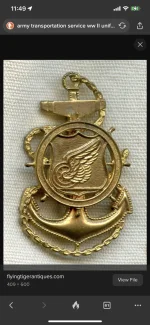
I think the cover insignia is for the US Army Transportation Service. Like this one:
I have a partial answer. I'm a military buff, but this one had me stumped. So, out comes my friend (Google)...
I think the cover insignia is for the US Army Transportation Service. Like this one:
Also, I found an example of the collar insignia online, and it was described as an Army Transportation Service Machinist Officer insignia.
And the chinstrap on his service cap is gold, which generally denotes officer.
And the chinstrap on his service cap is gold, which generally denotes officer.
Last edited:
Here's a link to a book on the Internet Archive website which talks about the ATS:
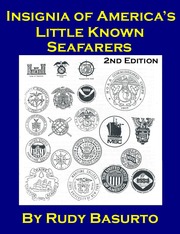
Insignia of America's Little Known Seafarers (Army Transportation Corps) : Rudy Basurto : Free Download, Borrow, and Streaming : Internet Archive
Rudy Basurto authored this book and I illustrated it with pictures of insignia. It was 125-pages in length and is shown by each chapter, this one being on the...
archive.org
- OP 🔹
- #53
- Aug 19, 2020
- 1,583
- 4,520
- 2018 Subaru Outback
- 1999 Subaru WRX Club Spec Evo 3
It’s a different badge. The top of the wings are different, as are the cross bars under the eagle. Also, the army one has braid beside the anchors on each side. Very close though, you really have to have the photos side by side to pick the differences. Makes you wonder why there were differences and if anyone at the time knew either.Also, I found an example of the collar insignia online, and it was described as an Army Transportation Service Machinist Officer insignia.
I think you got it. Found another example of the cap device, this one a commissioned officer with rank shoulder boards and wearing the transportation service collar devices.Also, I found an example of the collar insignia online, and it was described as an Army Transportation Service Machinist Officer insignia.
And the chinstrap on his service cap is gold, which generally denotes officer.
Very interesting. I was aware of the Army transportation warrant program in its current form but wasn’t aware that they wore Navy uniforms and rank structure during WWII. I’ve attached their CPO cap device, same as the Navy but has the Transportation Service pin superimposed.
Attachments
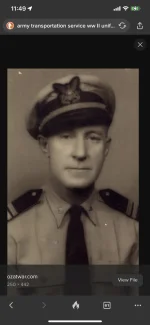
Here’s a link I found, may explain everything. A US Army transportation command based out of Australia during WWII under General MacArthur, had lots of Australian personnel from what the article states.
- OP 🔹
- #56
- Aug 19, 2020
- 1,583
- 4,520
- 2018 Subaru Outback
- 1999 Subaru WRX Club Spec Evo 3
And I just found thisHere’s a link I found, may explain everything. A US Army transportation command based out of Australia during WWII under General MacArthur, had lots of Australian personnel from what the article states.
I'm betting it's ATS though. There was a surprising bit of variation in bullion insignia back in those days. Often, you can find differences in bullion insignia, based on who made it.It’s a different badge. The top of the wings are different, as are the cross bars under the eagle. Also, the army one has braid beside the anchors on each side. Very close though, you really have to have the photos side by side to pick the differences. Makes you wonder why there were differences and if anyone at the time knew either.
Here's yet another example of an ATS cap insignia. Again, the top of the wings are different, and there is no rope or chain on either side of the anchors.:
Looks like we all helped narrow it down, got the answer!
Interesting history, something I’m definitely going to research.
And an ATS hat and machinist insignia would fit--the ATS operated troop and cargo transport ships, and were the predecessor of the Army Transportation Corps.
Plus the ATS was army, so that would explain his rank of major.
He may have even worn the navy rank of lieutenant commander (while being called a major), as I've seen several things that indicate they wore navy uniforms.
AR_B
Plus the ATS was army, so that would explain his rank of major.
He may have even worn the navy rank of lieutenant commander (while being called a major), as I've seen several things that indicate they wore navy uniforms.
AR_B
Last edited:
"We may never know. Perhaps he saw the threat of communism as a threat as great as Japan was and the army was seen as a better way to fight it."
Well, ground pounders probably sleep better. I'm sure his
reasons were ironclad (there I go again!) and he was a credit
to all wherever he went.
Well, ground pounders probably sleep better. I'm sure his
reasons were ironclad (there I go again!) and he was a credit
to all wherever he went.


Tremor Forum Photos
![What did you do to your Tremor today? [2025 edition]](https://www.fordtremor.com/data/files/featured_images/featuredimages_thumb_1.webp?1788603282)


![What did you do to your Tremor today? [2026 edition]](https://www.fordtremor.com/data/files/featured_images/featuredimages_thumb_5.webp?1788603283)
Tremor Forum Photos


