No worries.
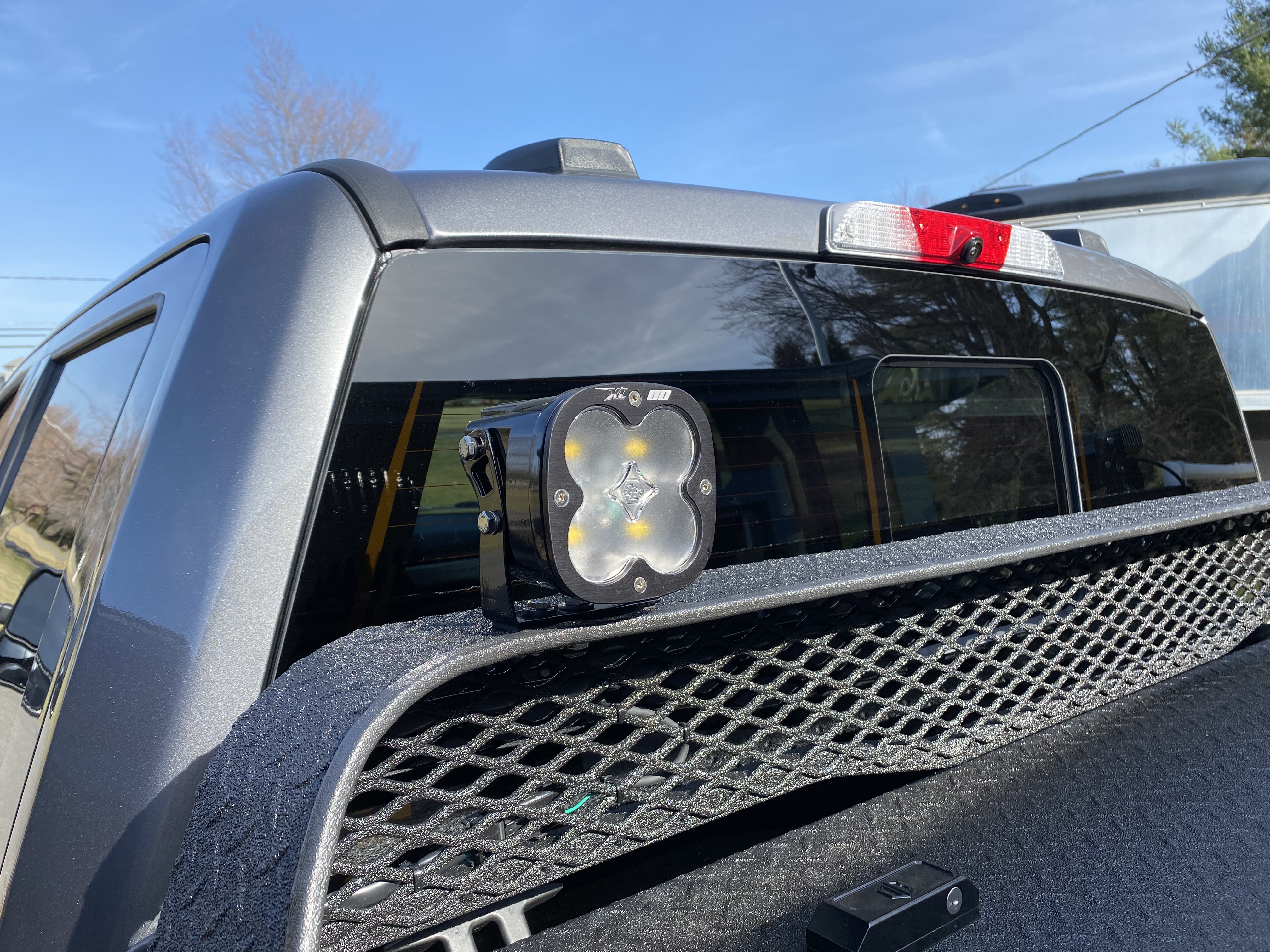
They're exactly like daylight and my boys get a kick out of standing in front of them (truck not moving, of course

).
Things start to get weird when you dim LEDs (or even incandescent bulbs for that matter). The XL80s are a three wire system, +12VDC (white wire), Negative (black wire) and a Switched Ground (green wire). Obviously, the +12VDC goes directly to the appropriate upfitter switch wire, pretty simple. The negative obviously goes to battery or chassis ground and the switched ground is an option
IF you want a low power capability. I don't recommend using a dimmer because they force the lights to draw more current with a drop in supply voltage. In turn, this increases heat and heat is bad. Using the switched ground enables one to reduce the level of light while maintaining proper supply voltage. I don't remember if the low power feature is a reduction
BY 20% of full blast or a reduction
TO 20% of the available level of light, I'll have to refer back to the literature to remember exactly which one it is.
So, the Switched Ground. One can use a standard Bosch style relay and power the coil (leg 85) with one of the upfitter switches (the other side of the coil (leg 86) goes to ground (battery or chassis). Also, run one side of the "switched pole" (leg 30) in the relay to ground (legs 30 and 86) and the green wire to the XL80s goes to the other side of the "switched pole" (leg 87, Normally Open or NO). Some Bosch style relays have a leg marked 87A, which is a Normally Closed (or NC) feature, so whatever you wire to leg 30 appears at 87A constantly. When the relay "poles" by the application of power at legs 85 and 86, what's wired to leg 30 is switched to appear at leg 87.
For the front and rear XL80s, I wired the green wires together and sent them to leg 87, this allowed me to use one relay and a total of three upfitter switches instead of adding a separate relay for front and rear and using four switches.
It's likely you're already familiar with how all this works, but if not, relays are better long-term than a dimmer, especially in higher current applications that run off of 12VDC, and hopefully others reading this will/can gain something from what I'm sharing. I nicely "connectorized" everything using Deutsch connectors so the system is "plug and play." Also, I hate butt splices, electrical tape (no offense to those that use them) and those pesky splices that clamp to a wire or wires as a means of "tapping" voltage or ground. These methods can be highly intermittent, aesthetically unappealing and much harder to service if/when something stops working.
MB